
By MJ DeVivo
UConn Journalism
December 16, 2025
ROTC is a college-based program that prepares students to become commissioned officers in the United States military while they earn their degrees. Cadets in the Reserve Officers’ Training Corps balance academic coursework with military leadership labs and physical training.
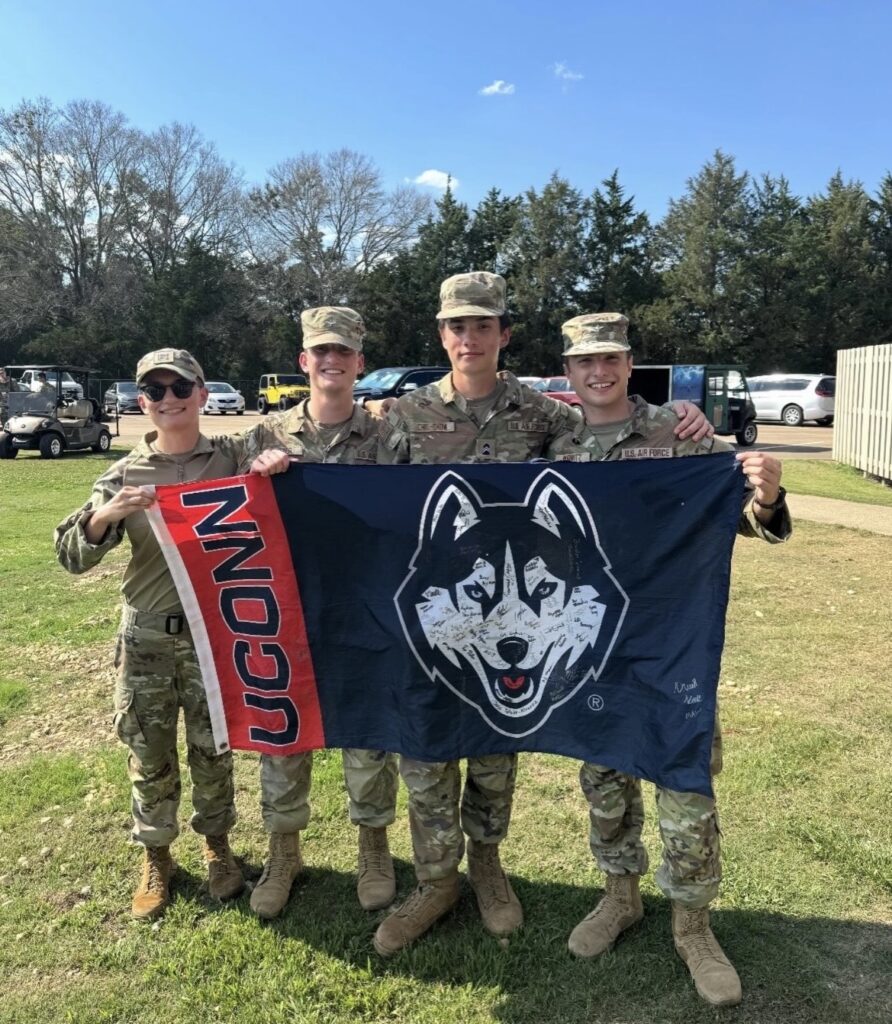
UConn’s Air Force ROTC program partners with four other schools in the region, while UConn Army ROTC program serves students across ten schools, including Yale, Quinnipiac, Sacred Heart, and several Connecticut state universities. Photo by MJ DeVivo
“We train cadets to become officers in the United States Army,” said Jon Bartolotta, UConn Army ROTC program coordinator.
“Students graduate with their degrees and then they’re able to serve in the military right away and represent the United States,” said Bethany Grabowski, program coordinator for UConn Air Force ROTC.
Both the Air Force and Army ROTC programs at UConn operate as host sites for colleges and universities that do not have their own ROTC programs. The Air Force ROTC program partners with four other schools in the region, while the Army ROTC program serves students across ten schools, including Yale University, Fairfield University, Quinnipiac University, Sacred Heart University, and several Connecticut state universities.
Alyssa Neves, a May 2025 graduate of UConn’s Air Force ROTC program who earned a degree in mechanical engineering, said many students are unaware of UConn cross-college agreements.
“If you go to a school like the University of Rhode Island, you can actually come to UConn and do [Air Force] ROTC here because they don’t have a program,” Neves said.
Army ROTC cadets from partner institutions travel to UConn’s Storrs campus or the University of New Haven to complete their training and coursework, Bartolotta explained.
Currently, women account for 24 percent of cadets in UConn’s Air Force ROTC and 35 percent in UConn’s Army ROTC. Both figures exceed the percentage of women soldiers serving on active duty in their respective military branches.
University of New Haven Army ROTC cadet Katrine Semenyaka said seeing other women in ROTC played a significant role in her leadership development.
“Something that drives me today is helping everyone I see, especially the girls,” Semenyaka said. She said she hopes to encourage younger women who may feel discouraged by the challenges of the program.
The physical and performance expectations of ROTC can be demanding.
“When I see the girls going through it now, I see myself in them,” Semenyaka said. “It’s inspiring, and it keeps me going toward my goal of helping them.”
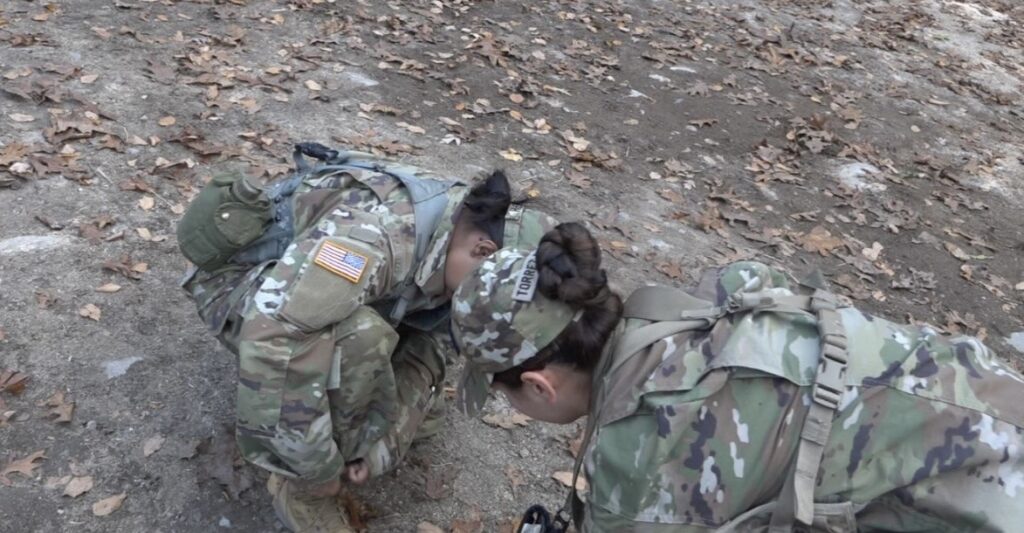
Neves noted that fitness standards, particularly body composition requirements, can be particularly challenging.
“It wasn’t the pushups or the run,” Neves said. “It was the body weight and BMI standards.”
Ruby Joseph, a first year Army ROTC cadet agreed. “We’re lifting the same weight and meeting almost the same standards, so sometimes it feels unfair.”
Despite these challenges, women cadets at UConn describe ROTC as a supportive environment focused on leadership, teamwork, and personal growth.
“There are so many female role models in the program, especially among the seniors,” Joseph said, adding that the relationships formed through ROTC are especially meaningful. “They’re very special, and I don’t think I would have had them through another sport or activity,” she said.
“Everyone’s here to develop each other and that’s the biggest part of ROTC,” said Lauren Sitka, a senior in UConn Air Force ROTC . “It was very daunting at first… I wasn’t sure of what was in store for me. I didn’t know if I was going to be the only female, or surrounded by support.”
Sitka advised new cadets not to fear failure. “Don’t be afraid to fail, and don’t be afraid of the fear,” she said.
Neves, who was selected for one of the Air Force’s Remotely Piloted Aircraft (RPA) or Drone Pilot career field upon graduation, echoed those sentiments.
“ROTC provided me with the resources, mentorship, and preparation I needed to succeed. From study materials and flight aptitude training to support in navigating the complex medical clearance process, ROTC ensured I was fully prepared to compete for and earn my position,” Neves testified at February 2025 state legislative committee meeting.
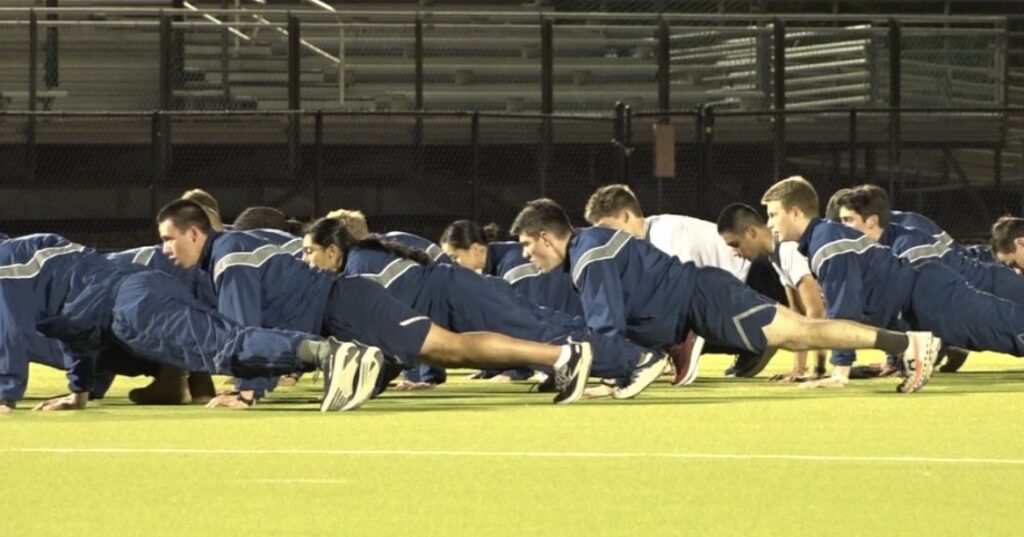
Bartolotta encouraged interested students to explore the program without pressure.
“If you have even a slight interest, you can come and try a semester of classes,” he said. “Give it a shot. If it’s not for you, that’s okay. But if it is, you may have just made a life decision that impacts you forever.”
For more information about ROTC programs at the University of Connecticut, students can visit the Hall Building on the Storrs campus or explore the UConn Air Force ROTC and Army ROTC websites: