
By Maleena Muzio | UConn Journalism
January 30, 2026
Rain pounding against windows and ocean waves crashing into the foundations of shoreline homes with wind gusts of over 60 mph — what may sound like a stormy September day in Florida actually took place in Milford, Conn. during Tropical Storm Isaias in August 2020.
Complications faced by Milford residents during tropical storms and hurricanes in the last 15 years demonstrate an increased intensity in storms affecting the Northeast region of the United States as the climate continue to change.
“You always hear at the time of the storms when we’re evacuating the coast, ‘I never thought it would happen,’” said Bill Richards, the deputy director of emergency management in the city of Milford.
Coastal evacuations and severe flooding incidents have become a reality for Milford homeowners. They know that more storms will come. Rising sea levels and an increase in ocean temperatures, caused by greenhouse gas emissions, fuel more powerful storms. Connecticut, however, is falling behind in reaching its greenhouse gas reduction target set for the year 2030, less than five years away.
Eleven hurricanes and tropical storms have passed through Connecticut since the 1950s, with the six most recent taking place after 2011, according to FEMA. In the last five years, Tropical Storm Isaias (2020), Hurricane Henri (2021) and remnants of Hurricane Ida (2021) impacted the state. A flash flood emergency was issued for the first time in Connecticut for New Haven and Fairfield counties during Ida.
“Our weather patterns are changing,” Richards said.
During Isaias, along with increased wave action, over 40% of residents of Milford lost power and several large trees were knocked down by wind gusts. However, Milford and other shoreline towns began facing an onset of more frequent and intense storms in 2011 during Tropical Storm Irene.
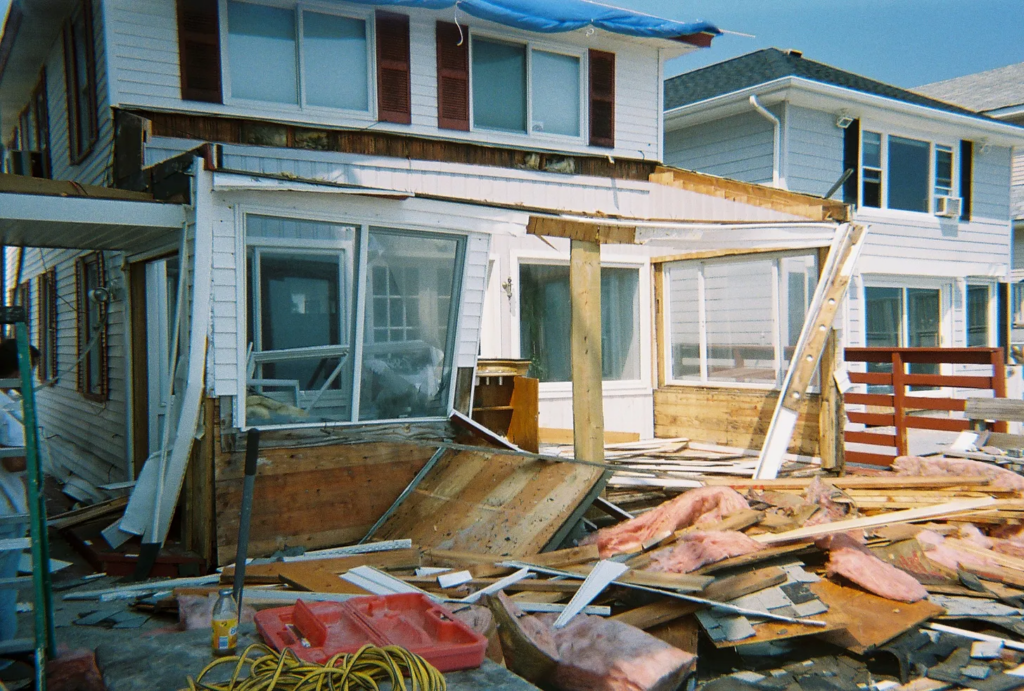
Longtime Milford residents Theresa Covaleski and Scott Digris said that Irene severely damaged their shoreline house on Lawrence Court. Winds ripped the porch off the front of the building, while water rushed into the downstairs, leaving Covaleski stuck on the second floor. She had run upstairs to gather essential documents so they could evacuate.
“The scariest part was hearing the wind and knowing the waves and the water were flowing underneath on the first floor,” Covaleski said.
The couple began repairing and renovating the house after Irene, but before that work was done, Superstorm Sandy struck the next year, destroying brand new windows and other furnishings inside. The couple said that they had never experienced storms of these magnitudes in the past, even though Covaleski had lived in Milford since the 1960s and Digris since the 1980s.
“Sandy was vicious,” Digris said.
Covaleski and Digris lived in four different houses near the Milford shoreline, each of which were also damaged by storms, before moving back into their original home, which now rises 18.5 feet off the ground.
Extreme surge
Hurricanes and tropical storms, like Isaias, Sandy and Irene, are created when tropical waves become rotating systems of clouds and thunderstorms as warm ocean air rushes into the low pressure of the waves. Warmer ocean temperatures fuel the storm’s intensity.
The East Coast is experiencing some of the most dramatic temperature increases in the Atlantic Ocean. Ocean temperatures in this region have shown increases of up to nine degrees Fahrenheit above normal ranges as of June 2024, according to the National Oceanic and Atmospheric Administration.
Sea level rise is also a direct result of a warming globe, caused by melting glaciers and the expansion of warmer water, which holds further implications for storms. Hurricanes and tropical storms typically create surges, which are abnormal rises in sea level as water is pushed to shore. However, surging becomes more intense and poses larger threats to shoreline property if initial sea levels have already been elevated prior to the surge.
Connecticut sea levels in particular are rising, with a projected 20-inch rise from 2001 levels by the year 2050, as adopted by the Department of Energy and Environmental Protection (DEEP) in 2018.
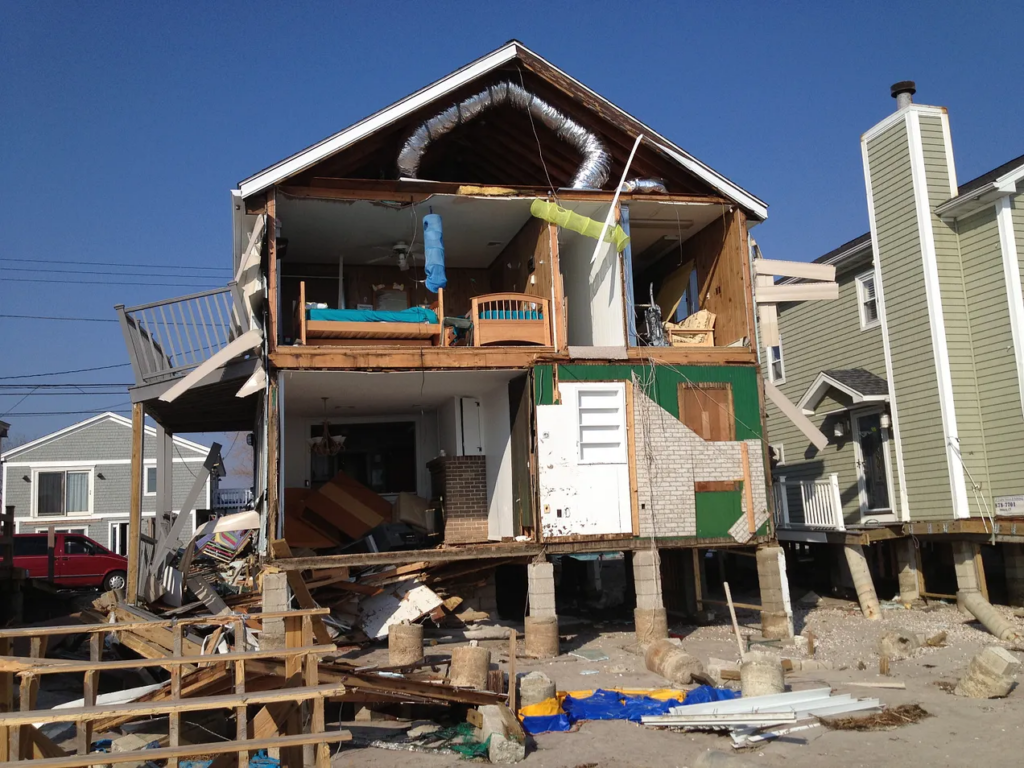
Richards recalled an extreme surge that destroyed a home on East Broadway near Silver Sands State Park during Superstorm Sandy, earning it the nickname “The Dollhouse,” after one of its exterior walls was torn off by ocean waves.
“The waves were 25–30 feet high,” Richards said. “This wave hit this house and literally peeled the outside of the house off, so that it was like a dollhouse. You could look inside and see the bed and the closet and the bathroom.”
The structure has since been demolished.
Warming ocean temperatures and sea level rise can be attributed to greenhouse gas emissions. A Connecticut law, the Global Warming Solutions Act (GWSA), aims to limit these emissions and mitigate the effects of climate change. The GWSA was passed in 2008, aiming for a 10% decrease in 1990 carbon levels by 2020 and an 80% decrease in 2001 levels by 2050.
Approaching 2020, “we were kind of flirting with dipping below the target,” said Charles Rothenberger, the director of Connecticut government relations for Save The Sound, an environmental advocacy group focused on protecting and improving the land, air and water of the Long Island Sound region.
“We didn’t meet [the target] because of our policies; we met it because of the pandemic.”
Rothenberger explained that drastic reductions of transportation emissions that resulted from quarantine and the COVID-19 pandemic allowed the state to approach its 2020 greenhouse gas emissions goals.
Bending the curve
Connecticut passed amendments to the GWSA in 2025, including benchmark goals to reach for the years 2030 and 2040, as well as an additional net zero emissions goal for 2050. However, the state is already falling behind in reaching the 2030 goal of a 45% decrease in 2001 levels.
DEEP reported in the “Connecticut Greenhouse Gas Emissions Inventory” last August that “if emissions were assumed to continue declining at the average rate achieved in the two decades since peaking in 2004, the state would be 40% below 2001 levels by 2030.”
Reduction efforts need to be increased by a factor of 1.6 to reach the 2030 goal, and additional 1.3 to meet a 65% decrease in 2001 levels by 2040, DEEP stated.
“We need a more consistent effort and more effort to bend that curve,” Rothenberger said. “Increasing the pace of our emissions reductions by a factor of 1.6 is doable and achievable.”
Milford residents continue to face threats posed by storms and coastal flooding each hurricane season, causing many residents, like Covaleski and Digris to elevate their homes.
In the years since Irene and Sandy, “a tremendous amount” of shoreline houses have been elevated against future floods, said Clay Markham, the owner of High Caliber Contracting in Milford, which elevated Covaleski and Digris’ home. “Twenty-five years ago, it was kind of an oddity to see a house that was way up in the air compared to the other houses around.”
To reduce the impacts of global warming, like the ones present on the Connecticut coastline, Save the Sound suggests that shifts towards renewable energy and carbon reductions in the transportation industry are key for lowering greenhouse gas emissions and reaching future GWSA benchmarks.
“Climate change is changing the physical and chemical composition of our oceans and our water bodies,” Rothenberger said. “We have a lot of people and a lot of infrastructure that lie right along Long Island Sound.”
Rothenberger said that dealing with the effects of climate change along the Sound is going to be very expensive but that investing in making buildings and the coast able to withstand the changes is “appropriate and a commonsense way to help reduce the costs we will eventually be on the hook for dealing with.”
Milford created a Hazardous Weather Action Plan for 2024–2029, and the National Weather Service designated the city as “StormReady” as part of a program that recognizes communities with high levels of severe weather preparedness.
Residents like Covaleski also remain prepared for future storms.
“We still have lifejackets under the bed,” Covaleski admitted with laughter.
Maleena Muzio is studying journalism at the University of Connecticut.