
By Charlotte Harvey | UConn Journalism
January 20, 2026
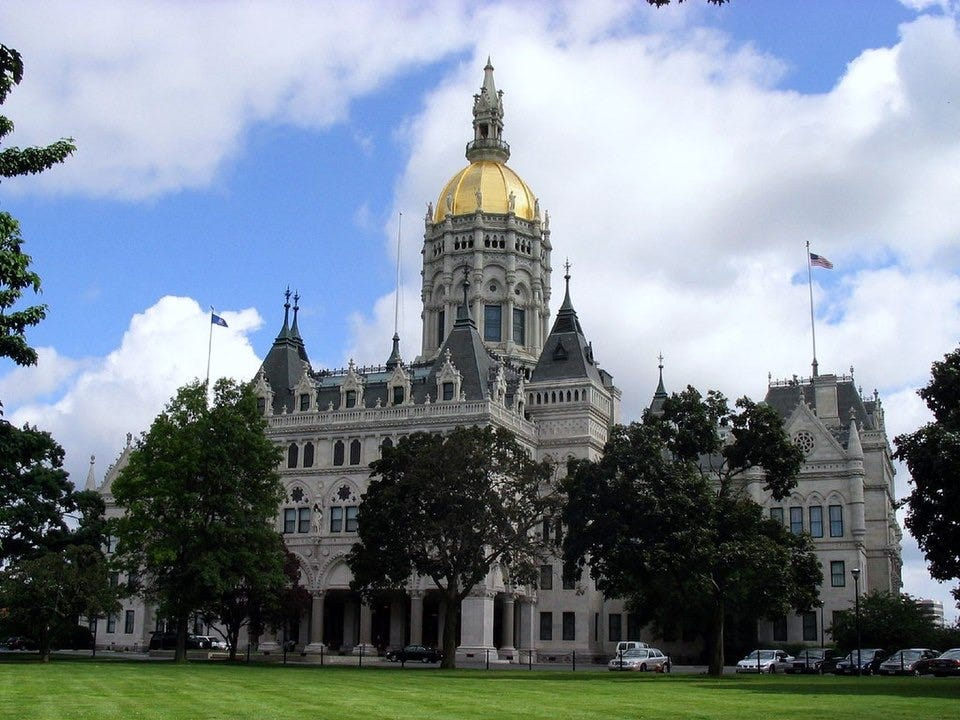
For almost three years now, state legislators have been arguing over whether they should address environmental problems in a way only three other states have tried.
With a new legislative session about to start, some environmental activists and lawmakers are hoping they can make progress on changing the state constitution to grant Connecticut residents a new right: the right to a clean and healthy environment.
While the efforts have thus far been unsuccessful because of pushback from the Connecticut attorney general’s office, some involved in the movement remain hopeful that they can get it done.
Kimberly A. Stoner, a biologist at the Connecticut Agricultural Experiment Station, coordinates the Connecticut Environmental Amendment Alliance.
“Obviously I’m hopeful or we wouldn’t be trying so hard.” she said.
In 2023, biologist and Wallingford Democratic state Rep. Mary Mushinsky, introduced a bill that would amend the state constitution and put the right to a healthy and clean environment on par with other rights such as freedom of speech and religion.
This effort is part of a nationwide movement to amend state constitutions across the country to add what the movement calls a “green amendment” into the Bill of Rights.
The national green amendment movement was started by Maya van Rossum, an activist and lawyer from Delaware. In 2013, she founded an organization called For the Generations which has the primary purpose of passing these green amendments. That year, Pennsylvania used a long-ignored provision in the commonwealth’s constitution from 1971 to fight a law that promoted fracking in the commonwealth.

Pennsylvania also affirmed a constitutional right for its citizens to a clean and healthy environment. That right holds the same legitimacy and strength as other constitutional rights, such as the right to free speech.
Van Rossum examined the language in Pennsylvania’s Bill of Rights so that it could be replicated in other states. Montana was the only other state at the time to have similar language in its constitution.
After this, van Rossum began a crusade to provide the same environmental protections to all people across the country through the mechanism of a constitutional right. New York adopted a green amendment in 2021 and van Rossum is currently working with more than 20 states to secure these same constitutional amendments.
“There was a breadth and quality of language along with the Bill of Rights placement,” van Rossum said in a recent interview. “It allows the constitutional language to empower and obligate government officials to ensure that every time they are acting, they are doing so in a way that protects those cherished freedoms. Now we are adding to those freedoms – on the environment.”
Mushinsky, who has been in the Connecticut House of Representatives continuously since 1981, has always been passionate about the environment. She heard remarks van Rossum had made regarding the movement, its intents and successes so far and said that she was receptive to the ideas.
Last year, the bill died at the committee level, Mushinsky said, primarily because the environmental division of the Connecticut attorney general’s office wanted to change the language in the proposed amendment. It did not want Connecticut to be held legally liable in challenges by citizens on environmental rights.
The attorney general would be the one to defend against any lawsuits brought by environmental activists or citizens using the constitutional amendment as a basis for legal action.
“It puts the attorney general in an awkward position because he does support clean energy, but he would have to go to court to defend the state against an environmental challenge,” Mushinsky said.
Stoner agreed that it was the language change the attorney general wanted that killed the bill.
By the time the altered bill had come to a vote in committee, Stoner said, the coalition of activists could no longer support it. They felt it had been watered down to the point where it would no longer be effective.
The language in the bill had initially been that, regarding the right to a clean and healthy environment, “the state shall protect these rights.” This, the advocates argued, is language that would make the amendment enforceable.
The changes made at the attorney general’s request altered the language to say: “The state shall not unreasonably infringe upon these rights and shall make reasonable efforts to protect these rights equitably.”
“What that modification did was it stripped the amendment of all its power, and made it pretty language that wasn’t going to change anything, you know? Nothing meaningful anyway,” van Rossum said.
The removal of support from those fighting for the amendment caused the bill’s death in committee, Stoner said.
“There’s a lot of work involved in getting a constitutional amendment and we didn’t want to do all that work for language that was not going to be strong,” she added.
Mushinsky, Stoner and van Rossum concur that this disagreement with the attorney general’s office is the biggest obstacle facing the supporters today.
They say that the reasoning behind this is the fear of frivolous lawsuits that could be brought against the state.
While van Rossum points out that this has not happened in any of the other states where this amendment exists – Montana, Pennsylvania and New York – Mushinsky said she understands why this doesn’t comfort the attorney general’s office.
“The attorney general would have to defend the state of Connecticut in court against an environmental advocate challenge, and he doesn’t want to be in that position,” Mushinsky said. “Even if it didn’t happen in another state that has the constitutional amendment it could still happen in Connecticut, and then he would be on the defensive representing the state.”
The goal now, ahead of a new session, is to try to craft language that is acceptable to both the advocates and the attorney general’s office.