
By Bridget Bronsdon, UConn Journalism
May 21, 2026
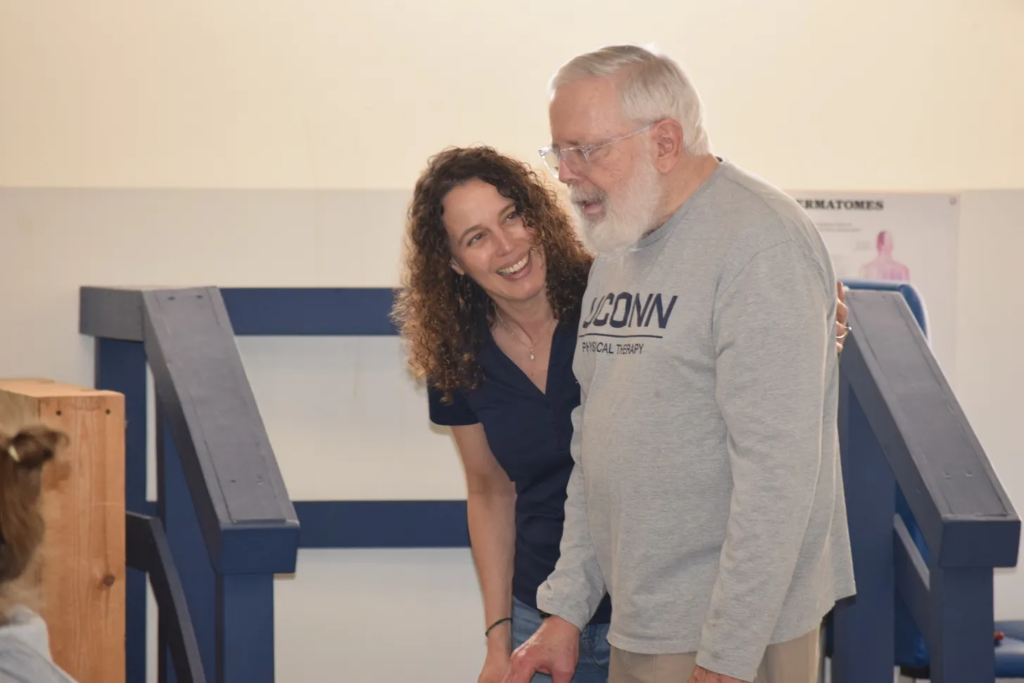
University of Connecticut physical therapy professor Dr. Cristina Colón-Semenza saw a 2019 article in the Journal of the American Medical Association about exercise as an effective method to manage depression.
She was excited, thinking the article would reference physical therapists. But she quickly realized the piece completely ignored her profession.
“It was a bit of an emotional rollercoaster ride reading this article,” Colón-Semenza said in a recent interview. Although she was excited that the healthcare system recognized the role of physical activity in mental health at a high level, she says she was completely “let down” that the piece failed to recognize physical therapists’ essential role “within that critical component of managing mental health.”
That sent Colón-Semenza “on a journey of wanting to elevate physical therapists’ role in the management of depression, of mental health, of mood,” she says. Since then, she has worked to highlight physical therapists’ essential role in mental health at the school, state and national levels.
First, as a legislator for the American Physical Therapy Association (APTA) representing Connecticut, Colón-Semenza collaborated with her colleagues to write legislation clarifying the physical therapist’s role within APTA. This way she says, physical therapists have “a clear understanding that we can and we should be a part of managing mental health conditions given the evidence we have around exercise.” The legislation passed in 2020.
Colón-Semenza also collaborated with a UConn colleague, physical therapy professor Mary Beth Osborne, to integrate mental health and first aid training into UConn’s doctorate of physical therapy curriculum. The new curriculum includes a mental health first aid training modeled after the Red Cross physical first aid training program.
“We need to start looking at people as whole people,” Osborne says, and that includes both mental and physical health.
The first two years of UConn’s doctorate of physical therapy program feature typical classroom education, and woven in throughout those two years is integrated clinical training. The clinical experience allows students to work with community partners in clinics, hospitals, home health care and long term health facilities. The final year is full-time clinical work.
The new curriculum includes a mental health first aid training at the end of the first year. The training includes asynchronous online mental health first aid training and synchronous online lectures with professors and students.
“Issues of mental health are being addressed at multiple levels with their clinical instructors and professors,” Colón-Semenza says of the new curriculum.

Evans Payen, a second-year doctor of physical therapy student, says the training was helpful in teaching him what mental health signs to look out for in patients and how to respond to patients that might discuss mental health concerns.
“I’m able to feel a bit more confident, at least if I can’t help them, knowing what resources to send them to,” he says.
Payen says it’s essential to have the mental health conversation with patients because it encourages them to stay engaged with the exercises while also feeling “seen and heard.”
The work of Osborne and Colón-Semenza extends beyond the classroom. Osborne helps lead UConn’s PT CARES (Community Access to Rehabilitation and Education Services). The program is a student-oriented learning experience that provides physical therapy services to uninsured or underinsured members of the community. Those seeking services are community volunteers and work with DPT students under the guidance of faculty.
In addition to physical rehabilitation services, Osborne has seen five people specifically for mental health services. They all demonstrated improvement, she says. Though the program is still growing in the mental health sector, Osborne says, the common goal is to get people back to their lives, their roles, what they love and what gets them up in the morning.
Osborne says students also get training in “motivational interviewing.” This technique uses open-ended questions and acknowledgment of stages of change “to help individuals arrive at a solution without telling them what to do,” she says.
“Physical therapy itself is a profession that promotes self-reliance and motivation and continued adherence to a program,” she says. “We try to educate and empower people to manage their own lives.”

Colón-Semenza’s Movement for Life Lab is another UConn program working toward whole-person care. The lab, which has been operating for over a decade, helps members exercise while simultaneously creating community, social connection and peer support for those with Parkinson’s Disease.
Parkinson’s is a chronic and progressive disease that affects movement, causing tremors, muscle stiffness, slowed movement and other symptoms.
But the impacts aren’t just physical.
According to research published in the National Library of Medicine, the prevalence of depression in Parkinson’s patients is 20–35%. The prevalence of anxiety can be as high as 60%.
“One of the most common nonmotor symptoms is depression. And there’s a lot of psychological implications in living with the disease that doesn’t happen as a secondary effect,” Colón-Semenza says.
However, movement and social connection might provide a partial solution.
Research from the Parkinson’s Outcomes Project, one of the largest clinical studies for the disease, finds that those with the disease “who engaged in at least 2.5 hours of exercise a week had a better quality of life than those who didn’t exercise at all or started exercising later.”
One of the indirect methods of addressing mental health conditions is creating social community, support, and being surrounded by people going through similar conditions, she adds.
“That’s been a really powerful project, and that’s what my research is focused on, is the use of exercise and social support and social connection to help manage health in a whole-person, psychologically informed perspective,” she says.
Research published in the Neuroscience and Neurological Surgery Journal has found that “Physical therapy, particularly through exercise, has been shown to significantly improve mental health outcomes” for those who suffer from anxiety and depression.
“Physical therapy offers a nuanced, personalized approach to mental health intervention by designing targeted exercise prescriptions that address individual psychological and physiological needs,” it says. “After participating in physical activity interventions, reviews consistently show medium-to-large improvements in mood, stress, anxiety and depression.”
Colón-Semenza says that some people now drive more than 90 miles across the state to attend the program because they find it beneficial. The program has been so popular it now includes patients with other diagnoses that can also carry a burden of stress and depression such as multiple sclerosis, Alzheimer’s and stroke.
“I’m really hopeful that we are headed in the right direction as a healthcare system that is destigmatizing mental health,” Colón-Semenza says.
Payen, who also works as a graduate assistant in the lab, says getting to know the participants has allowed him to build relationships and understand the participant’s Parkinson’s diagnosis on a deeper level. He says the lab has connected the dots, allowing him to put his in-class learning into practice.
“Seeing people come back week after week, and seeing them making progress week to week, month to month, from when I started to now – it’s just been absolutely eye opening and incredibly rewarding,” he says.
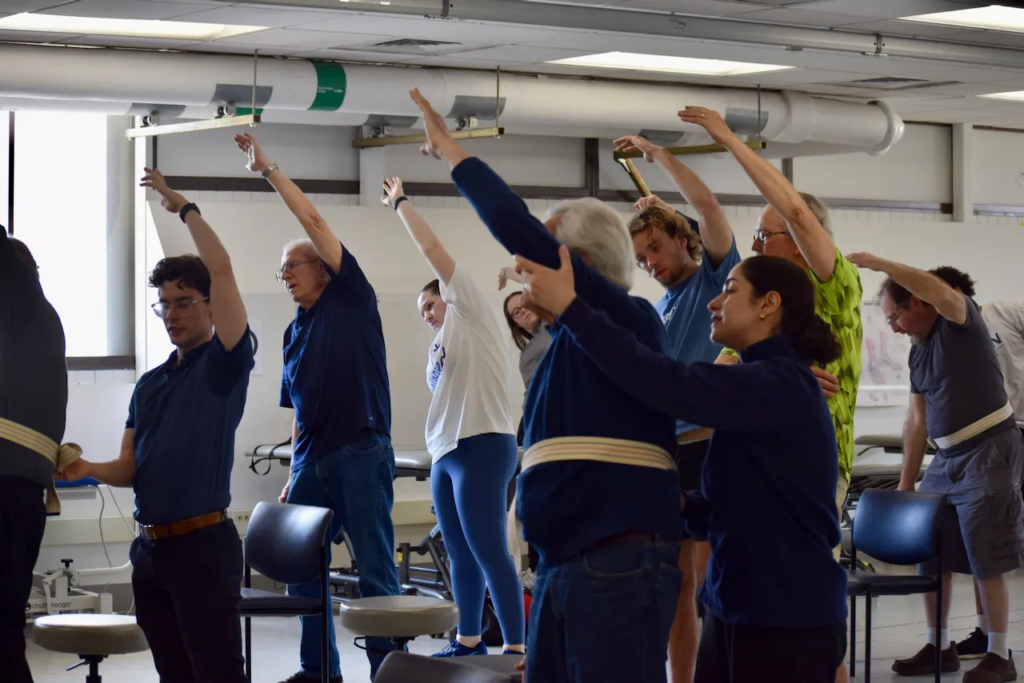
Although the evidence is strong regarding the importance of exercise, specifically delivered interventions from physical therapists in that role is still under evaluation and to be determined, Colón-Semenza says.
Amid the ongoing research, Colón-Semenza and Osborne have extended their work to a national level. For the past two years, they have presented their work at the APTA combined sections meetings to advocate for a higher level of involvement of physical therapists in mental health care.
Colón-Semenza says they’ve also urged the APTA to lobby for funding for physical therapists to be paid for their role in mental health conditions. Under current Medicare and Medicaid regulations, PTs would not be approved as a primary care provider for mental health diagnoses, she says.
This story was supported by a grant from the Solutions Journalism Network. UConn Journalism is a foundational member of the CT Student Journalism Collaborative, which was chosen to participate in the Solutions Journalism Network Student Media Challenge cohort for 2025–26.