
By Earvin Adjei
UConn Journalism
June 6, 2025
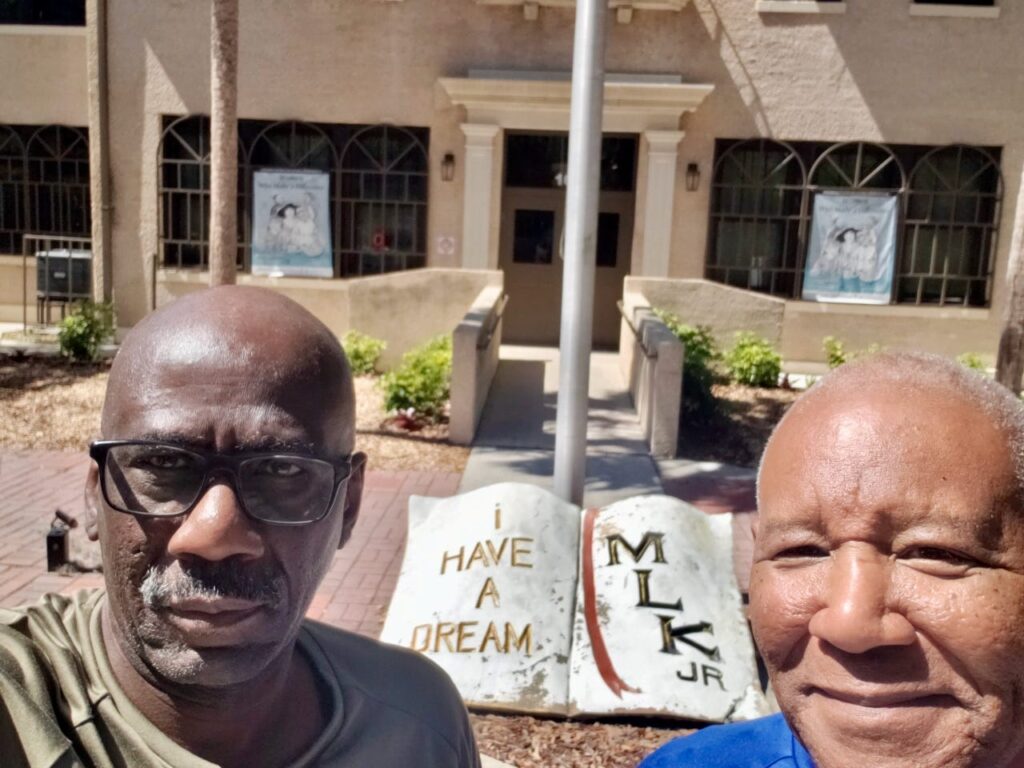
In the busy halls of East Hartford High School, students often sought out Mr. Cooper and Mr. Claitty not just for help with schoolwork, but also for life advice, mentorship and a friendly conversation.
To many students, these men were more than teachers — they were father figures, uncles, and older brothers in a system where faces like theirs were not often seen.
The presence of Black male teachers like Roosevelt Cooper and Wallace Claitty in Connecticut’s schools is alarmingly low, and Claitty said this underrepresentation poses significant challenges for students of color who benefit from having mentors who reflect their own background.
“Many of my kids have said I was the first Black male teacher they had,” Claitty said. “For some kids, I was like a role model for them — something that they could strive to become.”
Connecticut’s public schools serve a diverse student population, but the teaching workforce does not reflect this same diversity. According to the state Department of Education’s Educator Diversity Dashboard, during the 2023–2024 school year, out of approximately 54,006 teachers statewide, only 4.9% were Black or African American. The number of Black male teachers is even smaller, highlighting a significant gap in representation.
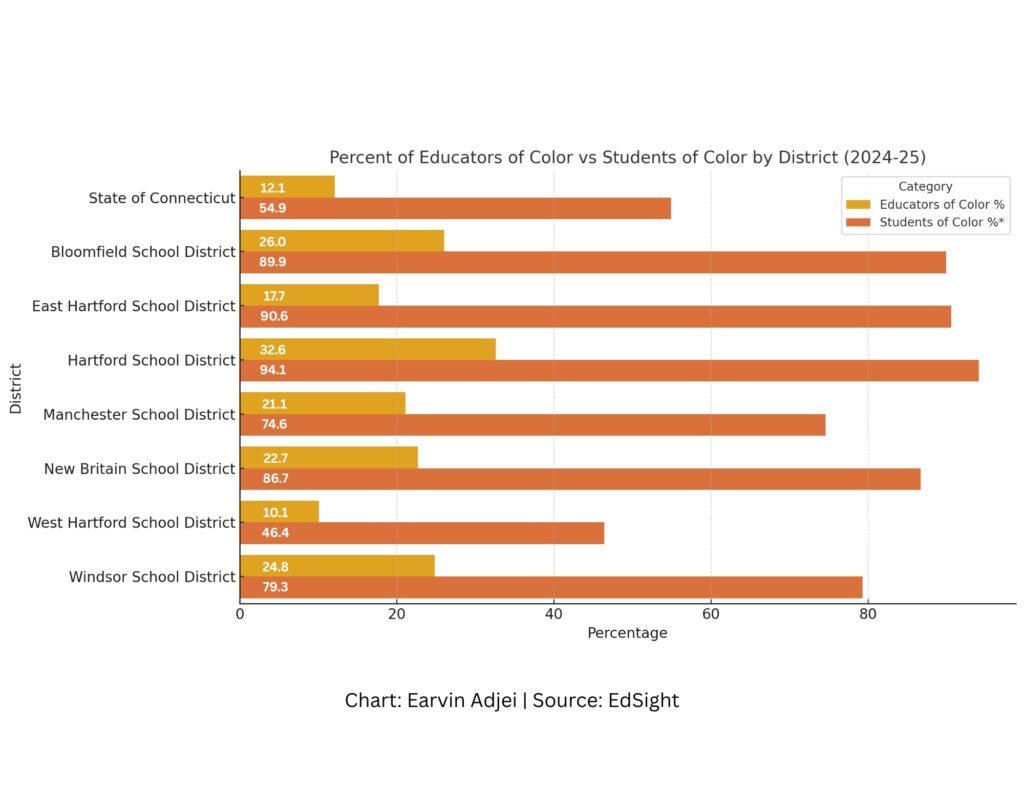
In East Hartford in the 2024–2025 school year, students of color made up 90.6% of the student body while teachers of color comprised only 17.7%, according to the Diversity Dashboard.
While exact number of Black male educators in East Hartford is not specified in the available data, anecdotal evidence suggests they are an even smaller minority within the district’s teaching workforce.
The dashboard shows that some Connecticut school systems are doing a bit better than East Hartford in recruiting teachers of colors. Waterbury this year has 18.6% teachers of color compared to 90.4% students of color while Bloomfield has 26% teachers of color in a district where students of color make up 91.3% of the student body.
New Haven has 31.4% teachers of color and 90.4% students of color compared to 32.5% and 93.1%, respectively, in Hartford.
With teaching careers spanning more than a decade each, Cooper and Claitty, who have since left the East Hartford school system, described the challenges and triumphs of being Black male educators in Connecticut.
“Well, to be honest, the field of education, even up to this day, is not a well-paying profession,” said Cooper, who is now retired. “So if you are going to raise a family and have a home, an educator’s salary just doesn’t cut it. From a Black man’s perspective, I would assume they’re thinking I could make more money doing something else.”
Claitty emphasized the importance of representation in the classroom due to the role he played in his students’ lives.
“A lot of kids, I was either their father or uncle or older brother or something like that,” he said. “They sought me out to advise them.”
According to a 2022 study in the American Economic Journal, Black students are significantly more likely to attend college if they have Black educators during their formative years. The study found that Black students who had a Black teacher in early elementary grades were 9 percentage points more likely to graduate from high school and 6 percentage points more likely to enroll in college.
The Neag School of Education at the University of Connecticut is part of a nationwide initiative aimed at increasing the number of Black and Latino men in the teaching profession. The project seeks to boost enrollment of young men of color in teacher preparation programs by 25% in the coming years.
In addition to universities, organizations like the Connecticut Education Association are leading efforts to encourage young people of color to pursue teaching. The CEA’s “Teaching Is Calling You” campaign highlights the impact educators can have as role models and mentors.
John Napoleon, a former East Hartford High School student, said having teachers who looked like him was encouraging.
“I had two Black male teachers — Mr. Claitty and Mr. Higgins,” Napoleon said. “I definitely saw them as role models. They made me feel like I belonged and that I could actually relate to them. Mr. Claitty and I used to talk about basketball and other stuff I was into, which was pretty cool.
“Having someone with similar experiences made a big difference.”
Earvin Adjei is a journalism major at the University of Connecticut.