By Anna Heqimi
UConn Journalism
Knocking on doors in an immigrant neighborhood on a recent fall afternoon, Selize Mendes was on a mission to inform residents about their constitutional rights.
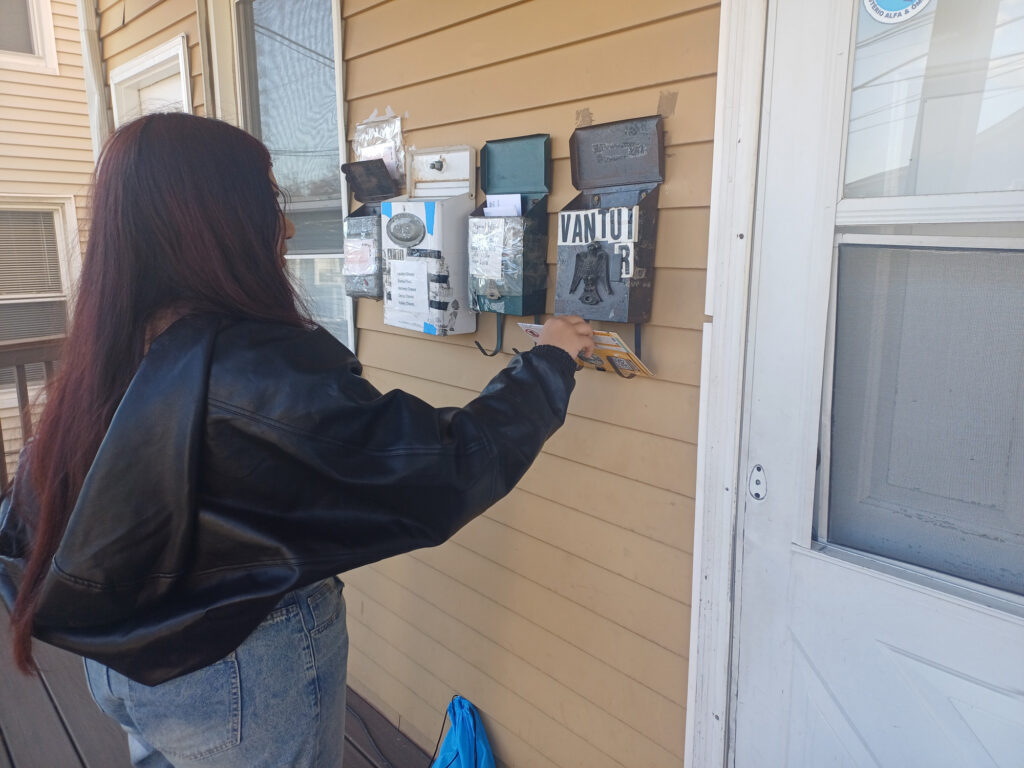
Mendes, a senior at Danbury High School, delivered informational packets with Danbury Unites for Immigrants, a community group comprised of immigrants and allies. She joined the effort after a close friend who is an undocumented immigrant stopped attending after-school activities in early 2025 for fear of being deported.
“I want to be her voice,” Mendes said.
Connecticut is home to more than a half million immigrants who comprise about 20 percent of the state’s labor force, according to a 2023 estimate from the American Immigration Council. About 200,000 immigrants in the state were estimated to be undocumented in 2023, according to the Migration Policy Institute.
As detainments and deportations ramp up as part of President Donald Trump’s aggressive immigration enforcement agenda, Connecticut community groups and residents are rallying to provide support for immigrants and educate them about their rights.
Juan Fonseca Tapia cofounded Danbury Unites for Immigrants in September 2024 to prepare for a possible second term for Trump. “We knew that we had to prepare,” Fonseca Tapia said.
He said the group has a helpline number for residents to call, which activates a rapid response team that has been very effective. The response team is made up of almost 40 individuals, and designated members drive around the city each day to alert residents if they see suspicious activity.
The organization also has a support group to help the families of detained immigrants, connecting them with attorneys and helping to locate their loved ones in the system. The group has assisted 13 families so far, Fonseca Tapia said. One of the detained individuals the group assisted has been released and reunited with his family in Danbury, he said.
“We don’t let the kidnappings and the disappearances happen in obscurity and secrecy,” Fonseca Tapia said.
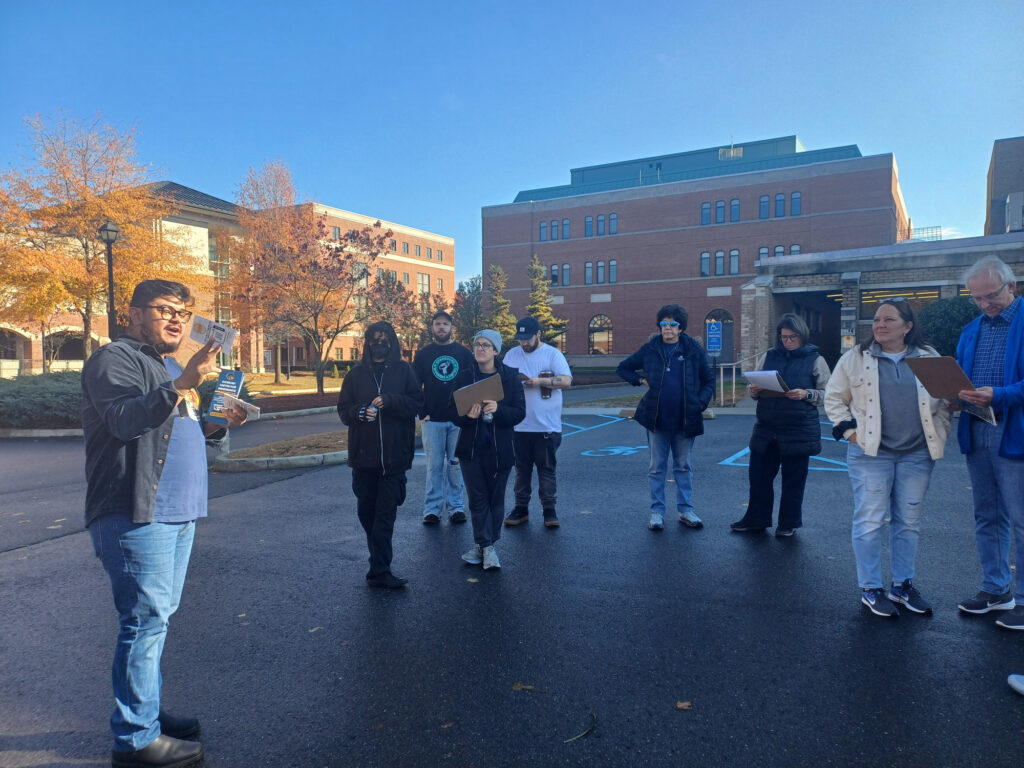
The community canvassing days, which began in October 2025, provided “direct education and outreach,” built community trust and promoted the group’s new helpline, he said.
Marcelo Cantu, originally from Chile, attended his first canvassing event with the organization in early November.
“There’s injustice being committed by our very government,” Cantu said.
He said he visited over 100 houses, but only five opened their doors. Still, he called the day a success. He distributed packets containing information on rights and what to say to ICE agents if encountered.
Nonprofits mobilize for rapid response
Tabitha Sookdeo, executive director of Connecticut Students for a Dream, said fear in her community amid immediate detainments and deportations has forced her organization to rapidly respond.
The undocumented youth-led organization created emergency protocols and is expanding networks of immigration attorneys in other states such as Georgia, Louisiana and Texas since immigrants from Connecticut are being quickly shipped to detention facilities around the country.
The goal, Sookdeo said, is “find the person that’s detained and figure out a legal strategy.”
She cited the detention of a Wilbur Cross High School student, Esdrás Zabaleta-Ramirez, in New Haven while he was working at a car wash. Her group and partner organizations created a deportation defense fund for Zabaleta-Ramirez’s legal fees.
Sookdeo is originally from Guyana and became a U.S. citizen through marriage in 2022. As a former undocumented immigrant, Sookdeo said that she didn’t have to go through nearly as much as undocumented immigrants do today.
Her group hopes to build relationships with political leaders and donors and gain new members through local chapters.
“I don’t want people to feel bad for us,” Sookdeo said. “I want people to stand up and fight with us.”
Involved with the group since high school, Emerson Zecena said that ongoing immigration enforcement prompted him to cofound the University of Connecticut chapter of Connecticut Students for a Dream in September 2025. He said it’s his way of giving a “voice to the voiceless.”
“ICE needs to be held accountable for their barbaric actions and dehumanizing nature they have toward undocumented immigrants who are just trying to make a living,” said Zecena, the son of undocumented immigrants.
Barbara Lopez, the executive director of Make the Road Connecticut, a community-based organization working for immigrant justice, said her organization provides direct legal services, healthcare support and rapid response.
“I can testify that there has been a lot of hunger for community members to be heard and seen, and that’s what I am passionate about — for members to have a voice of why they should be treated with dignity and respect,” said Lopez, whose parents immigrated from Guatemala.
“Our people cannot afford to live. There is a threat of individuals losing their work status, residency or not having access to pathways to legal citizenship. There is a lot of economic instability for low-income, mixed-status communities,” she said.
Lopez said members of her organization, which is 10 years old, were learning as they were going in the first Trump administration. Now they feel more prepared and have created more networks. But Trump’s second term has drastically increased deportations.
“We’ve seen everything that he did in his first term times 10,” Lopez said.
In 2025 alone, ICE removed more than 527,000 undocumented immigrants, according to an October report from the Department of Homeland Security. In stark contrast, there were just over 61,000 removals of undocumented immigrants during the first year of Trump’s first term, according to an ICE report measuring deportations from Jan. 1, 2017 to Sept. 30, 2017.
“There are more deportations, there’s more fear, there’s more anti-immigrant rhetoric,” Lopez said. “Everything is intensified.”
Backing immigrant justice
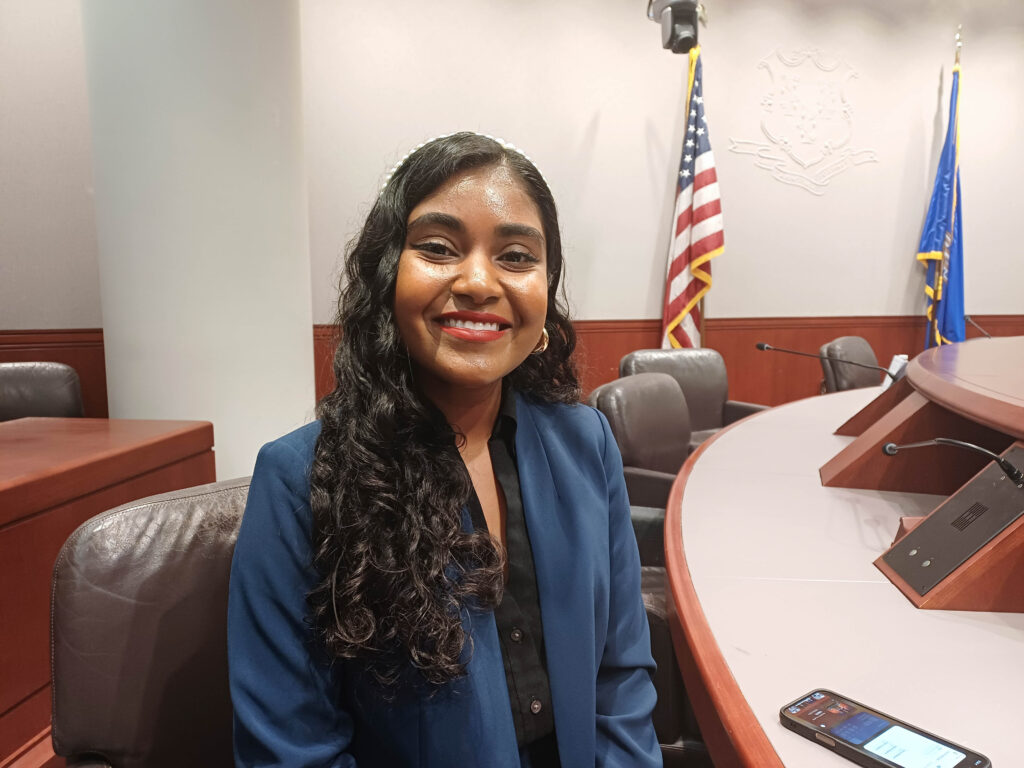
A Latino Policy Summit at the state Legislative Office Building in early October gave members of local community organizations a chance to be heard by state legislators.
During a panel discussion titled “Responding to Fear with Justice,” immigration attorney Glenn Formica told the audience that it is important to challenge every deportation case.
“I say we fight every single removal even if we lose,” Formica said. By doing so, “we are forcing the system to respond,” he added.
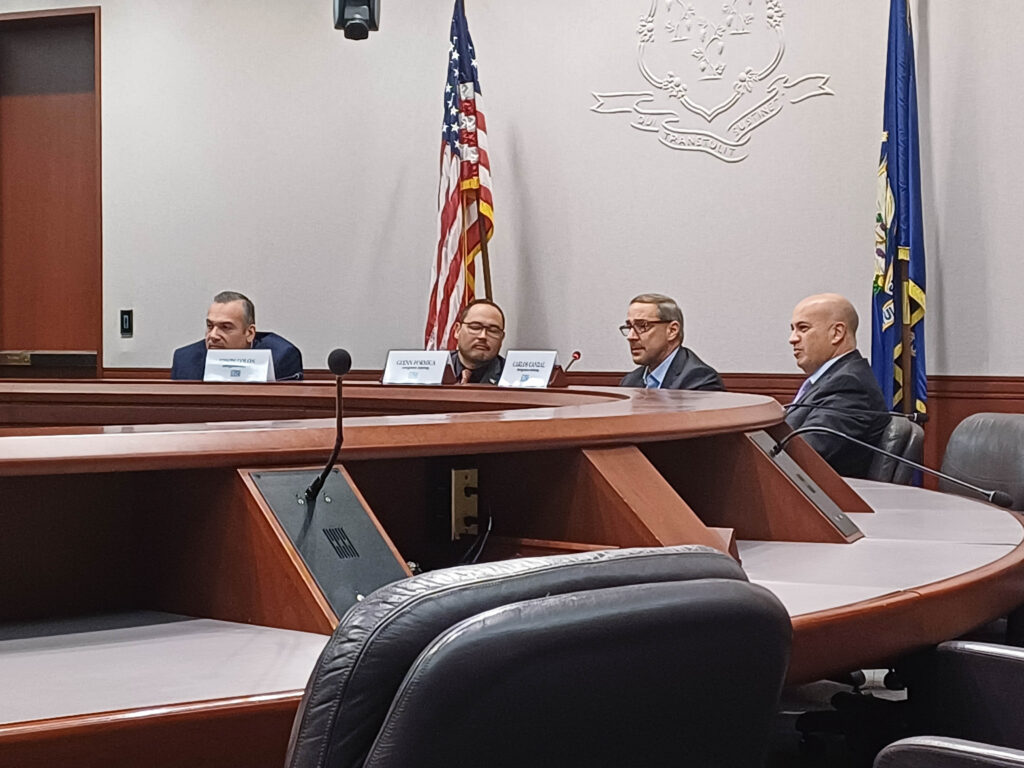
Formica noted a September ruling by the U.S. Supreme Court that allowed ICE officers to continue tactics such as stopping individuals without reasonable suspicion.
In response, Formica encouraged citizens to be bold and willing to challenge the system.
“If you put enough wolves out there, they’re going to be afraid to be bit,” Formica said. He suggested citizens use their privilege to provoke and confuse ICE officers. “If you’re a U.S. citizen, speak Spanish, see what happens,” he said.
Connecticut Attorney General William Tong’s opening remarks at the summit focused on protecting immigrant rights.
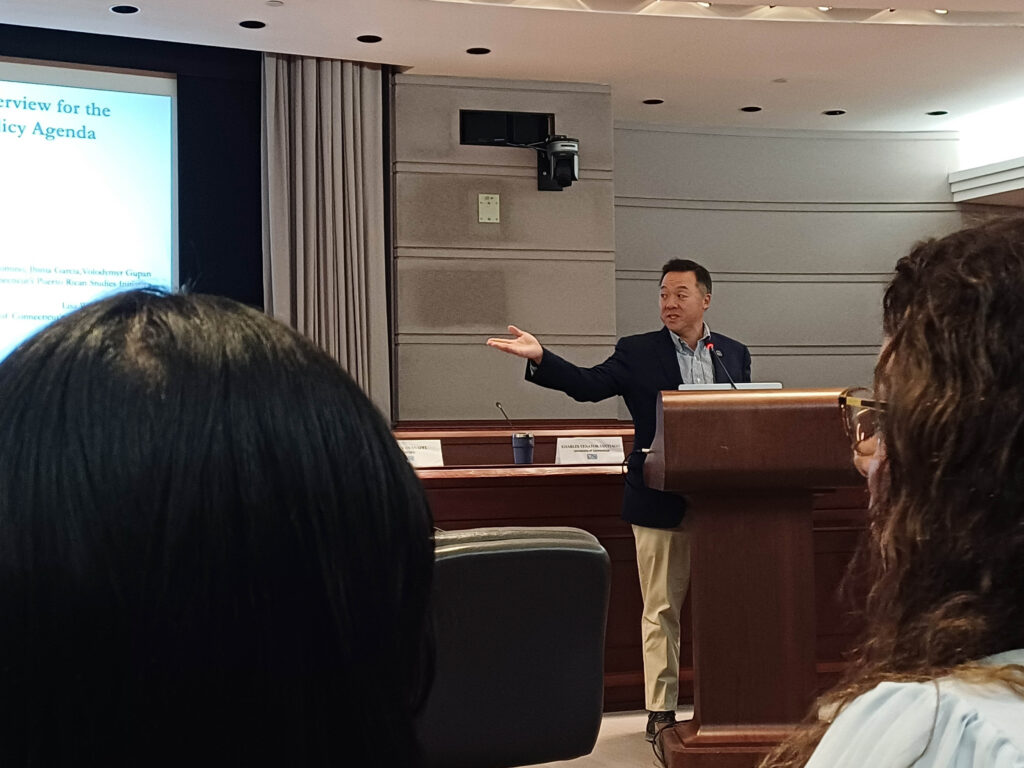
Tong said immigration is often cast as a Latino issue to marginalize and dehumanize them. He shared how his own immigrant parents worked seven days a week, 12 to 15 hours each day.
“America runs on two things,” Tong quipped, “Dunkin’ and immigrants.”
The power of protest
As ICE agents detain undocumented immigrants, Avelo Airlines facilitated operations by conducting deportation flights. According to reporting from CT Insider and Connecticut Public, Avelo will no longer participate in DHS’ charter program of deportation flights starting on Jan. 27.
For months, a coalition of groups committed to immigrant rights from Connecticut and Massachusetts protested Avelo’s involvement with ICE.
On Nov. 1, 2025, the groups celebrated that Avelo will no longer be operating out of Bradley International Airport starting in January.
John Majercak, a volunteer with Indivisible Northampton — Swing Left Western Massachusetts, waved to cars passing by as he celebrated on the I‑75 Overpass outside the airport.
“Our position is that ICE is illegal, immoral and unnecessarily cruel. We don’t want to support any business that supports ICE,” Majercak said.
Group leader and founder of Indivisible North Central Connecticut Robin Henrie said the goal is to encourage a boycott of the airline.
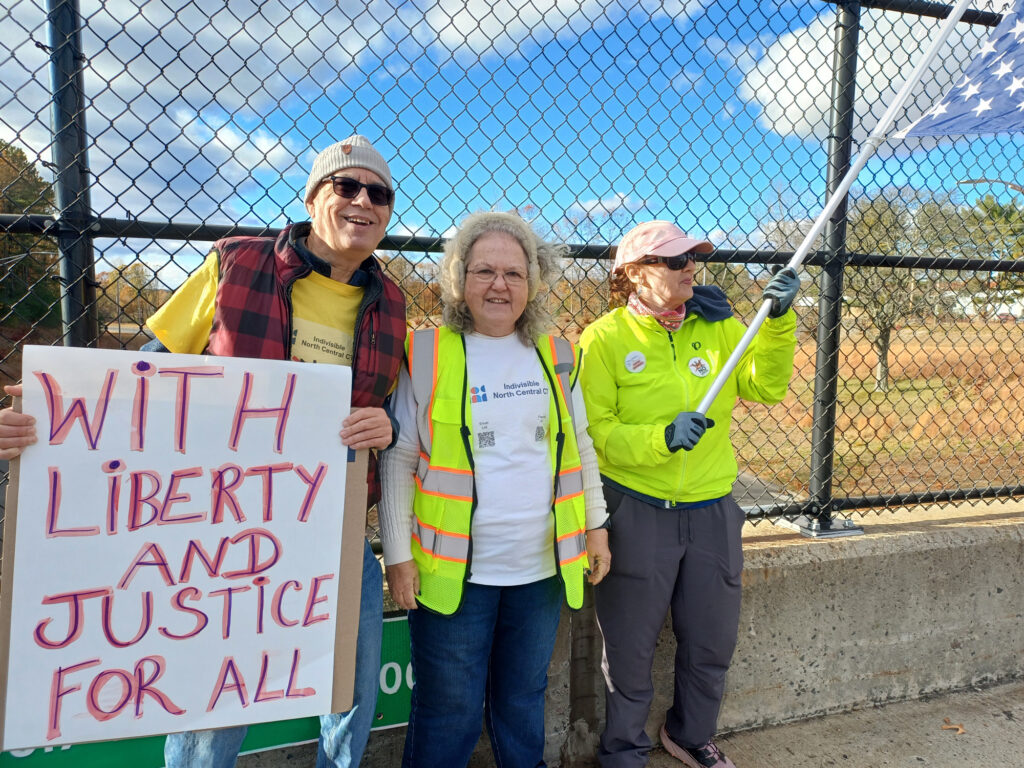
“It’s really important for people to know not to fly Avelo Airlines until they stop flying deportation flights for ICE and DHS,” Henrie said.
Henrie’s group also planned to protest Avelo at Tweed New Haven Airport.
Avelo leaving Bradley “means we are hitting their pocketbook, and companies respond to the pocketbook,” she said. “If more people refuse to fly Avelo here out of Tweed New Haven, they will figure out they need to stop flying those flights or they will go out of business.”
The groups have also inquired about the relationship between Avelo Airlines and UConn.
University spokesperson Stephanie Reitz said there is no direct relationship between UConn and Avelo.
“Learfield (UConn Sports Properties) and Avelo are partnered in a UConn Athletics sponsorship agreement to provide Avelo with asset placement, including signage, promotion contests, PA announcements, and airline ticket contests for UConn students at several UConn sporting events such as men’s and women’s basketball, hockey, and baseball,” Reitz said in an email. “The sponsorship agreement with Avelo does not include any travel by UConn teams or personnel; it is strictly a marketing arrangement.”

In October, more than 7 million people participated in “No Kings” events protesting the Trump administration, according to the national No Kings Alliance. Locally in Glastonbury, more than 2,000 people joined the protest, according to Lisa Chandler from Take Action CT.
Julie Ingenohl, a Glastonbury therapist, said she participated to gather with like-minded people to “stand in number to counter any support the administration has.”
She called the Trump administration’s immigration enforcement actions “despicable” and “racist.”
“It feels like the beginning of genocide,” she said. “This administration is becoming a monarchy.”
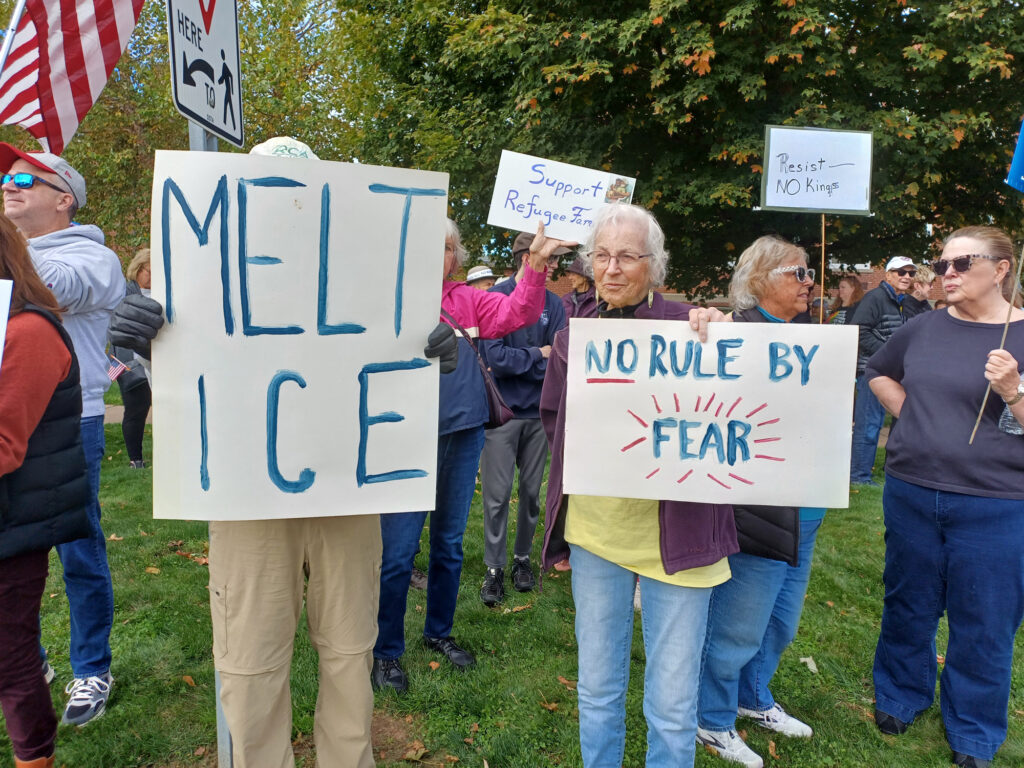
Rev. Richard Allen, who said he was appalled at the treatment of immigrants and refugees, held a “Melt ICE” sign during the protest. He said he helped settle numerous refugee families during his more than 30 years of service at the Congregational Church in South Glastonbury.
“I personally witnessed the strength and passion they bring,” he said. “I must find ways to resist. One of the ways is to come outside with a sign that says, ‘Melt ICE.’”
You must be logged in to post a comment.