By Dan Stark
UConn Journalism
Unparalleled. Unprecedented. Unchecked.
These are some of the words that have been used by many to describe the actions of President Donald Trump during his second term in office.
Upon returning to the White House in January 2025, Trump has taken sweeping actions that have promoted a broad view of executive power as he pushes to implement his agenda, including issuing over 200 executive orders, implementing tariffs on foreign goods, firing large numbers of federal workers, shuttering agencies and freezing federal funding to accomplish ideological goals.
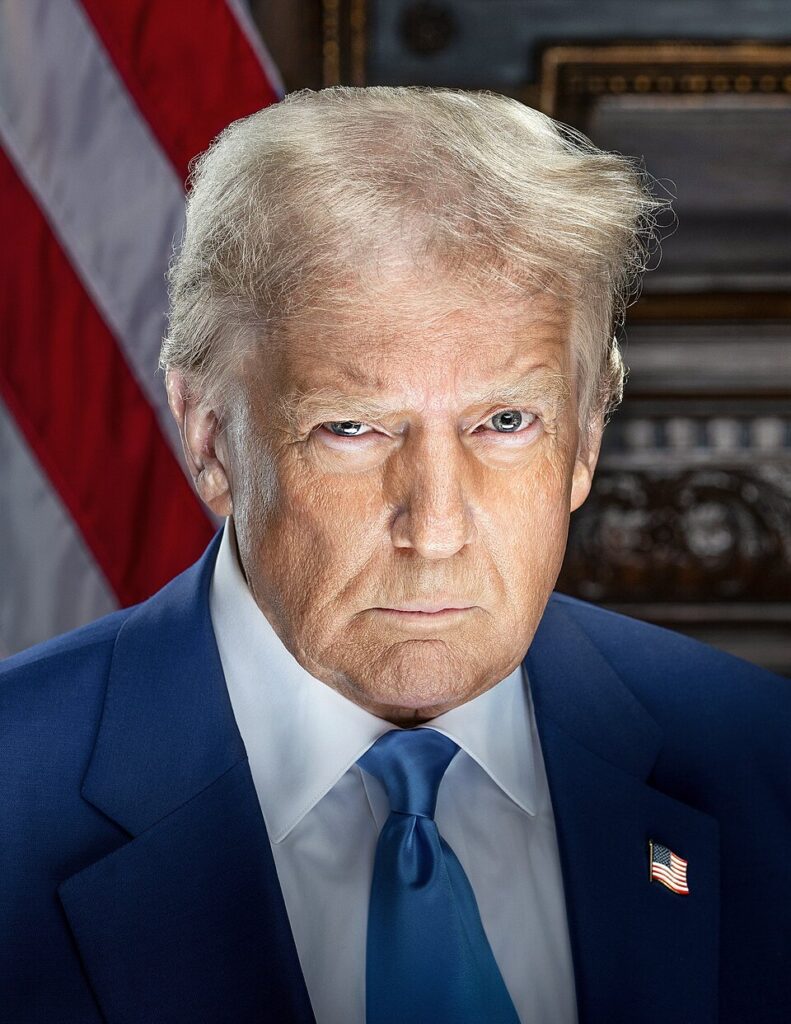
The impacts so far have reached into civilian life in Connecticut and across the country.
Schools have faced threats of funding loss if they don’t comply with new diversity, equity and inclusion policies.
An anti-science agenda has undermined federal public health guidelines as deregulation has weakened environmental protections.
Renewable energy projects, including some in Connecticut, have been stalled.
Non-profit groups, theaters and food pantries in Connecticut and across the country have lost federal funding.
Deportations have dramatically ramped up and protections for refugees have been canceled.
Transgender Americans have seen their identities challenged and international students have had their actions scrutinized.
Public and private universities, including the University of Connecticut, have lost millions of dollars in research grants as the administration seeks to reshape what is studied and taught amid a broader attempt to shape public history.
Behind this is a president who has been emboldened to expand the power of the executive branch. Trump has wrestled the power of the purse away from the legislative branch by eliminating agencies and programs approved by Congress. He has taken control over independent regulatory agencies, tried to eliminate agencies he disfavors like the Department of Education and imposed purity tests on federal workers. He has deployed the National Guard to patrol Democrat-led cities and cancelled billions in funding to blue states. He has called for the jailing of Democratic officials and for the Justice Department to punish his enemies. News outlets have been barred from the White House and television networks have had their broadcast licenses threatened.
These actions have occurred at a greater scale and pace than during Trump’s first term.
“A difference between a second and first term is a level of sophistication and kind of strategic planning,” said Mitchel Sollenberger, a political science professor at the University of Michigan-Dearborn who has researched on executive power. “There’s intentionality in Trump 2.0 that you didn’t see with Trump 1.0, so there’s much more focus on unilateral executive action in Trump 2.0 than 1.0.”
Trump’s actions have not gone unchallenged. Millions of people have gathered across the country for “No Kings” protests throughout the year, with the October events marking the biggest protests seen in the U.S. since Earth Day in 1970.
Groups like the American Civil Liberties Union of Connecticut have filed lawsuits on behalf of those impacted while coalitions of states have banded together to fight back against Trump’s actions.
Connecticut Attorney General William Tong, a Democrat and first-generation American, has been one of the most aggressive, joining in more than three dozen legal challenges against the administration. Tong said these lawsuits aren’t rooted in partisan bias but were necessary because the attorneys general view Trump’s actions as threats to the sovereignty of their states and the lives of their citizens.
“We didn’t ask for this,” Tong said. States were compelled to sue because of “offenses to the states, to the Constitution, to our rule of law and the guardrails. All of these things have been so threatened in such a profound way that we’ve had to act.”
Separation of Powers and the Power of the Purse
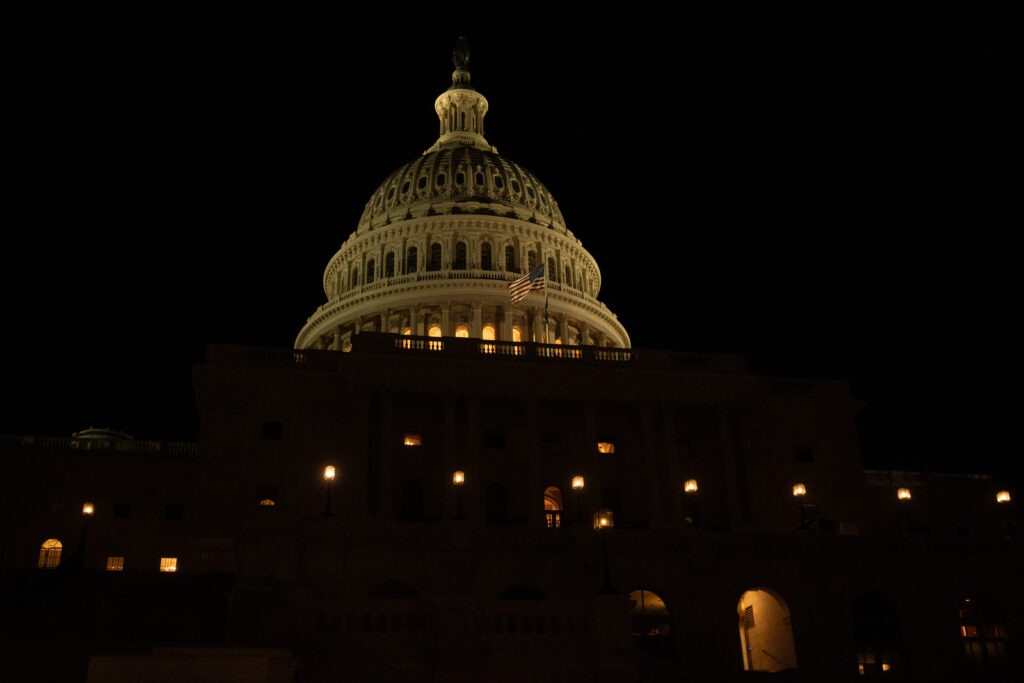
Many of the Trump administration’s expansions of executive power have come from its attempt to seize spending power from Congress, known as the “power of the purse.” This has occurred through cancelling research grants, defunding agencies and implementing funding freezes, which has impacted multiple aspects of American life.
Energy funding is one affected area. In August, the administration halted construction on Revolution Wind, an offshore wind project that was expected to reduce energy costs in Connecticut. The move was challenged by Tong as well as other parties to the project. The U.S. District Court for the District of Columbia issued an injunction in September allowing for construction to resume.
The administration has sought to influence curriculum and programs at colleges and universities, threatening to withhold funding from institutions that do not comply. Some schools have been specifically targeted and have chosen to settle with the administration, most notably Columbia University, which agreed to pay $200 million after threats and allegations of anti-Semitism from Trump. Other universities, including Harvard University, have taken a more combative approach by suing the administration.
While UConn has not been specifically targeted like Columbia and Harvard, it has still been impacted by cuts to research grants. UConn had $41 million in federal research grants terminated as of Oct. 15, impacting research in a variety of programs from health to political science. Tom Katsouleas, an engineering professor and former president of UConn, has criticized the Trump administration for what he believes is an authoritarian takeover of education. In May, he and a group of seven other former university presidents published an op-ed in the Washington Post calling for the public to “speak up in defense of private and public research universities and everything they do to ensure our way of life and the future security and prosperity of the nation.”
“The Trump administration is moving as far as it can towards being authoritarian, and higher education and its pursuit of truth is antithetical and an obstacle to forming more authoritarian government,” Katsouleas said in an interview. “Authoritarian governments like to develop their own narratives … and universities being about truth then become problematic.”
Trump has also tried to seize control over independent regulatory agencies. In February, he signed an executive order requiring them to submit frequent updates to the White House and regularly coordinate with them about policy proposals and actions.
Office of Management and Budget director Russell Vought, who was one main architects of the Project 2025 plan outlining goals for a conservative redesign of the federal government, has been a key advocate for Trump taking control of these agencies and has argued that they aren’t fully independent under the Constitution.
“There are no independent agencies,” he said in an interview with conservative political commentator Tucker Carlson as Trump prepared to take office. “Congress may have viewed them as such – SEC, or the FCC, CFPB, the whole alphabet soup – but that is not something that the Constitution understands.”
Though the Federal Reserve Board of Governors was listed as an exempt agency in the order, Trump announced in August his intention to remove a President Joe Biden appointee three years into her 14-year, Senate-approved board term without cause. Lisa Cook sued the administration and a federal appeals court blocked her firing in September.
In December, the Supreme Court heard oral arguments in another case, Trump v. Slaughter, which was filed by two Democratic members of the Federal Trade Commission who were fired by Trump in March. Conservative members of the Court appeared open to allowing Trump to fire members of independent agencies, while the liberal bloc opposed the idea.
“You’re asking us to destroy the structure of government and to take away from Congress its ability to protect its idea that the government is better structured with some agencies that are independent,” said Supreme Court Associate Justice Sonia Sotomayor.
The U.S. Agency for International Development, an independent agency which funded humanitarian efforts around the world, was also quickly targeted by the Trump administration. He signed an executive order in January 2025 criticizing foreign aid and eliminated over 90% of USAID’s contracts, effectively shutting down the organization before merging it into the Department of State.
“The United States foreign aid industry and bureaucracy are not aligned with American interests and in many cases antithetical to American values,” the executive order read. “They serve to destabilize world peace by promoting ideas in foreign countries that are directly inverse to harmonious and stable relations internal to and among countries.
Targeting Opposition
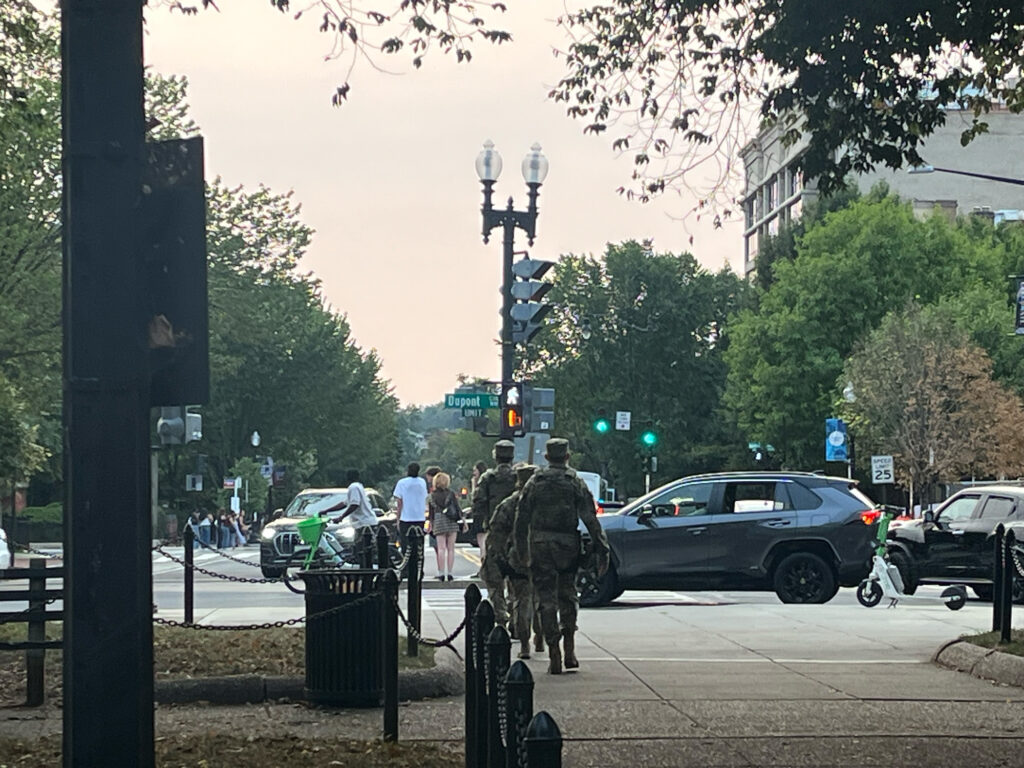
Under Trump, the National Guard has been deployed in ways not seen since the Vietnam War. In June, he deployed nearly 4,000 National Guard troops and 700 Marines to Los Angeles in response to protests against aggressive immigration raids. Since then, he has deployed troops to Memphis, Portland, Chicago and Washington, D.C.
The legality of these deployments has been continuously challenged in courts. In September, the U.S. District Court for the Northern District of California ruled that Trump’s deployment of the National Guard to Los Angeles was illegal under the Posse Comitatus Act, which prohibits the use of the military in civilian law enforcement. In the ruling, U.S. District Court Judge Charles Breyer of the Northern District of California said that sending in the troops would “create a brand-new exception to the Posse Comitatus Act that nullifies the act itself.”
The deployment of the National Guard to Portland was also blocked by the courts. U.S. District Court Judge Karin Immergut, a Trump appointee from Oregon, issued two rulings in October.
“Defendants have made a range of arguments that, if accepted, risk blurring the line between civil and military federal power – to the detriment of this nation,” she wrote.
Immigrants have been targeted extensively under Trump, with ICE raids across the country to achieve mass deportations. The administration claims that nearly two million undocumented immigrants have either been deported or self-deported, while thousands have been held in detention facilities across the country.
U.S. Sen. Chris Murphy of Connecticut, one of Trump’s leading Democratic critics, said that this crackdown on immigrants is “violating one of the most sacred laws of our nation” and is rooted in racism.
“The lies that they’ve perpetuated on the public is that there’s some specific threat posed by immigrants, when in fact the opposite is true,” Murphy said in an interview. “This is a racist trope. The idea that immigrants, and specifically undocumented immigrants are a security threat, is just not true.”
Trump has taken an aggressive approach against state and local elected officials who have criticized his actions. When Illinois governor JB Pritzker and Mayor Brandon Johnson expressed opposition to the National Guard deployment in Chicago, Trump responded in a Truth Social post that “Chicago Mayor should be in jail for failing to protect Ice Officers! Governor Pritzker also!”
Trump also threatened to arrest Zohran Mamdani, who was elected mayor of New York City in November, if he tried to block ICE arrests in the city, which Mamdani vowed to do.
After a group of Democratic lawmakers led by U.S. Sen. Mark Kelly of Arizona released a video telling soldiers that “you can refuse illegal orders,” Trump took to Truth Social to call the video “SEDITIOUS BEHAVIOR, punishable by DEATH!” Kelly has said he has received death threats since Trump’s post.
The administration’s threats have also targeted media organizations. In September, ABC suspended “Jimmy Kimmel Live!” after FCC Chairman Brendan Carr threatened action against the network and parent company Disney for host Jimmy Kimmel’s remarks about the death of Charlie Kirk. The suspension was heralded by Trump, who took to Truth Social to call for NBC to take similar action against comedians Jimmy Fallon and Seth Meyers, too.
Trump has taken legal action against multiple media organizations. He filed a $15 billion defamation lawsuit against The New York Times regarding its coverage of his 2024 campaign. The case was thrown out in September before being refiled in October.
In July, Paramount agreed to pay $16 million to Trump to settle a lawsuit he filed about the editing of a “60 Minutes” interview with Kamala Harris that aired on CBS in October.
Trump’s rhetoric has reinforced the idea that he is cracking down on free speech. In September, he claimed that negative TV coverage about him is “no longer free speech” and said networks should lose licenses for airing content critical of him. After he signed an executive order to crack down on the practice of flag burning, which the Supreme Court has long said is protected under the First Amendment, Trump said that his administration “took the freedom of speech away.”
International students at universities have had their visas revoked and been arrested for publishing op-eds and participating in protests. Among them was Rümeysa Öztürk, a doctoral student at Tufts University in Massachusetts who wrote an op-ed criticizing the university’s response to the Israel-Gaza War and was detained by ICE in March.
Trump has also used his power to target his critics. He pressured grand juries in Virginia to indict New York Attorney General Letitia James and former FBI Director James Comey, two prominent Trump critics, on charges of making false statements. The charges were dismissed in November. John Bolton, who became critical of Trump after serving as National Security Advisor during his first term, was indicted in October under pressure from Trump.
Rule of Law
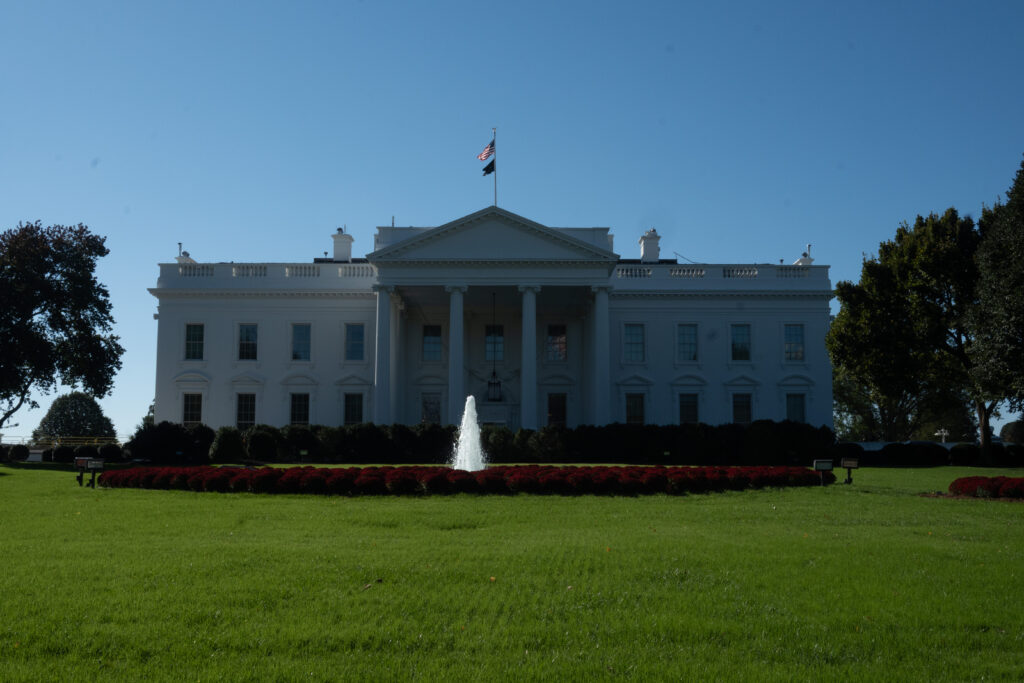
In Trump’s expansive interpretation of executive power, some experts see a blatant disregard for the rule of law.
“It’s tough to describe how little Trump seems to care about the law; I would say he just doesn’t,” said Dan Barrett, legal director of the Connecticut ACLU. “He views it as an externality, it’s just something that affects other people because the way in which he’s attempting to change the law itself violates the law, and the substance almost always does as well.”
The administration has challenged the power of the judicial branch, including ignoring a court order in a fight over deportation flights, and has questioned the authority of judges to rule on the administration’s actions.
“Judges aren’t allowed to control the executive’s legitimate power,” Vice President J.D. Vance said in a post on social media platform X in February.
A month later, House Speaker Mike Johnson, a staunch Trump ally, asserted the power of Congress over federal court budgets and the existence of federal courts.
“We do have authority over the federal courts,” he said. “We can eliminate an entire district court. We do have power over funding over the courts and all these other things. But desperate times call for desperate measures and Congress is going to act.”
Virginia Hettinger, a political science professor at UConn and expert on the judicial branch, said that the current attacks on the federal judiciary are not unprecedented. The Supreme Court’s jurisdiction has been changed by Congress before, but lower courts have not been eliminated. She said that these attacks threaten both the legitimacy and integrity of the courts.
“If the public does not perceive the courts as legitimate, then will they follow those rulings?” she said. “And so then, what effect do attacks on courts have? And I think the threats are significant, potentially, [and] it’s true regardless of who the politician is making those charges. I think that there are some real, critical concerns about damage to the institution.”
Trump has also tried to change who counts as an American. On his first day in office, he issued an executive order that sought to end birthright citizenship for babies born in the U.S. without at least one parent who is a American citizen or lawful permanent resident.
Jon Bauer, a clinical professor at UConn Law focused on immigration law, said that Trump’s executive order directly challenges the Constitution’s guarantee that anyone born in the U.S. is a citizen.
“This executive order just radically changed what the courts have routinely held to be the meaning of the 14th amendment,” he said. “And not surprisingly, in the cases that have challenged the birthright citizenship executive order, all of the courts to hear those cases so far have said that it is unconstitutional and beyond the power of the executive.”
The Supreme Court is set to consider the issue of whether Trump’s order to end birthright citizenship is constitutional sometime in early 2026.
Lily Goldblatt and Sara Bedigian contributed reporting to this article.
You must be logged in to post a comment.