By Sara Bedigian
UConn Journalism
University of Connecticut Professor Jennifer McGarry has spent more than 20 years running a federally funded program that provides nutrition and physical activity support to low-income families in the Greater Hartford area.
UConn received $2 million per year from the Department of Agriculture for the effort, part of a larger $5 million statewide grant.
In late September, McGarry received an email from the federal government saying the grant had been cut — part of the almost $95 million that UConn has lost through reduced, slowed or terminated federal research awards over the past year.
“You’re operating with this level of stress, anxiety, responsibility for yourself and the people that you work with to do the work that you do,” McGarry said. “There’s all the people that would have been helped, supported, kept alive, if that work continued — so that’s pretty heavy to think about.”

Since taking office in January 2025, the Trump administration has canceled previously approved research grants and withheld funding at universities nationwide. Many of the cuts have reflected the administration’s opposition to diversity, equity and inclusion practices as well as greater scrutiny of spending in areas such as climate change and public health.
While UConn has not been individually targeted by Trump or engaged in high-profile battles with the president like other universities such as Harvard, Columbia and Brown, it has been impacted by the administration’s unprecedented research grant cuts and changes to federal funding.
UConn has lost $41 million from research grant terminations and unexpected non-renewals, said Lindsay DiStefano, interim vice president of research. New research awards were down $54 million in fiscal year 2025 compared to fiscal year 2024, bringing the loss to $95 million as of Oct. 15, 2025, she said.
“The research being done at UConn is important — not just to our university, but it makes actual impacts,” DiStefano said. “It makes impacts across the state, across the country, across the world, and making sure that people are supported and continuing to do this incredible work is essential.”
The federal cuts have directly impacted the more than 1,700 faculty, staff or graduate assistants across UConn and UConn Health whose salaries are paid in part by federal grants and programs, according to a September memo from UConn’s Interim Vice President for Finance Reka Wrynn.
Jeffrey Dudas, a political science professor who serves as president of UConn’s chapter of American Association of University Professors, had a two-year $135,000 grant from the National Endowment of Humanities canceled in April after the first year. The grant funded a writing and podcast project that told stories of how artificial intelligence appeared in popular culture over the years.
“We got a one-sentence notice saying that the grant had been canceled, and there was no explanation given,” he said. “There was no reasoning.”
Dudas said although the grant was smaller than many federal grants, it was significant within the Department of Political Science.
More than 1,400 endowment grants valued at $427 million have been terminated nationwide as of April 8, 2025, according to a database created by the Association for Computers and Humanities.
Jason Chang, a professor of history and Asian American Studies who is the department head of social and critical inquiry, had a five-year minority-serving grant from the U.S. Department of Education cut in September. The grant, which Chang had for two years, funded programming at UConn Hartford to increase perseverance, retention and graduation rates for students.
“We know how impactful these programs are, and we’re working to try to reconfigure and reconnect them and rescale the project that’s sustainable with what we have right now, so that we can continue serving students,” he said.
McGarry said she has witnessed a sentiment of fear spread across UConn as faculty worry that years dedicated to federally funded research could come to an end, too.
“There’s just this aura of awfulness,” McGarry said. “It’s just deliberate because it interrupts your ability to focus and have a path or a series of goals for the work that you’re doing.”
Breakdown of federal funding crisis
In addition to terminated grants, there has also been a general deterioration of federal funding dollars and support for indirect costs, such as infrastructure and building maintenance, that drives the research apparatus at large, said Nathan Alder, professor of molecular and cellular biology and co-chair of the federal funds committee for UConn AAUP.
Alder researches chronic diseases to develop drugs. His lab is primarily funded through the National Science Foundation or through the National Institutes of Health, he said.
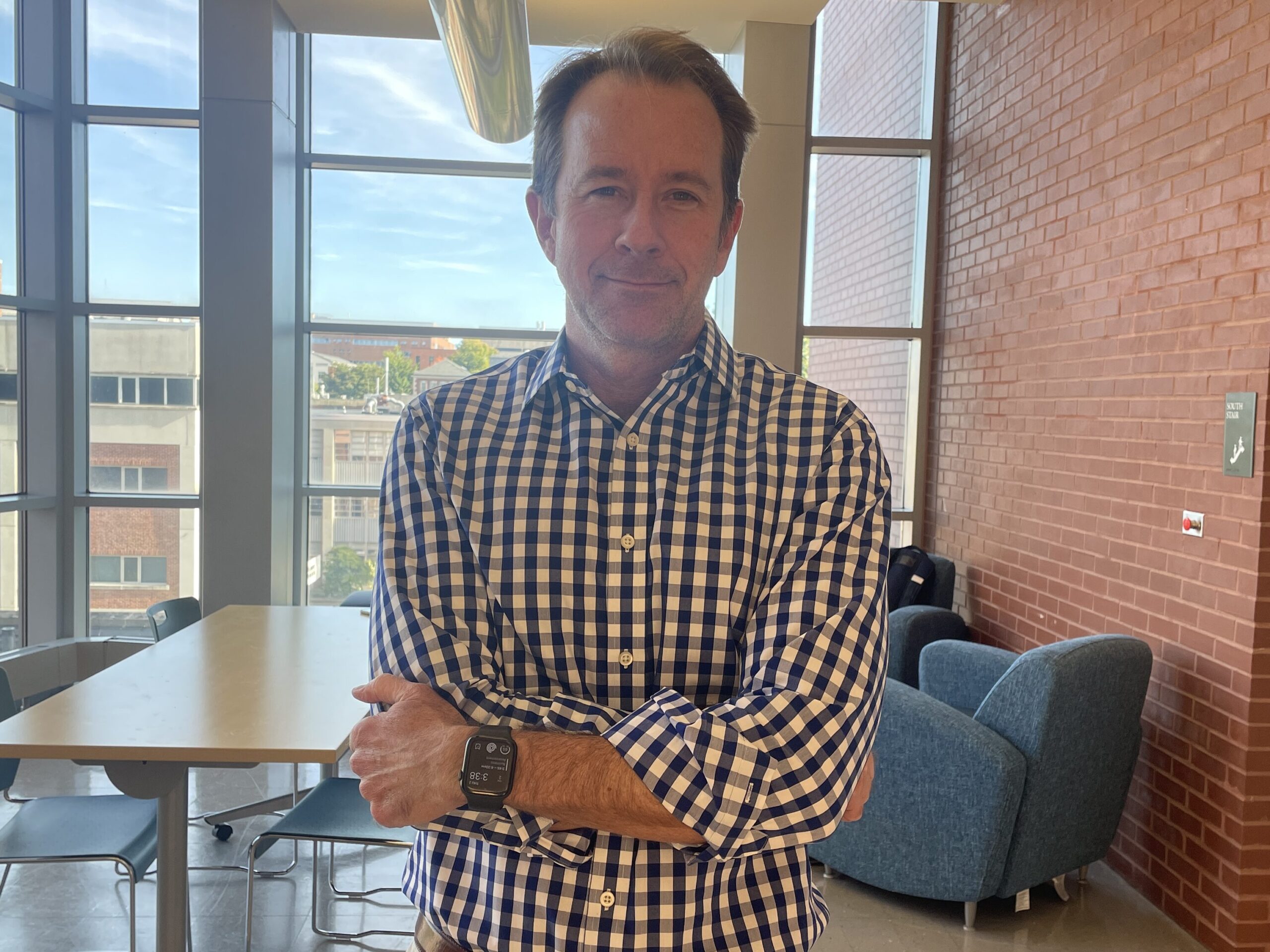
In the first six months of Trump’s second term, NIH terminated 2,100 research grants totaling $9.5 billion, according to a June letter from NIH staff members. In a separate mandate from the Trump administration in April, an additional $2.6 billion in contracts were eliminated, according to American Association for the Advancement of Science.
A Boston-based federal appeals court ruled on Jan. 5 that the Trump administration cannot cut billions of dollars provided by the NIH to universities for medical and scientific research, according to a press release from Massachusetts Attorney General Andrea Joy Campbell. Campbell spearheaded the legal challenge last April, joined by several other states, including Connecticut.
NSF had terminated more than 1,600 active grants, valued at roughly $1.5 billion, as of May, according to the New York Times.
Although Alder has so far been able to renew his grants as normal, he said the competition has greatly increased. While typically about one in 10 projects were funded, that has fallen to about one in 50, he said. With the decrease in available federal funds, Alder said he is looking to privatize his research by exploring alternative funding with industry partners to support his lab. He said other researchers are looking to do the same.
“This is not what we are used to,” he said. “We’re all having to figure out how to reposition ourselves and keep our research programs afloat in a system that has been almost 100% reliant on federal dollars.”
In addition to funding availability, the federal government has limited the ability of researchers to receive reimbursement for indirect costs that pay for things like building maintenance, electricity and other costs required for research. UConn is projecting an additional $34 million annual loss across all campuses if the federal government limits reimbursement rates for indirect costs to 15% as it has proposed, DiStefano said in an announcement to faculty in October.
UConn has paused the distribution of fiscal year 2025 indirect cost reimbursements scheduled for December 2025. DiStefano said the decision on whether to distribute these funds will be assessed in early 2026 based on the federal funding climate.
National impact
Alder said that cuts to academic research will have drastic consequences in the country’s future.
“We’re really seeing an intellectual drain in this country,” Alder said.
He said he has seen a drastic decrease in professor and research jobs that are available now compared to this time last year, and he is concerned with his graduate students’ job prospects due to the increased competition.
“The rippling effect…is going to affect the research apparatus downstream for years and years, even if things got better today,” he said.
The Trump administration has offered some universities prioritized access to federal funding if they agree to a set of conditions proposed in a compact letter. These include limiting international students, eliminating DEI initiatives, restricting employees from expressing political views on behalf of the institution, and shutting down departments that “punish, belittle” or “spark violence against conservative ideas.”
UConn has not received the compact letter, and officials have said they would not accept the deal if it were offered to the university.
“Whatever is stated there must be illegal,” Interim Provost and Executive Vice President Pamir Alpay told the University Senate in October. “Obviously that is not in agreement with our philosophy at UConn.”
UConn’s response
UConn has been working to supplement some lost federal funding through its Emergency Research Grant Expenditure Fund.
The fund was created in spring 2025 to provide short-term support for less than a year to researchers whose grants were terminated, DiStefano said. As of Oct. 20, 12 awards had been granted, totaling $1.6 million.
She said the priority was to prevent or minimize layoffs and protect graduate students receiving research funds so they would still be on schedule to complete their degrees.
“At this point, it has been productive, and we are doing everything that we can,” DiStefano said.

DiStefano said although the past year has been challenging, she has worked to ensure open lines of communication by conducting weekly meetings with research teams, institute directors and leadership of the Office of the Vice President for Research.
After the election, she said the office opened up a triage inbox for their email that started being monitored around the clock so anyone with questions could be met with a fast response.
Ad hoc task forces were created across the university to facilitate communication and help investigators pursue other sources of funding if their programs were changed. DiStefano said the office started holding workshops for faculty to talk about their research and strengthen relationships with industry partners.
UConn’s AAUP created an ad hoc federal funds committee, led by Alder and McGarry, to work with Office of Vice President for Research to get information and share facts with faculty.
“Information has just been flowing like a fire hose; it changes day to day,” Alder said. “The role of our committee has been to just sort of trying to make sense of everything.”
While McGarry has lost nearly $2 million from the federal government, she was granted some funding from the emergency fund to continue research and keep staff and programming through the fall semester.
But the funding did not provide her with the reduced teaching load she had with the canceled grant. This has meant less time for research.
“There are not enough hours in the day,” she said. “All the ripples are there.”
You must be logged in to post a comment.