By Anna Heqimi & Karla Perez
UConn Journalism
Two high school students. Eighteen minors. Hundreds of arrests in nearly 20 different towns. Ramped up immigration enforcement efforts have affected communities across Connecticut.
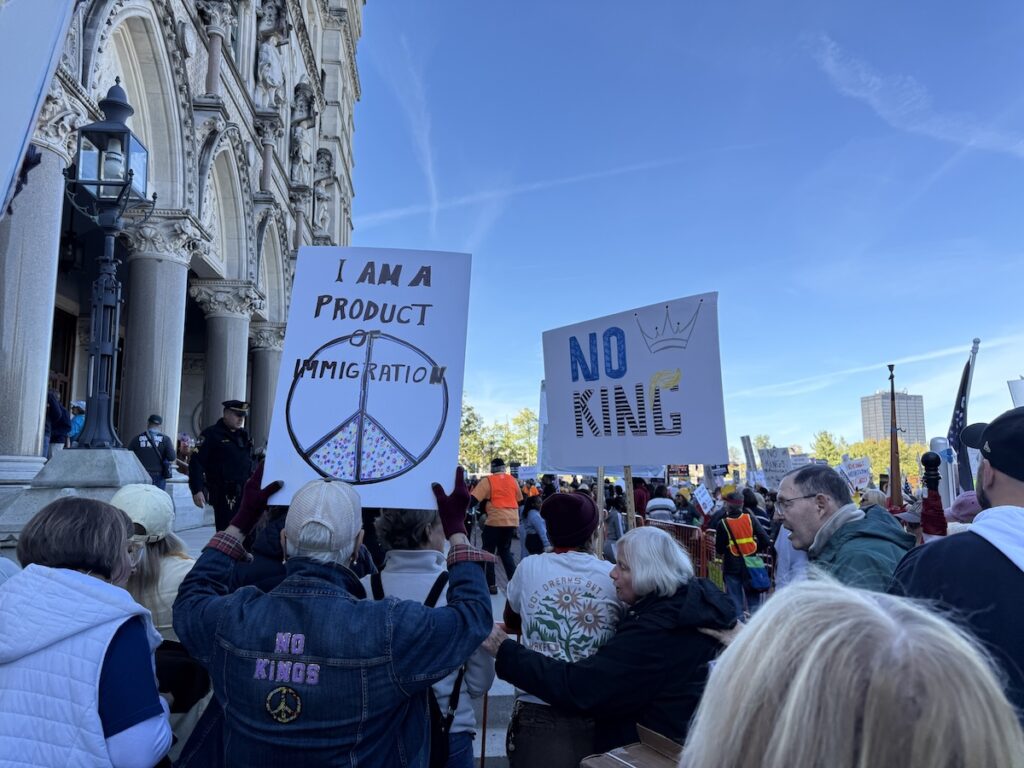
In just the first six months of President Donald Trump’s second term, Immigration and Customs Enforcement made almost 400 arrests in Connecticut, according to the Deportation Data Project. While the administration claimed it would target “the worst of the worst” immigrants, ICE has instead cast a broad net in its apprehensions. The arrests have instilled fear among many non-citizens in Connecticut, regardless of age, occupation or legal status.
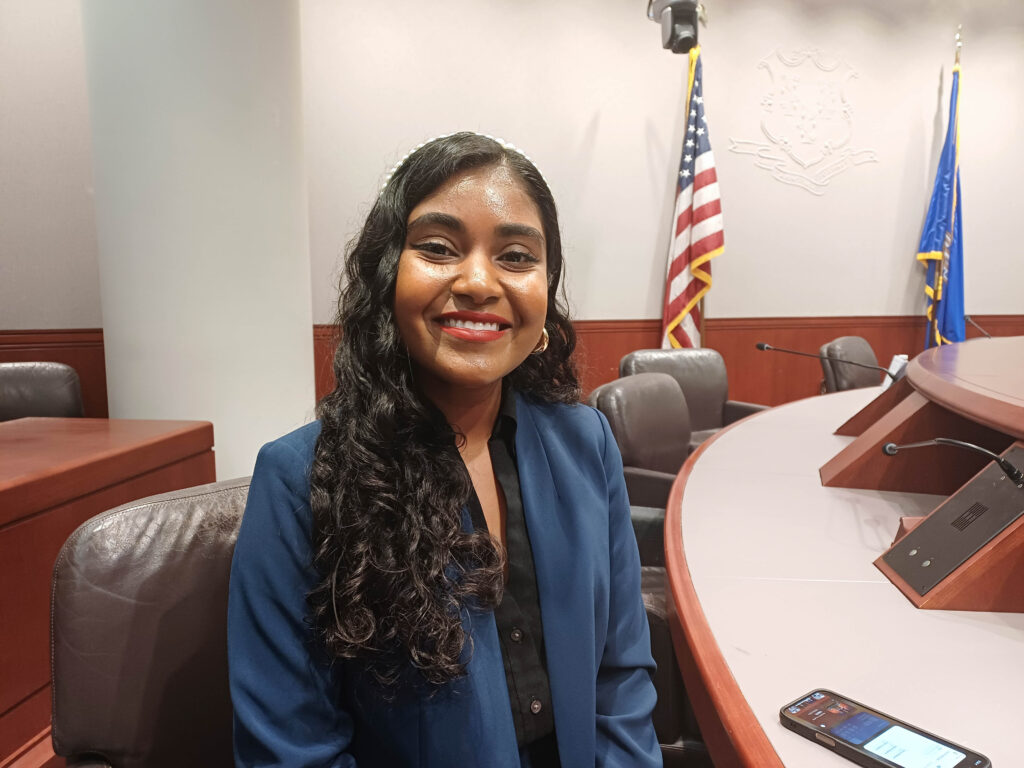
“Students are nervous about going to college. Parents are not sending their younger students to school. Folks are not going to school,” said Tabitha Sookdeo, executive director for Connecticut Students for a Dream.
Foreign-born residents made up nearly 16% of Connecticut’s total population in 2024, according to the U.S. Census Bureau. Nearly 200,000 immigrants in the state were undocumented as of 2023, according to the Migration Policy Institute.
Several major ICE operations have taken place in Connecticut since Trump came back to office. Among them were at least two raids targeting employees at car washes. The largest enforcement effort, Operation Broken Trust, occurred over four days in August 2025 throughout Danbury, Stamford and Norwalk, resulting in 65 arrests. This included 29 arrests of people that ICE said had been convicted or charged in the U.S. with crimes.
In promoting the operation’s success, ICE took aim at the Connecticut Trust Act, the state law that restricts state and local law enforcement agencies from helping ICE enforce federal immigration laws.
“Connecticut is a sanctuary no more,” the agency declared in a press release.
“Make no mistake: Every person that we arrested are criminals and breaking federal law, but many of these individuals also victimized innocent people and traumatized communities — rapists, drug traffickers, child sex predators and members of violent transnational criminal gangs,” said Patricia H. Hyde, the ICE Enforcement and Removal Operations Boston acting Field Office Director. “They all made the mistake of attempting to subvert justice by hiding out in Connecticut.”
Activists have disputed the agency’s characterization of all those arrested as having criminal records. In some cases, those who have been arrested by ICE in Connecticut were high school students.
Dr. Madeline Negrón, superintendent of New Haven Public Schools, said the community joined together to bring home Esdrás Zabaleta-Ramirez, a student at Wilbur Cross High School who was detained in July at a Southington car wash where he worked.
“There’s a strong coalition in this city by which we come together to prepare, because we knew this time could come,” said Negrón, who moved to the U.S. from Puerto Rico when she was 10 years old, not knowing a word of English. Though she was a U.S. citizen, she said she remembered feeling like an outsider — a sentiment she sees in immigrant students today.
“The fear was always there; it has just intensified more,” she said.
Due Process
Immigrants and advocates say the Trump administration’s detainment practices have been notably more hostile and aggressive. Social media videos have shown individuals being shoved onto the ground and tased. Many of these incidents occurred in courthouses when people showed up for immigration hearings.
Once detained, immigrants say they have faced deplorable living conditions such as overcrowding and malnutrition. The American Immigration Council said there have been 22 detainee deaths since Trump took office, while ICE has said only 15 deaths occurred in that timeframe.
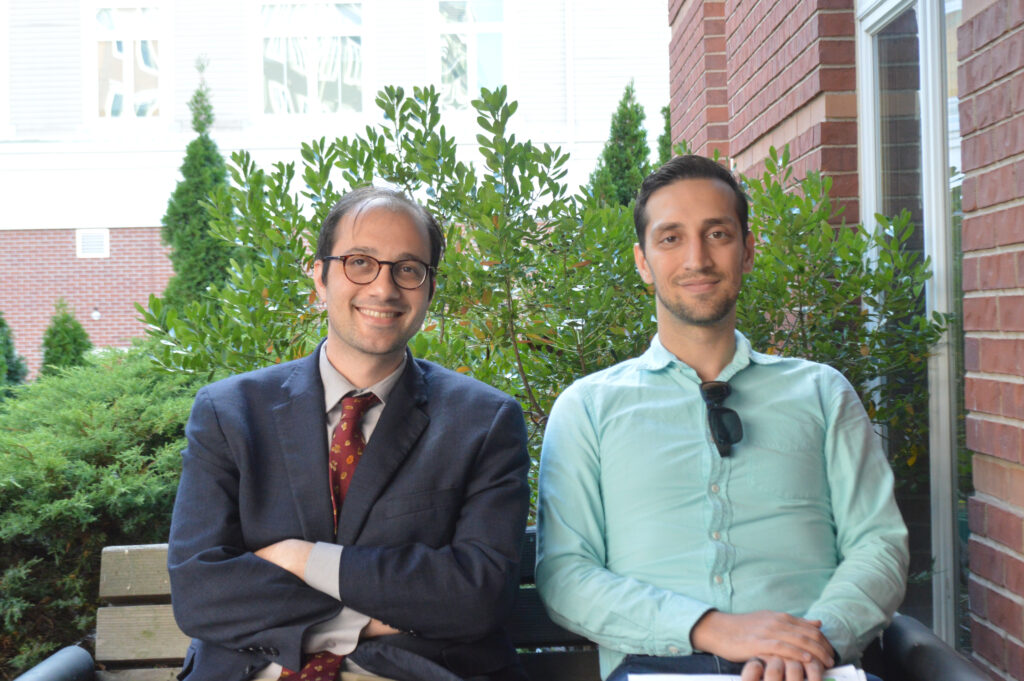
Saifullah Khan, who lives in New Haven, spent three weeks in ICE custody after being detained during an immigration status hearing at the Abraham A. Ribicoff Federal Building and U.S. Courthouse in Hartford. Khan, who immigrated to the U.S. from Afghanistan and enrolled at Yale University in 2012, was charged at by a group of masked ICE agents as he was leaving the courthouse. He said he ran because he was scared. Agents tackled him to the ground and tased him.
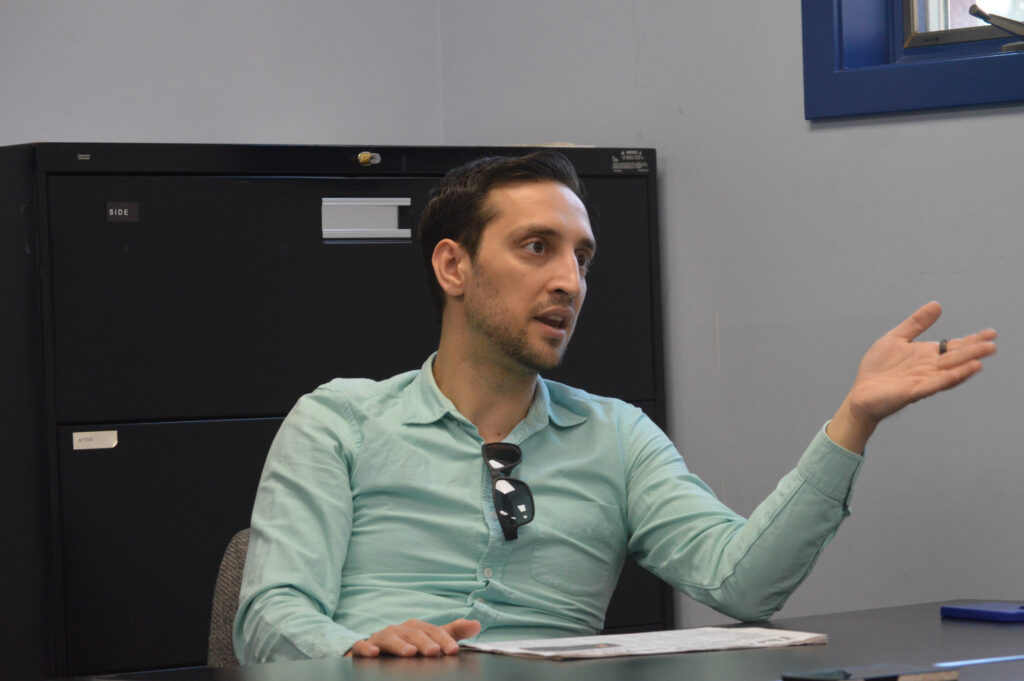
“The right side of my entire body, including my face, was just paralyzed. I couldn’t feel. I didn’t have sensation. I couldn’t move,” he recounted.
Khan said he was dragged to a holding cell under the courthouse. The officers shackled his hands and feet and refused to let him go to the bathroom, leaving him to sit in his own urine for hours, he said. Khan remained in that holding cell for three days before being transferred to Plymouth County Correctional Facility in Massachusetts, where he was held in maximum security.
Connecticut does not have an ICE detention facility; therefore, most people detained by ICE are shipped to either the Plymouth County facility or Moshannon Valley Processing Center in Pennsylvania. As of Dec. 10, 2025, there are more than 500 ICE detainees in the Plymouth facility, according to the Plymouth County Sherrif’s Department. ICE did not respond to inquiries about how many of those people were arrested in Connecticut.
According to Khan and his attorney, Alexander Taubes, Khan’s bond was posted immediately, but ICE disregarded it, instead shipping him off to the Pennsylvania facility. Khan said he was denied food and given only one bottle of water during the 18-hour journey in the summer heat.
University of Connecticut Professor Charles Venator-Santiago, who teaches a course titled “United States Constitutional Dictatorship,” called ICE agents’ immigration enforcement, “movie-style raids” as they grab people while wearing masks and in unmarked vehicles. “This is more of a show of force, to scare people,” he said.
Dan Barrett, legal director of the American Civil Liberties Union of Connecticut, said he believes that there have been violations of the Fifth Amendment in immigration cases. The Fifth Amendment states that no person shall “be deprived of life, liberty, or property, without due process of law.”
In many cases, the Trump administration is deporting immigrants without going through immigration courts, Barrett said.
“To eject the number of people that it’s decided capriciously to eject from the country, it must act unilaterally, which is the definition of an absence of due process,” Barrett said.
Barrett said the Supreme Court established in a 1976 case that due process requires “meaningful opportunity to be heard.” Every person, regardless of immigration status, is entitled to due process, Barrett said.
“If you are physically present, you are subject to American law. One American law is the United States Constitution … That’s true both federally and on the state level,” he said. “If you’re physically present here, then you have the protections, for example, of the due process clause.”
Jon Bauer, a clinical professor at UConn School of Law, operates the university’s Asylum and Human Rights Clinic that represents clients applying for asylum in the U.S. His clients have fled from their home countries to escape violence due to their gender or sexual orientation, religious or political persecution or some other danger.
Bauer said that one of the ways the Trump administration has undermined due process has been by reinterpreting the law to deny people the right to a hearing and to keep noncitizens in prolonged detention. He said that the administration has decided that anyone who entered the country without a visa is no longer entitled to a bond hearing, for example.
“That’s another area where in just about every case where a court has reviewed this new policy, the courts have found that it’s legally unfounded, and in fact, people are entitled to a bond hearing,” he said.
Bauer said the administration is also attempting to exploit executive orders in another part of the immigration debate: the quest to change who qualifies for birthright citizenship.
Birthright Citizenship
One of the eight executive orders regarding immigration that Trump signed on his first day back in the White House targeted birthright citizenship. This order aimed to deny citizenship to children born on U.S. soil if neither their parents had legal permanent status when the child was born.
Bauer said this order directly contradicts how the Supreme Court has interpreted birthright citizenship for more than a century.
“The Fourteenth Amendment to the Constitution, which has been in effect since 1868, says ‘all persons born or naturalized in the United States and subject to the jurisdiction thereof, are citizens of the United States and of the state wherein they reside.’ So, on the face of things, it could not be clearer that people born in the United States are citizens of the United States,” he said.
The common law doctrine of birthright citizenship was established even earlier, during the founding of the U.S. as the nation seceded from England, Bauer said. He explained the logic that people are subject to the jurisdiction of the land they are present in. The Trump administration’s view that children born to noncitizens who lack permanent status is nonsensical, he explained. Anyone born in the U.S. is obliged to follow U.S. laws and can be prosecuted for any crimes they commit — so they are clearly subject to the U.S.‘s jurisdiction, he said.
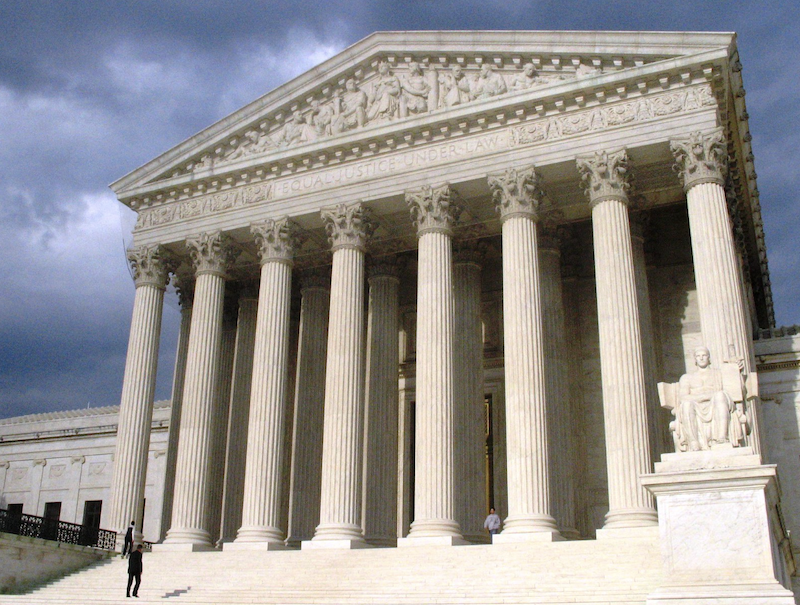
“This order just radically changed what the courts have routinely held to be the meaning of the Fourteenth Amendment,” Bauer said.
Connecticut Attorney General William Tong said that the order, if enforced, would raise a slew of questions including whether children born in the U.S. to immigrant parents become stateless.
Tong’s parents immigrated to the U.S. from China and Taiwan in the 1960s. He was granted citizenship because he was born in the U.S. He grew up working in his family’s restaurant in Wethersfield, Conn. alongside immigrants and saw their strong work ethic first-hand.
“I am extraordinarily grateful to be an American and to have been born in this country and American by operation of the Fourteenth Amendment,” Tong said.
When Trump signed the executive order on his first day back in office, federal judges from several states issued injunctions that temporarily blocked it from being implemented. In March, the Trump administration asked the Supreme Court to prohibit lower courts from doing this. In a 6–3 vote, the court rejected the injunctions. In early October, though, the First Circuit Court of Appeals upheld the Boston district court’s injunction and declared Trump’s attempt to end birthright citizenship unconstitutional.
On Dec. 5, the Supreme Court said it will hear arguments on birthright citizenship in the spring, with a ruling expected by early summer.
Expanding ICE
The federal budget bill signed in July allocates over $170 billion to ICE-related costs over a four-year period to achieve the administration’s goal of deporting one million immigrants yearly, tripling ICE’s annual budget and making it the highest-funded federal law enforcement agency.
According to the American Immigration Council, $45 billion is intended for building new immigration detention centers such as “Alligator Alcatraz,” which began operations in Florida in July. Another $46.6 billion was dedicated to constructing the wall at the U.S.-Mexico border.
Congress had already appropriated $10 billion for fiscal year 2025. With these new allocations, ICE enforcement received another $18.7 billion, according to the Brennan Center for Justice.
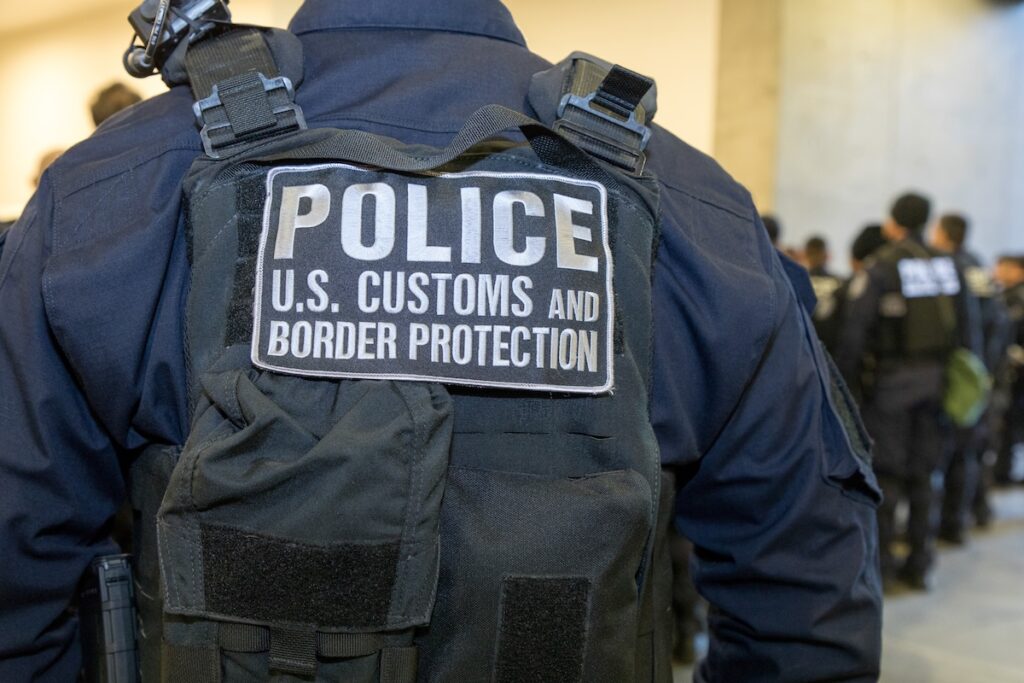
The federal budget bill also changed benefits available to non-citizens through federal food assistance and heath care programs.
“Individuals such as refugees, asylees, trafficking victims, humanitarian parolees and more who currently qualify for SNAP will no longer be eligible due to their immigration status,” the Connecticut Department of Social Services stated in July on its website. The aforementioned groups will also no longer be eligible for HUSKY Health, the state’s Medicaid program, as of Oct. 1, 2026, according to the website.
Connecticut Trust Act
Connecticut state law restricts local and state law enforcement from cooperating with ICE agents, leading Trump to brand Connecticut as a “sanctuary” state and threatening to punish municipalities with a loss of federal funding if they don’t assist ICE officers.
The Connecticut Trust Act was enacted in 2013 to establish guidance about when state and local law enforcement would acknowledge requests from ICE. The act prohibits law enforcement from arresting or detaining an individual unless that person has been convicted of a serious felony or is on a terrorist watch list.
“The Trust Act maintains Connecticut’s sovereignty by preventing deputization of local and state law enforcement for immigration enforcement,” Connecticut Special Counsel for Civil Rights Janelle Medeiros wrote in a January 2025 memorandum.

Immigration attorney Edwin Colon said that the legislature requires police departments and other state and government organizations to comply with the statute. However, some exemptions apply, such as when police deal with terrorists. While Trump portrays such laws as attempts to protect illegal immigrants, Colon said the laws are important to protect the larger community.
“You want your neighbors, regardless of status, to be able to feel comfortable and safe in reporting criminal acts that happen in your community,” Colon said. “You want that neighbor who suffered an assault to be able to report to a police department that the assault occurred, so it doesn’t happen to their neighbor next door.”
Connecticut police departments contacted for this article confirmed their compliance with the Trust Act.
“When Troopers interact with members of the community, they do not have knowledge of an individual’s immigration status,” an email from the Connecticut State Police’s media relations unit stated. “As such, their interactions remain fair and unbiased.”
UConn Police Department Capt. Matthew Zadrowski said in an email that their work “is in line with the Trust Act.”
More than 90 groups in Connecticut committed to immigrant rights sent a letter to state lawmakers in early September calling for action to strengthen the Connecticut Trust Act. The calls to action included prohibiting ICE arrests at courthouses, including travel to and from them, and prohibiting any and all indirect police assistance to ICE.
In early November, Connecticut lawmakers passed and Gov. Ned Lamont signed House Bill 8004, which prohibits most civil immigration arrests in state courthouses. Additionally, the law restricts Connecticut from sharing personal information with federal authorities, such as any information that reveals an individual’s location, including house, school and work addresses – except when required by state or federal law.
The new law also prohibits law enforcement officers – including ICE agents – from wearing masks while carrying out their duties if they don’t have a medical exemption.
U.S. Rep. John Larson, a Democrat representing Connecticut’s First District, introduced a bill in Congress called the “No Secret Police Act,” which would prohibit ICE agents from wearing masks while performing enforcement duties. According to Homeland Security, ICE officers wear masks to prevent doxing.
“All ICE law enforcement officers carry badges and credentials and will identify themselves when required for public safety or legal necessity,” according to ICE.
Larson said that ICE agents wearing masks give policing a bad name.
“What police force do you know that wears black masks and comes up and terrorizes people, and strikes fear?” Larson said in an interview. “This is not the America that it should be, and it certainly isn’t constitutional either.”
The Department of Homeland Security blasted Larson for his comments calling ICE agents “the SS” and “the Gestapo” for arresting illegal immigrants.
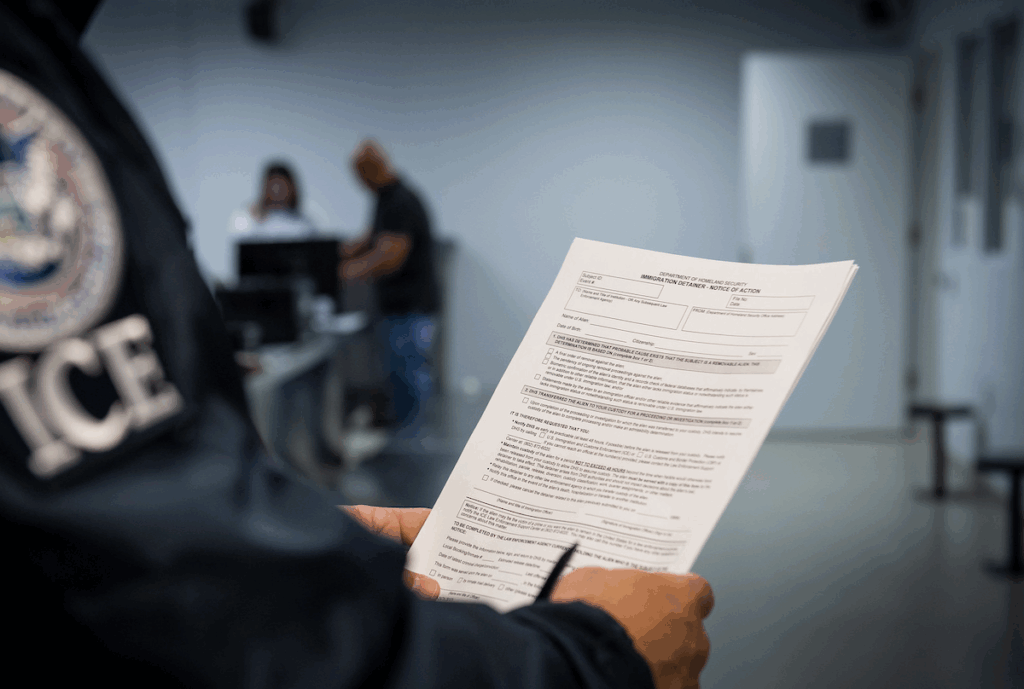
In a mid-September press release, the U.S. Department of Homeland Security said that there is a 1000% increase in ICE officer assaults that it blamed on “hateful rhetoric.” It named Larson, other democrats and left-leaning organizations in the press release.
“This demonization is inspiring violence across the country,” Assistant Secretary for Public Affairs Tricia McLaughlin said in the release.
Larson said he is undeterred.
“Any time you’re being singled out by the Trump administration, given his performance and what he has done, and the brutal nature of what transpired in my district, I wear it as a badge of honor,” he said. “I think it’s important that people speak out when we see wrong.”
Immigration attorney Dana Bucin said she believes the U.S. immigration system has been broken for many years, enabling Trump’s massive deportation plan.
“The first guilt that I assign is to us, the American people. There would be no Trump abuses if it weren’t for the American people having failed their duty to create a fair and equitable immigration legislative framework,” she said. “We already delivered to this administration a broken set of laws that the administration can just abuse and inflict on immigrants.”
You must be logged in to post a comment.