By Jenna Outcalt
UConn Journalism
New Englanders deal with some of the highest energy costs in the country, but the construction of an offshore wind farm promised lower prices as well as new jobs for the region.
Then came President Donald Trump, who had been feuding with the wind energy industry since before he even entered politics. He has accused wind farms of ruining landscapes and killing birds and whales and falsely claimed their energy is more expensive than other traditional forms of energy.
However, his opposition to wind farms is also political.
“He doesn’t like renewable energy — but he doesn’t like renewable energy only because he thinks that Democrats like it, and anything that Democrats like must be bad,” U.S. Sen. Chris Murphy, a Democrat from Connecticut, said in an interview.
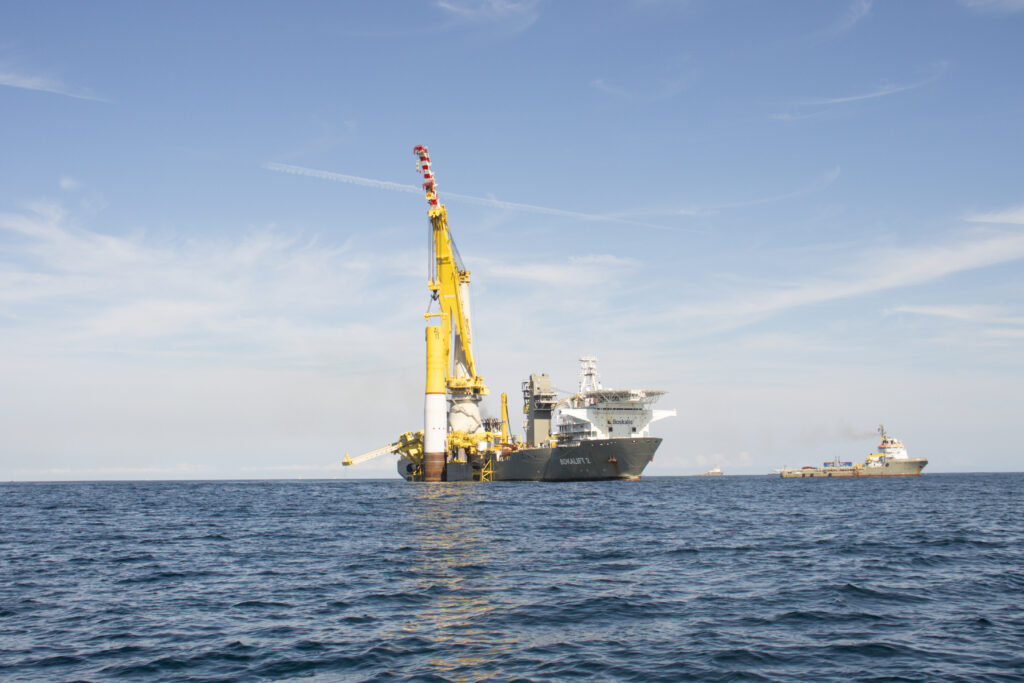
Revolution Wind, a 65-turbine wind farm off the coast of Connecticut and Rhode Island, promised to bring 304 and 400 megawatts of clean energy, respectively, to the states. The project catalyzed a remodeling of New London’s State Pier and was estimated to create “more than 2,000 direct jobs across construction, manufacturing, shipbuilding, and operations,” according to its website.
But the wind farm quickly became a target in Trump’s second term, with his administration halting construction and seeking to close it down as part of unprecedented executive interference with state energy projects. What ensued was a saga of legal battles between the federal government and the companies and states involved that probes the limit of a president’s power to reverse decisions of previous administrations on ideological grounds.
Connecticut Attorney General William Tong said the Trump administration’s actions violated the Administrative Procedure Act and the government’s authority under the Outer Continental Shelf Lands Act.
“We’re asking the court to step in right now, to recognize the irreparable and immediate harm we are suffering, and to stop the Trump Administration’s impulsive and lawless overreach,” Tong said in a September press release.
A federal judge allowed construction on the wind farm to resume in fall 2025, but the Trump administration has vowed to continue the fight against it.
History of Revolution Wind
Revolution Wind began in 2018 with a call for renewable energy proposals. Connecticut chose a proposal for an offshore wind farm by Deepwater Wind, a company that was soon acquired by Danish energy company Ørsted.
Onshore construction began in 2023, making New London a central location for offshore wind manufacturing.
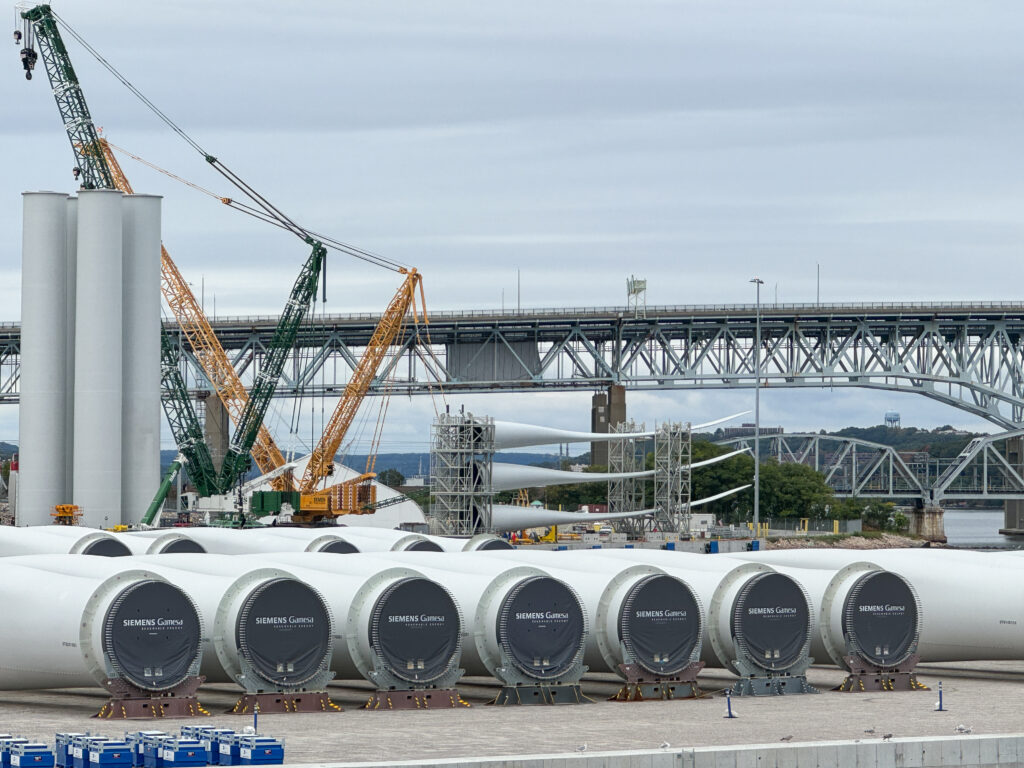
“This will not only begin a new era of renewable energy in our state, but it also means that hundreds of in-demand jobs will be supported in the New London region, bringing a positive economic impact to the area and setting Connecticut on a path to become the premier commercial east coast hub for this sector,” Connecticut Gov. Ned Lamont said in a press release at the time.
While environmental advocacy groups and academics praised offshore wind as a key strategy in the battle against climate change, some groups rose in opposition to the project, citing environmental concerns about the construction and operation of the wind turbines.
One group, Green Oceans, emphasized sea life health with a particular focus on whales and the industrialization of the ocean as its main reasons for opposing the offshore wind industry.
“Maintaining a healthy ocean and protecting biodiversity is our best defense against climate change,” Green Oceans stated in a white paper. “To assume that a particular technology will benefit climate change without proof could lead to irreversible harm.”
Other environmental advocates, however, disagreed with this reasoning.
Darrèll Brown, the vice president of Conservation Law Foundation in Rhode Island, said the biggest threat to the ocean is climate change – which wind energy helps mitigate by lowering reliance on fossil fuels. Without offshore wind energy, “we’re putting ourselves behind the eight ball in terms of addressing the need to reduce greenhouse gas emissions,” he said.
“We will not be able to meet those goals if we don’t have offshore wind,” Brown said.
Nathaniel Trumbull, an associate professor of geography at the University of Connecticut, said offshore wind’s efficacy must be considered in light of the global climate crisis.
“Our way forward is renewable energy,” he said. “This is Connecticut’s best shot at fulfilling some of our efforts to mitigate and turn the page on energy consumption.”
Evan Ward, head of marine sciences at UConn, agreed.
“We have to get a handle on climate change. That’s the existential threat,” he said. “Anything we can do to mitigate climate change is good.”
Industries working with offshore wind construction were also quick to come to its defense. Among those companies was ThayerMahan, which was responsible for bubble curtain technology that dampened underwater construction sounds to avoid disrupting wildlife. Ali Halvordson, the vice president for business operations at ThayerMahan, said offshore wind was holding itself to a much higher standard than other marine industries, especially in terms of wildlife protection.
“The offshore wind industry has requirements to protect the environment, and one aspect of that is marine life,” Halvordson said. “I would say that the offshore wind industry is doing more than any other industry to protect the whales. It’s the only industry right now that has requirements.”
Although they emphasized environmental concerns, local opposition movements often had ties to larger fossil fuel interests and conservative think tanks, according to a report from Brown University’s Climate Development Lab called “Against the Wind.” Timmons Roberts, one of the authors, said although local groups weren’t always directly funded by these larger organizations, they had ties to them through the information they shared.
“As we say in that report, they’re receiving an information subsidy,” Roberts said. “And that information includes strategies and tactics, as well as talking points and memes and social media posts, and on and on.”
Nonetheless, groups like Green Oceans, which denied any association with fossil fuel interests, sometimes encouraged single-issue voting. During the 2024 presidential campaign — as turbines were being installed offshore for the Revolution Wind project — the group encouraged voters to support Trump because of his promise to dismantle the offshore wind industry in the U.S.
Trump’s attacks on wind energy
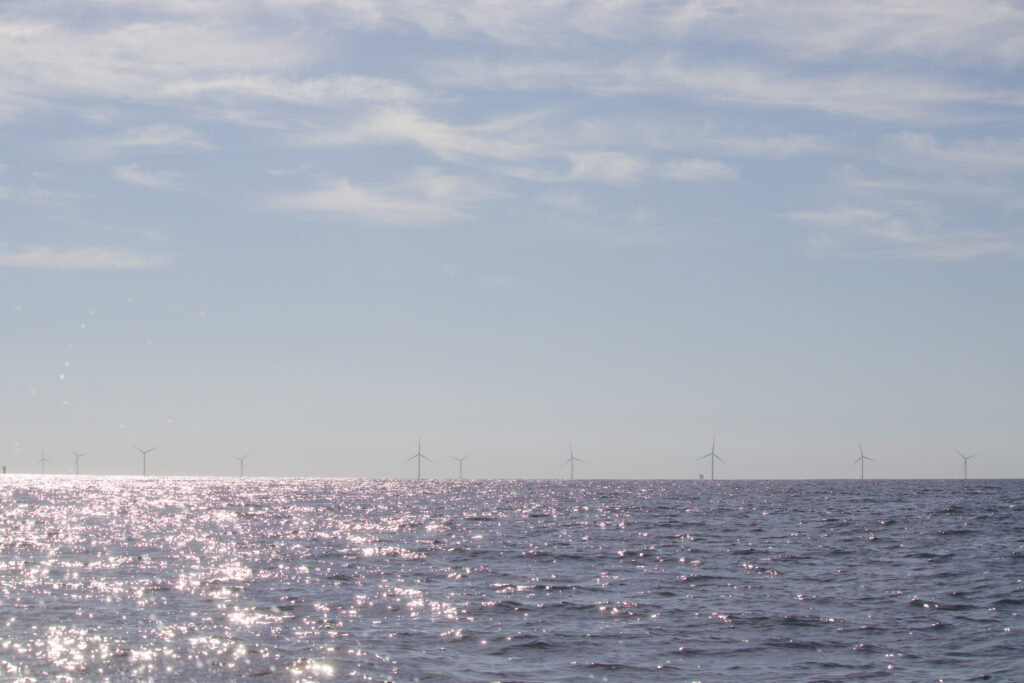
Trump has a long history of criticizing wind turbines, accusing them of killing animals, ruining views and failing to provide consistent energy. In 2015, he lost a legal battle to prevent a wind farm near his golf course in Scotland but vowed to “spend whatever monies are necessary to see these huge and unsightly industrial wind turbines are never constructed,” according to the BBC.
When he visited Scotland in 2025, he expressed a similar sentiment.
“You’re ruining your countries. I really mean it. It’s so sad. You fly over and you see these windmills all over the place, ruining your beautiful fields and valleys and killing your birds. And if they’re stuck in the ocean, ruining your oceans,” he said, according to the Associated Press.
On the first day of his second term in January 2025, Trump made good on his promise to stifle the wind energy industry. He issued an executive order calling for the reevaluation of offshore wind projects. Although the executive order primarily blocked the use of ocean areas for future wind farms, it also addressed the construction of wind farms that were already approved.
“With respect to such existing leases, the Secretary of the Interior, in consultation with the Attorney General as needed, shall conduct a comprehensive review of the ecological, economic, and environmental necessity of terminating or amending any existing wind energy leases, identifying any legal bases for such removal, and submit a report with recommendations to the President,” the order states.
Connecticut joined a coalition challenging the legality of the executive order in May.
Then in August, federal regulators issued a stop-work order for Revolution Wind that borrowed language from Trump’s executive order. Revolution Wind was already fully permitted, and all state and federal funding for it had been fully allocated. Construction was about 80% complete, according to Ørsted. Tong and Rhode Island Attorney General Peter Neronha sued in federal court in September, seeking a preliminary injunction against the stop-work order.
The Trump administration’s strategy is to “break it all apart, blow it up so that the fossil fuel companies can make as much money as they possibly can in the short term,” Tong said in an interview.
The lawsuit is one of dozens of lawsuits that Connecticut has joined against federal actions since Trump took office, including several involving environmental health.
“Our strategy is to be a firewall and to sue where we can — stand up for clean air, clean water where we can,” Tong said.
Because the Revolution Wind project had gone through all the hurdles and rigor of being permitted, the federal government’s action was illegitimate, Tong said. If these questions “had not been addressed, it would not have been permitted,” he said.
A U.S. District Court judge ruled on Sept. 22 in a parallel case filed in the District of Columbia by Ørsted that construction of the project could continue.
The Trump administration indicated that they would continue the legal fight against Revolution Wind.
“This will not be the final say on the matter,” White House spokesperson Anna Kelly said in response to the decision, Politico reported.
On Dec. 8, a federal judge ruled in favor of Connecticut and the other states challenging Trump’s original executive order.
“Trump’s erratic attacks on wind energy and his bizarre rants about windmills never made any sense. He was going to jack up energy costs for American families and businesses, further our reliance on fossil fuels and foreign oil, and throw workers off good jobs,” Tong said in a press release the day after the ruling. “We sued, we won, and I’m going to keep fighting to protect Connecticut’s ability to secure our own energy future that makes sense for our costs and climate.”
Construction on the wind farm continued until Dec. 22, when the Department of Interior suspended leases for five offshore wind farms, including Revolution Wind, saying it needed time to assess security risks. Tong released a statement that same day saying this was an “even more lawless and erratic” attempt to stall the project. He said the state was looking at its legal options to stop the new attack on the wind farm. Connecticut and Rhode Island filed a request for a preliminary injunction on Jan. 5.
UConn Journalism students Patrick Boots, Emily Markelon and Amanda McCard contributed reporting to this article.
You must be logged in to post a comment.