By Jenna Outcalt
UConn Journalism
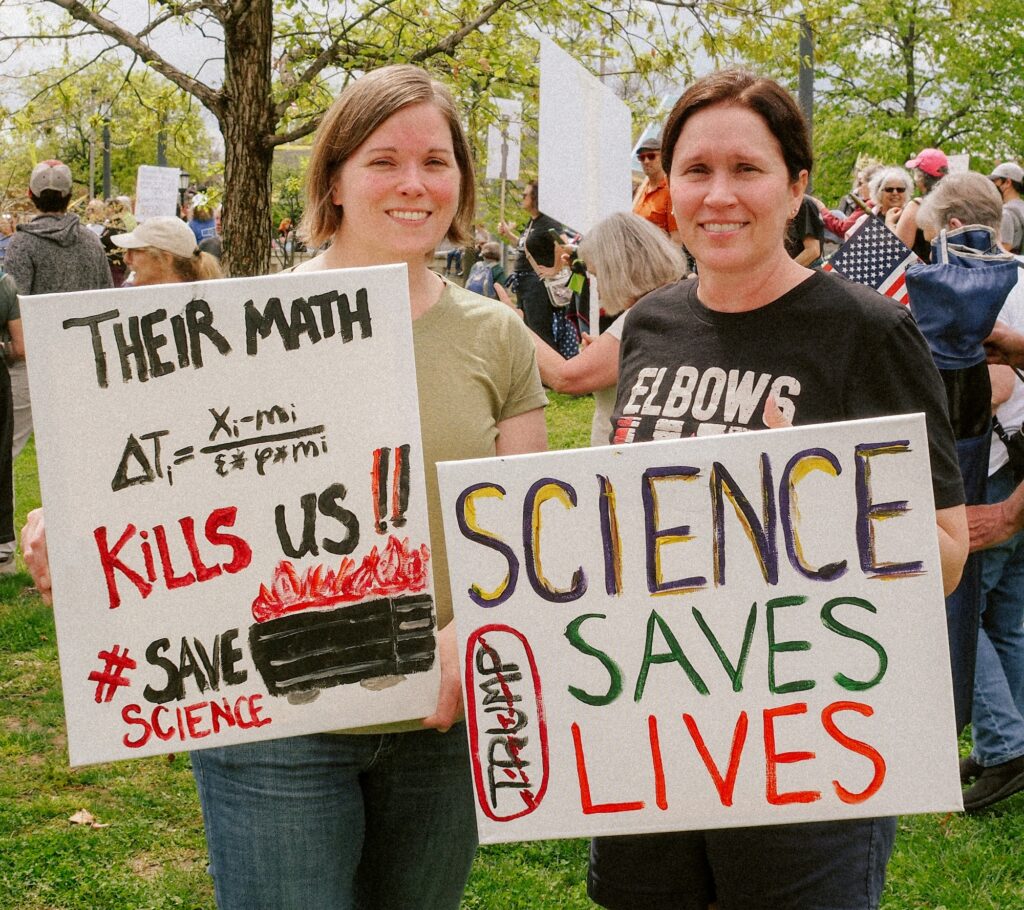
The United States has long been a leader in scientific research and a collaborator with other countries and state governments on public health and other scientific endeavors.
But after a year of misleading claims about vaccines, climate change and other scientific issues and cuts to research funding, the future of research and regulations on health and the environment has been thrown into turmoil.
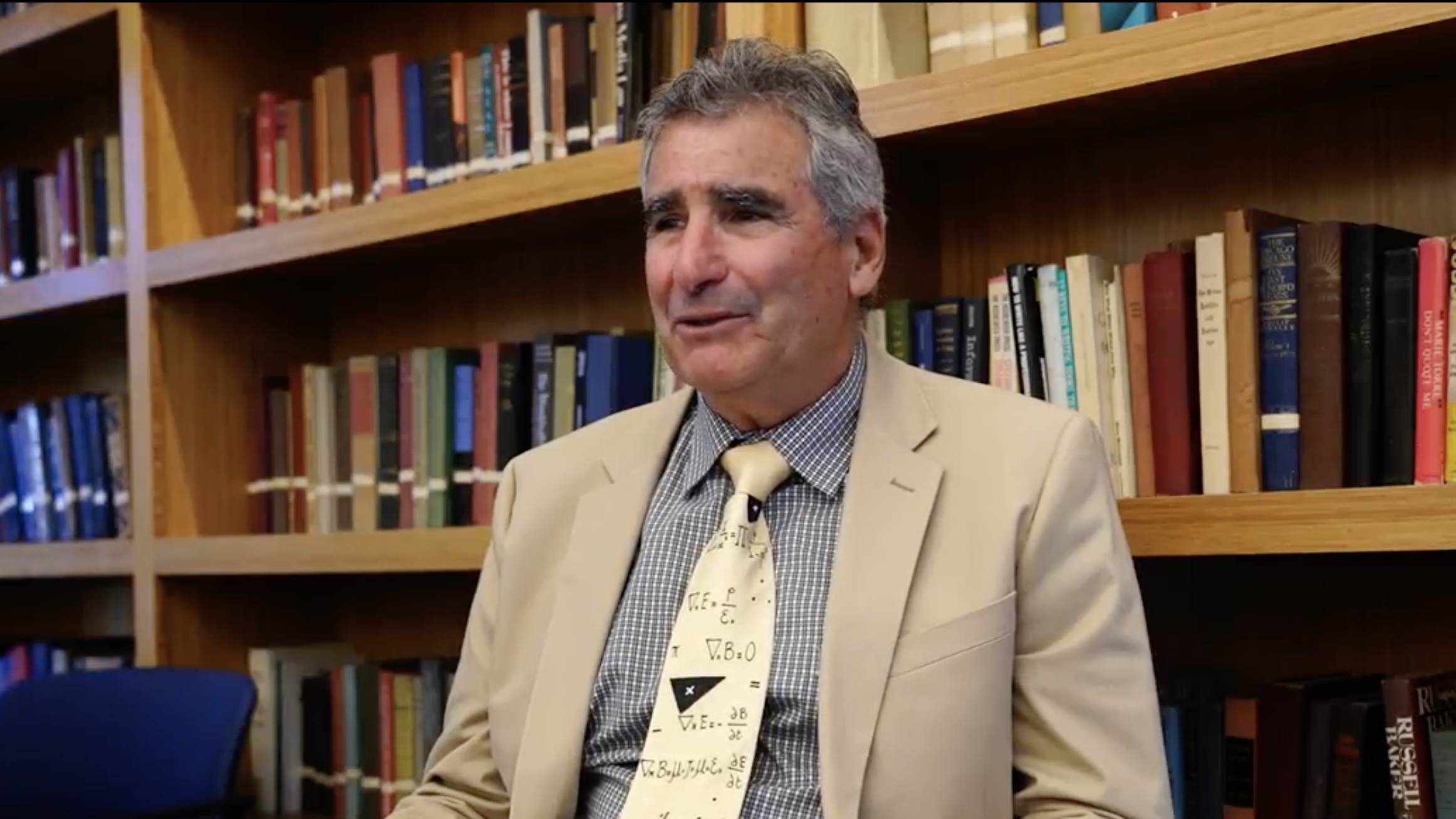
Tom Katsouleas, the former president of the University of Connecticut, said the Trump administration’s attacks on science are part of a drift toward authoritarianism.
“Historically, authoritarian governments have tried to suppress science because they have been resources for truth-finding, and that is inconvenient for authoritarian governments,” said Katsouleas.
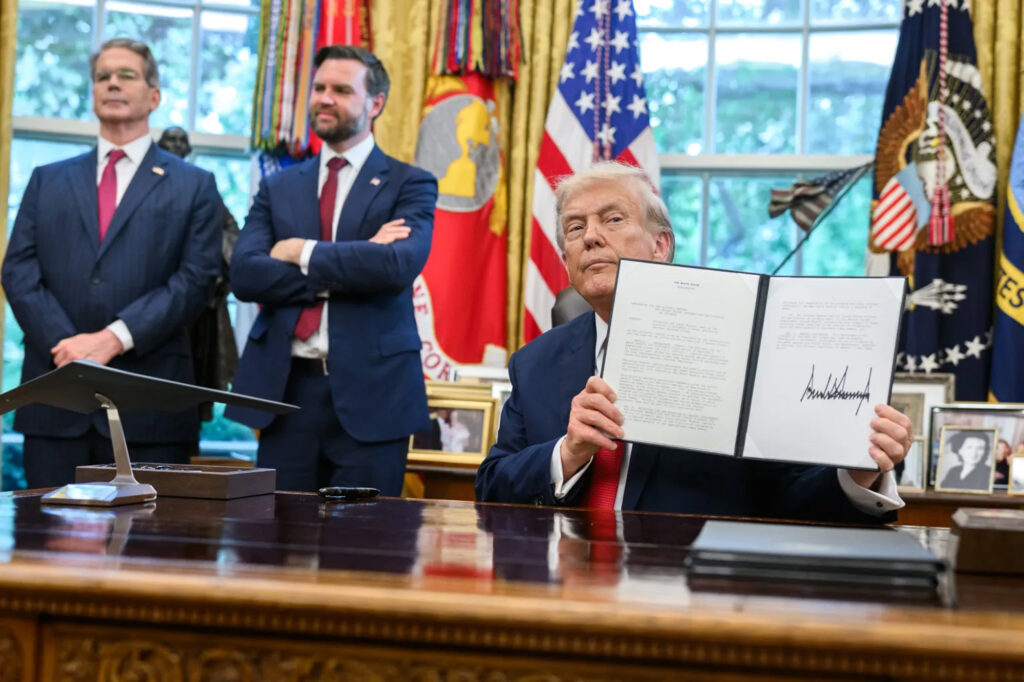
In the first year of his second term, President Donald Trump’s expansive interpretation of executive power has impacted public health programs, environment and clean energy projects and scientific research. His administration has broadly imposed its ideology and rescinded funds already approved by Congress. The impact has been felt in Connecticut through canceled projects and threats to research throughout the state.
The Environmental Protection Agency cancelled over $92.7 million in environmental grants to Connecticut, according to a map of cancelled funding developed by the National Resources Defense Council. The Department of Energy also cancelled more than 300 energy grants across the country, totaling over $7.5 billion.
Connecticut Attorney General William Tong has joined over 30 lawsuits against the Trump administration, with almost a dozen of them fighting battles related to the environment and health. He said the Trump administration’s strategy was to aggressively reduce oversight on health and the environment and “decimate the Environmental Protection Agency and our regulatory system, the infrastructure for ensuring clean air and clean water” at a moment where “our climate is changing rapidly in an adverse way.”
“Laws don’t mean anything unless you have people who are able to investigate and enforce them,” Tong said. “And so if you don’t have an EPA, then nobody’s minding the store.”
Public Health
Trump’s 2024 election platform included a pledge to make America healthy again. Once elected, he appointed prominent vaccine skeptic Robert F. Kennedy Jr.as the secretary of Health and Human Services. In February, Trump signed an executive order establishing the “Make America Healthy Again” Commission, tasked with “addressing the root causes of America’s escalating health crisis.” The commission’s website shows a focus on supporting better nutrition and investigating chronic diseases.
However, state health officials raised concerns about the lack of public health communication and reliable research from the Trump administration, including about vaccines.
In September, Connecticut officially joined several states and New York City in creating the Northeast Public Health Collaborative “to ensure trust in public health, respond to public health threats, advance community health and strengthen confidence in vaccines and science-based medicine,” a Connecticut press release said.
Connecticut Gov. Ned Lamont also helped form the Governors Public Health Alliance, a “nonpartisan, non-profit coalition of governors that works together to protect public health,” with 14 other states and territories according to its website. He said in a press release that “states are stepping up, amid federal uncertainty, to ensure our residents have the information they need.”
Dr. Manisha Juthani, commissioner of the Connecticut Department of Public Health, said that alliances like these have always existed, but the goals of current alliances are to “fill a vacuum that we are starting to feel from the absence of certain resources,” including experts and federal points of contact as well as financial resources.
Juthani said the goals of these coalitions were not necessarily in conflict with the Trump administration but to fill these gaps.
“If the federal government is not going to be investing in the same way in spaces that we’ve traditionally leaned on the federal government to give us information and have eyes and ears on things that can protect the public at large, then it’s incumbent on the states to try to find ways to do that,” she said.

Robert Miller, the director of the Eastern Highlands Health District, one of 20 health districts in Connecticut, said he is not looking to the federal government for funding as much as he used to “because of its uncertainty and volatility.”
Cuts to grants for state and local health departments have been felt across the state. Health districts experienced reductions in staffing, cancellations of contracts and hundreds of thousands in financial losses, according to reports submitted through the state’s federal impact reporting system.
The governor’s office said in a March press release that the state had lost almost $119 million from the administration’s cancellation of the federal Epidemiology and Laboratory Capacity grant, which the CDC said was created to support “health information systems enhancements and cross-cutting solutions for infectious disease outbreaks.” The state’s other major grant losses concerned vaccine information campaigns and addressing health disparities, the press release said.
The U.S. Department of Health and Human Services is responsible for vaccine recommendations for the general public, which can often determine which vaccines are covered by insurance. Since Trump took office, the CDC has stopped recommending COVID vaccines for healthy children and pregnant women.
The CDC’s vaccine recommendation council, made up of members handpicked by Kennedy after all the previous sitting members were removed, is reviewing childhood vaccine scheduling. It voted on Dec. 5 to roll back recommendations for Hepatitis B vaccinations. The vaccines will no longer be officially recommended to newborns unless the birthing parent tests positive for the virus, according to the CDC.
The Connecticut Department of Public Health did not realign its vaccine recommendations with the federal government’s, releasing recommendations on Sept. 9 that emphasized vaccination as the “most effective defense” against severe outcomes from COVID-19.
Miller said his district would follow state guidelines to save more lives.
“I think you can anticipate that there’ll be fewer cases of morbidity and mortality within the state of Connecticut and within the Eastern Highlands Health District as a result of following the science-based guidance provided by the Connecticut Department of Public Health,” he said.
Since Kennedy started as DHHS secretary, the federal government has shifted official stances on the CDC website to reflect his skepticism about vaccines and contention that they are related to autism. The CDC website was changed to say that “the statement ‘Vaccines do not cause autism’ is not an evidence-based claim.”
“This connection has not been properly and thoroughly studied by the scientific community,” the updated website said.
Multiple studies have found no connection between childhood vaccines and autism. The Association for Autism and Neurodiversity released a statement saying it was “deeply concerned” about the changes to the webpage.
“These edits removed long-standing, evidence-based statements affirming that vaccines do not cause autism and substituted wording that implies uncertainty,” the statement said. “No new scientific findings prompted this shift.”
The Trump administration also released a fact sheet in September that pointed to acetaminophen, the active ingredient in Tylenol, as a possible cause of autism when taken during pregnancy. Kennedy and Trump discouraged pregnant people from taking Tylenol during a press conference about the fact sheet.
No studies have proved a causal relationship between acetaminophen use during pregnancy and autism in children, according to the World Health Organization.
Environmental Health
In March, the EPA announced the “most consequential day of deregulation in U.S. history.” This included reconsidering emission guidelines on oil and gas, terminating the environmental justice arm and reconsidering mandatory greenhouse gas emissions reporting.
“Today is the greatest day of deregulation our nation has seen,” EPA Administrator Lee Zeldin said in a press release. “We are driving a dagger straight into the heart of the climate change religion to drive down cost of living for American families, unleash American energy, bring auto jobs back to the U.S. and more.”
Tracy Babbidge, bureau chief of air management at the Connecticut Department of Energy and Environmental Protection, said the pace of the deregulatory agenda and vast new proposals is “unlike anything we’ve ever seen.”
“I think it really has impacted the federal-state cooperative relationship and our ability to really meaningfully engage in some of these proposals,” Babbidge said.

Changes in federal rules can affect states like Connecticut’s ability to enforce pollution standards, according to Emma Cimino, deputy commissioner of environmental quality at DEEP. She said DEEP is “monitoring that closely to understand what those changes mean for us and the work we do and the tools we have available to us at the state level.”
She said the federal government has been showing signs of wanting to dismantle laws meant to maintain a healthy environment.
“I think in general, what we’ve been seeing this year has been a real roll back on some of the federal rules around the Clean Air Act, and I think we’re seeing sort of similar, less aggressively, but we’re certainly seeing similar kind of signaling around the Clean Water Act,” Cimino said.
Cimino said federal dollars were also less of a guarantee under the Trump administration. but the agency is taking steps to keep federal funding already promised to the state. Connecticut announced in October that it would join 21 other states and the District of Columbia to sue the EPA for the cancellation of solar energy grants under the Inflation Reduction Act.
“We’re trying not to close the door on funding we have,” Cimino said. “We’re working really closely with the attorney general’s office where appropriate to work through the courts to keep that funding intact and available to us.”
Science and Research
Of the more than 300 grants cancelled in September by the Department of Energy, twelve projects were based in Connecticut.
Grants for research in higher education were also targeted. UConn alone lost about $41 million in grant terminations and unexpected lack of renewals, according to Lindsay DiStefano, the interim vice president for research at UConn.

Among those researching the environment, there is a new culture of uncertainty about the future of research, funding and jobs.
One such example is the Connecticut Sea Grant, spearheaded at UConn. The initiative is one of many state and federal partnerships for marine research through the National Oceanic and Atmospheric Administration. The agency is responsible for weather and climate monitoring as well as coastline and fishery management, making it especially important to coastal states like Connecticut. In the first year of the Trump administration, hundreds of NOAA employees were fired, re-instated and fired again during the first year of the Trump administration, leaving employees in a “liminal state,” PBS reported.
Secretary of Commerce Howard Lutnick began personally reviewing NOAA grants over $100,000, which researchers said caused a delay in the grants sent to NOAA as the agency faced major staff reductions.
Connecticut Sea Grant Director Sylvain De Guise said this meant delayed payments for organizations like his.
“It was August by the time we received our first dollars for the grant year that started February,” De Guise said.
This fostered uncertainty among those doing environmental research with the Connecticut Sea Grant, which received about $1.5 million in core federal funds last year, according to its 2024 annual report.
“We have a bunch of employees that are expecting to be paid, and then there’s all those levels of uncertainty,” De Guise said. “And we have no answers to a lot of uncertainty and a lot of anxiety, but then you’re supposed to keep doing your job and doing it good.”
The Trump administration is taking a “short-sighted” view of energy and the environment, Attorney General Tong said. He said the administration is choosing favored industries, like cryptocurrency and artificial intelligence, over long-term public health and environmental well-being.
“Their strategy is to break it all apart, blow it up so that the fossil fuel companies can make as much money as they possibly can in the short term,” Tong said. “The future be damned.”
Sara Bedigian and Sam Brody contributed reporting to this story.
You must be logged in to post a comment.