By Lily Goldblatt
UConn Journalism
Politics shape the public memory of history. From Nazi Germany to the American Civil War and the Japanese Internment camps in the United States during World War II, historians have the task of researching historical accounts to verify the facts.
But today, the U.S. is mired in a “history war” in which political forces attempt to shut down well-researched and scholarly accounts of history in the name of “patriotism, nationalism, pride,” warned David W. Blight, director of Yale University’s Gilder Lehrman Center for the Study of Slavery, Resistance, and Abolition in his opening remarks at a recent symposium. “We’ve never lived in a time when the executive branch of the government, almost in its totality, has assaulted what we do as it is now.”
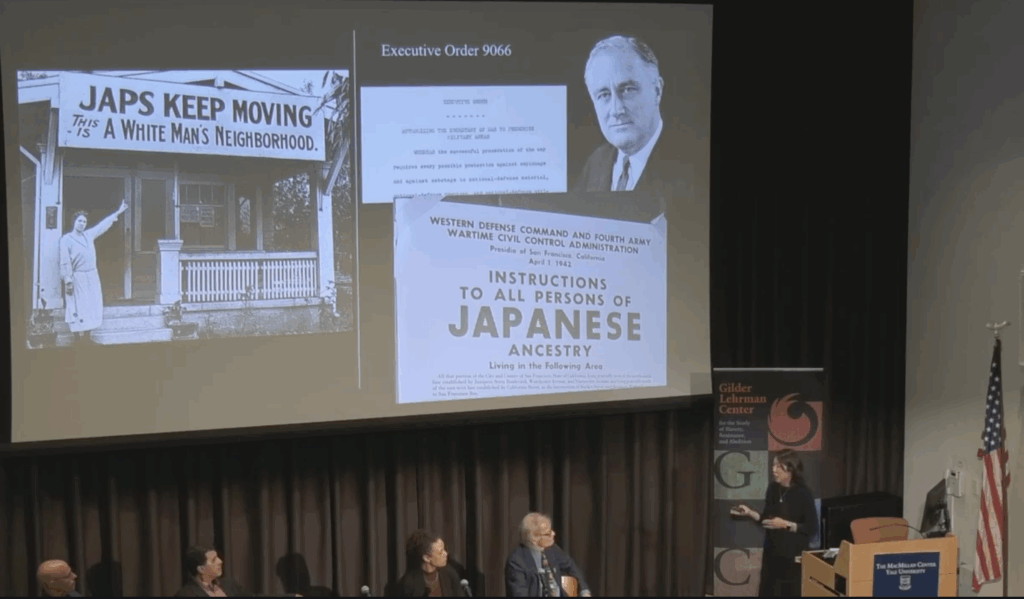
Scholars and historians from around the world gathered at Yale’s Luce Hall in early November 2025 to discuss “Public History in Authoritarian Times.” Sponsored by the Gilder Lehrman Center and the MacMillan Center at Yale and co-sponsored by the University of Connecticut’s Humanities Institute, the symposium featured a morning panel comparing perspectives from different countries that have confronted authoritarianism and an afternoon panel that focused on the President Donald Trump administration’s attacks on public history at the Smithsonian Institution and in national parks.
Jennifer Allen, a professor of German and European history at Yale, said her research on post-war Germany focuses not on the Nazi regime, but what comes after “the dust from the rubble settles.”
In the immediate aftermath of World War II, Germany tried to shift away from its actions during the war and presented Nazism as being “the work of a small group of criminals,” Allen said. “The optics of memory are kind of significant here in the early evolution of public history in Germany.”
Germany attempted to perform a kind of erasure of the past through a “leveling of historical topography.”
“Moving names, removing symbols, demolishing buildings that hadn’t already been reduced to rubble,” Allen said.
After an authoritarian regime, members of the public play an important role in preserving public memory. In Germany, the “Stumbling Stones” memorial project preserves the memory of Holocaust victims through brass-covered cobblestones in public streets, each etched with a victim’s name.
“This project is fascinating in that it’s entirely grassroot,” Allen said. “It is initiated, funded, researched, installed and maintained by really an army of ordinary people.”
Instead of having a centralized memorial, the stumbling stones are something that can’t be avoided because they’re on people’s daily commutes.
“As an analogy to suggest how significant this would be: imagine mini monuments to the victims of ICE raids,” Allen said.
Much like Germany, the U.S. has a complicated relationship with its actions during World War II, such as when President Franklin Roosevelt issued executive orders that allowed Japanese Americans to be rounded up and put in camps without due process.
“What really made the story of the Japanese American incarceration so challenging is that the government sanitized it, they didn’t want it taught in our public school systems,” said Shirley Higuchi, a lawyer and author who has studied the history Japanese internment.
Much like the sanitization of the Japanese internment camps, the politics of memory has caused a revival of the Confederacy in politics and national narratives, noted Blight.
“The real meaning of the American Civil War was … altered greatly,” Blight said.
Today, the Smithsonian Institution and the National Park Service, two institutions that seek to bring truth to America’s historical narratives, have been targeted by several executive orders and bills that threaten the accuracy of how they tell American history.
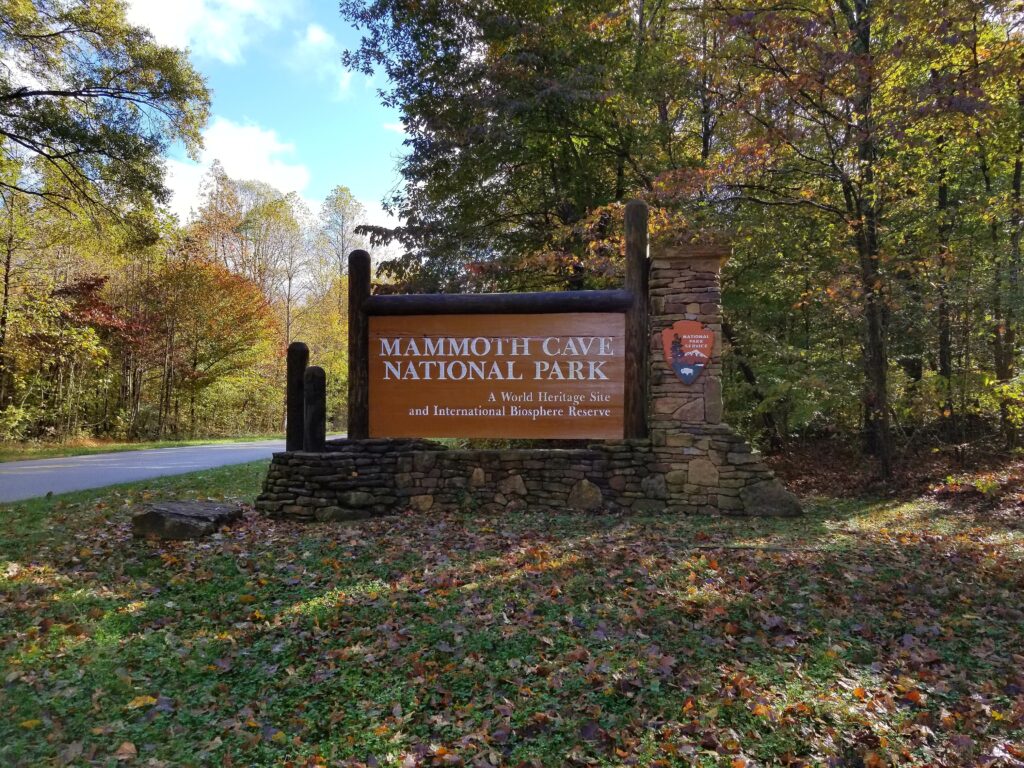
According to Gerry Seavo James, deputy director of Sierra Club’s Outdoors for All campaign, Trump’s budget bill that passed in July has “deleted so many great programs that created nearby nature and trail systems for unrepresented communities.”
Additionally, James said Trump’s Executive Order 3431, “Restoring Truth and Sanity to American History,” hit him in the gut as it undid years of work dismantling the “ecosystem of structural racism within the parks” and the mission for parks to tell more diverse stories.
According to James, this order created a “QR snitch system.” The order encourages people to report “any signs or other information that are negative about either past or living Americans or that fail to emphasize the beauty, grandeur, and abundance of landscapes and other natural features,” the executive order said.
James and his team mobilized their supporters to use this system to push for inclusive histories in the parks and national monuments.
“History should be told accurately, whether it hurts your snowflake feelings or not,” said one of the comments read by James. Another likened the QR codes to North Korea or East Germany, James said.
After the executive order, the White House notified the Smithsonian that it would be conducting reviews of museum displays to “ensure alignment with the president’s directive to celebrate American exceptionalism, remove divisive or partisan narratives, and restore confidence in our shared cultural institutions.”
“Our expertise is being devalued in the public realm,” said Sarah Weicksel, executive director at the American Historical Association. “What was once historians’ calling card – our deep knowledge and our evidence-based methodological approaches – is being cast as suspect by the administration.”
Chuck Sams, the first Native American to serve as director of the National Park Service, said the national parks tell histories following a set of regulations that are revisited and updated every few years to ensure they are being told accurately and to make sure there are no missing narratives from this story.
“We have been able to do this for over 100 years, and what I see now scares me,” Sams said. “Our parks are a direct reflection of our democracy.”
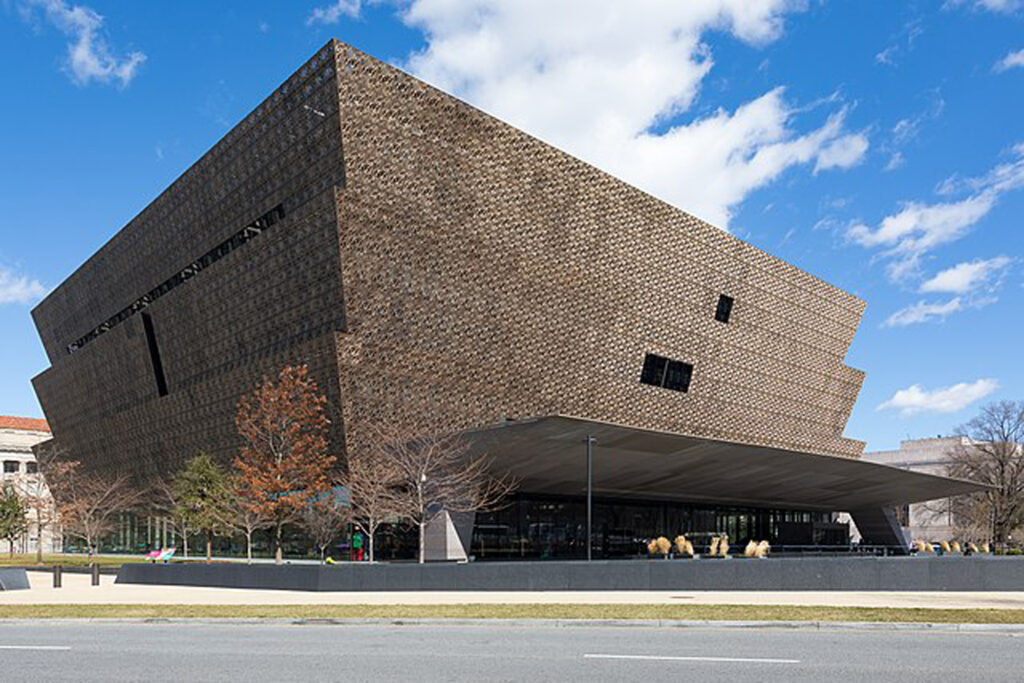
Chad Williams, a professor of history and Black diaspora studies at Boston University, said it’s important to protect institutions such as the Smithsonian to keep the public memory of U.S. history accurate and true.
“In the context of the Black experience in this country, similar to the experience of indigenous people in this country, authoritarianism is not new,” Williams said. “Having that history on display in a place like the National Museum of African American History and Culture makes it a threat.”
“This is a political fight,” Blight said in his closing remarks. “It needs a declaration of war. Donald Trump declared war on us on March 27, 2025, in that ‘sanity and truth’ executive order. That’s a declaration of war on what we do.”
You must be logged in to post a comment.