By Anna Heqimi & Karla Perez
UConn Journalism
University of Connecticut students from immigrant families are postponing travel, checking in regularly with parents and loved ones and worrying about their futures as President Donald Trump’s administration pursues an aggressive deportation agenda with the goal of deporting 1 million immigrants annually.
Students say that aggressive roundups around the country are causing fear and anxiety for themselves and their families.
Emerson Zecena, cofounder of the UConn Chapter of Connecticut Students for a Dream, said he worries constantly about his mother, a Guatemalan immigrant.
“It’s sad to even have to think about your mom not answering and immediately have to think she was detained, she has been pulled over, and now she’s being processed and sent back to her home country,” Zecena said. “I’m always texting her and I really do feel some sort of panic when she is not responding to me by the minute.”
Zecena helped organize a “Know-your-Rights” presentation on campus in late October — one of several events on campus designed to offer support and information about immigration enforcement.
The presentation was led by two attorneys who explained the Laken Riley Act, signed into law in late January 2025, that makes it more difficult for detained individuals to receive bond. The law requires that any undocumented immigrant who is charged with or admits having committed burglary, shoplifting, assault of a law enforcement officer or any serious felonies be detained.
That means if someone gets arrested for shoplifting and ICE detains the individual, they can’t request bond from a judge even if the shoplifting charge gets dismissed the next day, attorney Benjamin Haldeman said.
Nate Fox, an attorney with the Immigrant Children’s Justice Project, offered personalized assistance with students’ legal questions after the presentation.
Another event in November served to educate students on their constitutional rights. The “Migrant Teach-In” included a talk by Sister Mary Jude Lazarus, a nun and director of the Office for Hispanic Ministry of the Diocese of Norwich.
Lazarus told the story of an undocumented Guatemalan man living in Willimantic who was detained by ICE for five months after confirming to officers that the person they were looking for was his cousin. Lazarus said the man had a right to remain silent but spoke out of fear. He decided to self-deport along with his wife and their child, who is a U.S. citizen.
“It’s devastating,” Lazarus said.
UndocuHuskies, a group that represents undocumented students at UConn, has asked the university about safe spaces on campus.
On the first day of Trump’s second term, the Department of Homeland Security rescinded the Biden-era “sensitive location” protocols that restricted immigration enforcement in certain areas such as churches, hospitals and university campuses.
At UConn, campus administration stated in a letter on Jan. 28, 2025, that university police would not question students about immigration status and would not detain them solely on the belief that they are undocumented. The letter also stated that, under the federal Family Educational Rights and Privacy Act, the university is prohibited from sharing information about any student’s class schedule or classroom location.
ICE is not allowed to enter private spaces on campus unless they have a judicial warrant, according to an article in UConn Today. Private spaces include “residence halls, faculty and staff offices, clinical care spaces, and other spaces that are locked when not in use or can only be accessed using a key card.”
Aleena Chaudry, co-president of UndocuHuskies, said the group is cautious about how it promotes its events.
“We don’t know who has any harmful intentions,” she said. “It’s a bit more trickier now that things have really kicked off with deportations. We have to navigate those challenges when we actually have physical meetings to be able to make sure that they are in spaces that are untouchable to ICE agents.”
UConn Dean of Students Fany DeJesús Hannon said her office is committed to finding ways to support students and has conducted “Know-your-Rights” workshops on immigration since 2012.
But as fears have grown on campus, Hannon said steps had to be taken to protect members of the university’s Undocumented Student Advisory Board Committee. Committee members, both professors and students, expressed concerns about their names being public, so the university created a password-protected portal.
“We took those measurements to keep folks — I don’t want to use ‘protected’ because I think it’s very hard these days to even say that we’re going to keep you safe — but at least give them some peace of mind,” Hannon said.
Emerson Zecena, UConn chapter of Connecticut Students for a Dream cofounder
Emerson Zecena tries to call his mom every hour to ensure she is all right. He constantly texts her and when she does not immediately respond, he instantly fears the worst: deportation.
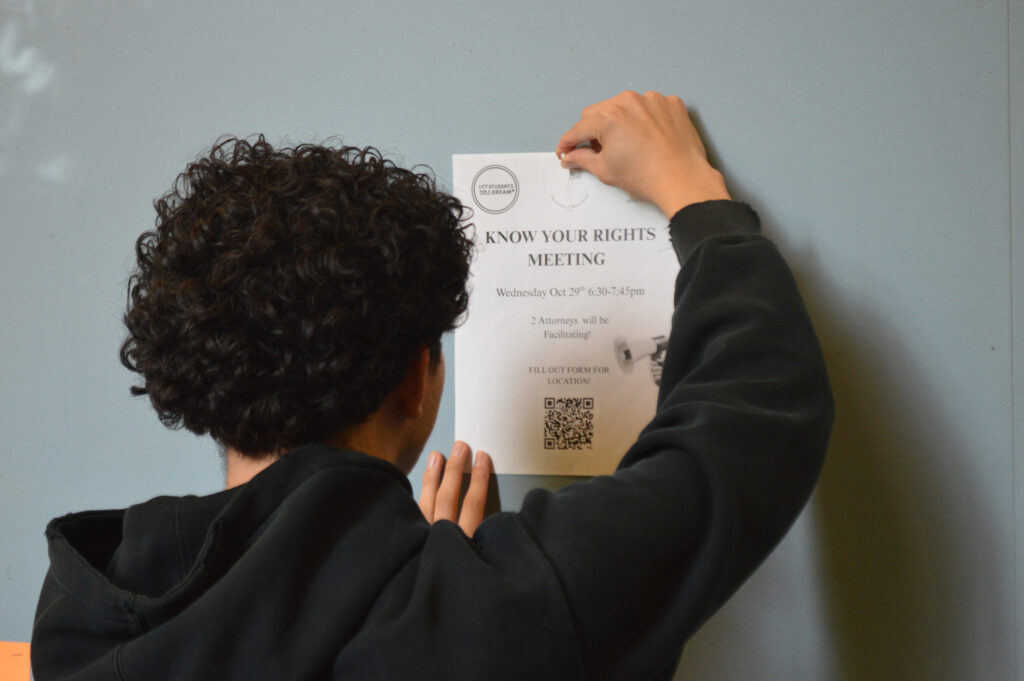
Zecena’s mother is an undocumented immigrant from Guatemala.
Prior to Trump’s return to office, Zecena, a sophomore political science major, said he would not worry about his mother getting deported. Now, as ICE detainments are happening in Connecticut, he said he is constantly frightened and anxious.
“Seeing all the inhumane actions … I have to be calling her consistently, checking up on her, having that extra burden and fear that if my mom doesn’t answer the phone, my mind immediately jumps to the worst,” Zecena said. “It’s such a horrible thing to have, and I know it’s a shared experience.”
Zecena said the ramped up immigration enforcement led him to start the UConn chapter of Connecticut Students for a Dream in September 2025. He got involved with the organization in high school after he had concerns about immigrant access to health care.
He said he wants to “be a voice to the voiceless and speak out against these injustices when no one else chooses to.”
Nursing Student Giselle
Giselle, a sophomore nursing major, said she worries constantly about her undocumented parents getting deported. Her mother is from Peru, and her father is from Ecuador. Fear of ICE has kept her father from attending court to legally stay longer in the U.S., she said.
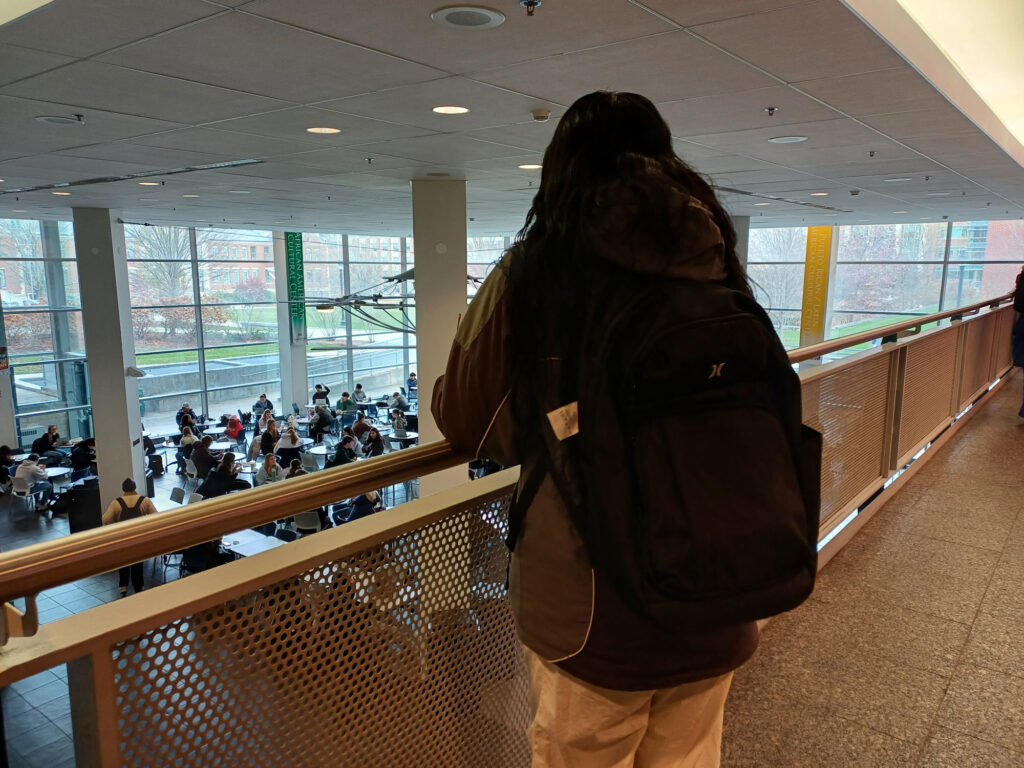
Giselle, who asked to be identified by her middle name to protect her family, said both parents now spend most of their time hiding at home. “They’re scared to go shopping, pick up my brother — they’re scared to do anything,” she said.
Her father is afraid to go out to certain places, so their family friend sometimes goes shopping for him. If the family does go out, Giselle said it’s simply to go through the Dairy Queen drive-thru and then immediately back home.
“It just takes one outing and you can get caught,” she explained.
Giselle keeps track of policy changes from the administration and shares new information she learns with her parents in hopes of keeping them safe. She recently gave members of her family red cards that list an individual’s constitutional rights during ICE encounters.
If they get deported, she worries that she will have to drop out of school and take care of her younger brother. Giselle is on a full scholarship, so it would be a painful and difficult choice to leave school, she said, but “family comes first.”
Ryan, co-president of UndocuHuskies
Ryan, an undocumented student from Brazil who is a senior at UConn, said he isn’t worried about being deported himself but is concerned about his father.
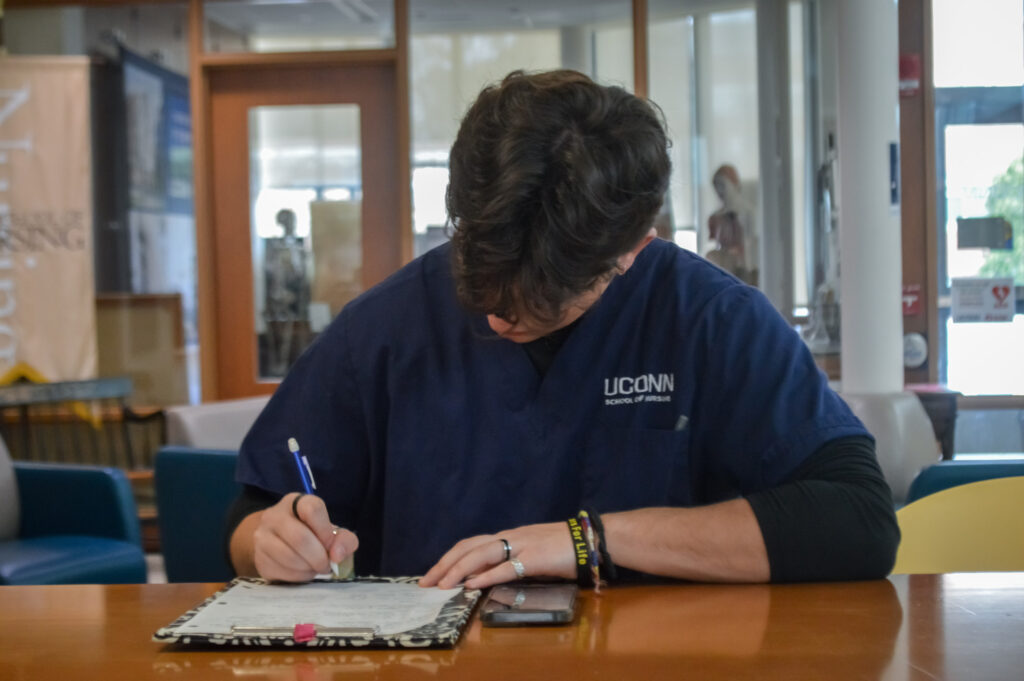
In the two decades his father has been in the U.S., he has worked multiple jobs — plumber, carpenter, construction worker and accountant.
Ryan said his father is a hard worker and, like many immigrants, has paid taxes and contributed to the economy.
“He cares about working and doing what’s right,” said Ryan, who asked that his last name not be used to protect his parents. “I wouldn’t want all his work to be thrown away.”
Sophie, Ukrainian Refugee
Sophie, a UConn student who came to the U.S. from Ukraine in February 2022, said she feels stuck here, afraid that if she leaves to visit family she won’t be able to return.

Sophie, who requests for her last name to not be revealed due to uncertainty with her immigration status, moved to Connecticut alone at 14 years old after high schools in Ukraine began to close after Russia’s invasion.
Her parents asked her how she envisioned her future. If she couldn’t finish high school, she couldn’t go to college either. So, Sophie applied to continue her education abroad. Saint Bernard High School in Uncasville offered to cover the cost of her tuition and connected her to a host family.
At first, she would cry almost every night, constantly worried about her family’s safety. Although she is still worried, she said she is grateful to her host family for giving her shelter, comfort and above all, a sense of belonging.
Now in her first year at UConn, she is studying computer science and engineering.
Sophie booked a flight for June 1, 2025, excited to see her mother and brother in Germany. Just three days before her departure, she received an email from the UConn Center for International Students & Scholars warning that the suspension of visa processing could mean that international students may not be able to return to the U.S. if they left.
Her host mom was scared that her trip would be considered “self-deportation.”
“I would be home for summer, but I was forced to stay here,” Sophie said. “If I do choose to go home, I have to be prepared to not come back. I’m not sure I want to be able to stay if I have to go through all this trouble. I can’t really stay here for such a long period of time without knowing I will be able to see them.”
Journalism student JJ Ryu
JJ Ryu, a journalism major and the daughter of South Korean immigrants, said she self-censors, choosing not to cover immigration stories for fear that her work could affect her parents.
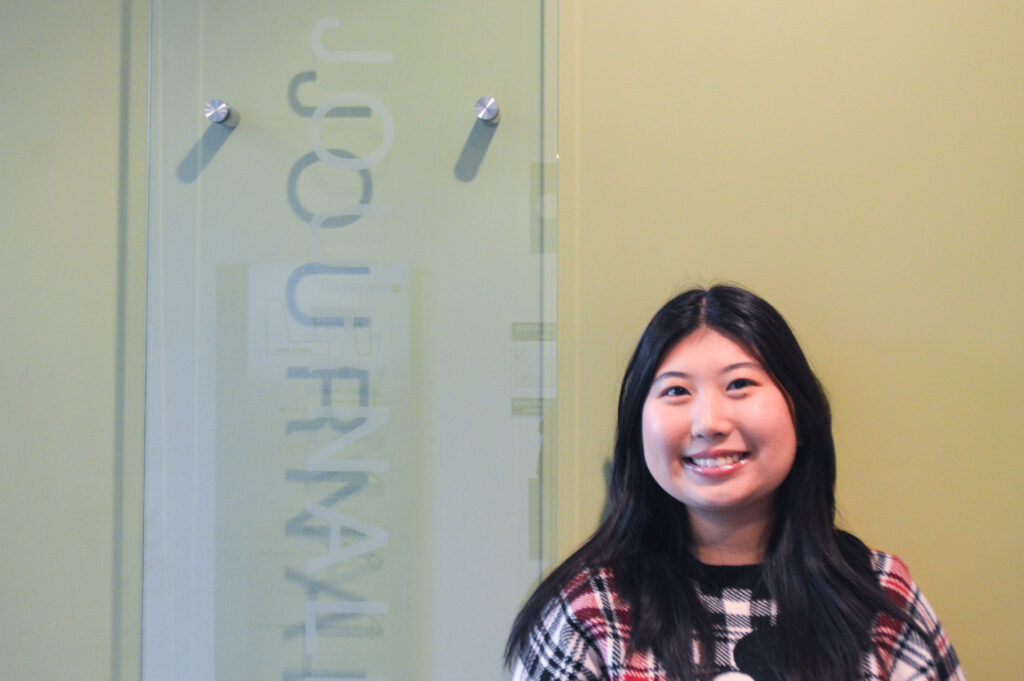
Ryu shared an instance where she wrote an article on the Trump administration’s attempt to shut down the U.S. Department of Education. Afraid that her story could have brought harm to her family, she refused to have it published. “I have to make sure that I’m taking as many precautions that I can,” she said.
As a journalist, she said she believes the public deserves to know what’s going on. Because she keeps up with the news, Ryu is the information holder for her friends and family. However, Ryu said her undocumented friends are hesitant to discuss their concerns with her. She said she understands because if she were in their shoes, she would stay silent too.
“I wouldn’t trust anybody,” Ryu said. “Your friends can turn their back on you at any moment. The government can turn [its] back on you any moment. Nobody’s a guarantee.”
Victoria Silva-Soto
Victoria Silva-Soto, a junior at UConn, said she wonders why the people that helped raise her are being treated like criminals.

When her mother immigrated to the U.S. from Brazil in 1999, several friends came with her. In Brazilian culture, it is common to refer to close family friends as “aunts,” “uncles” and “cousins” despite no blood relation. Her mom was one of the lucky ones, obtaining her citizenship in 2021, while two “aunts” that accompanied her on the journey from Brazil remain undocumented.
Growing up, Silva-Soto joined her mom’s long shifts cleaning houses and delivering stacks of Journal Inquirer newspapers. After one of her aunts began her own cleaning business, Silva-Soto worked for her as her first job.
Silva-Soto’s memories are filled with attending birthday parties, going to church and hosting large family get-togethers with these aunts.
In August, both aunts received letters from the federal government encouraging self-deportation. One of the women had her stay legally extended to November 2026 but worries she won’t be able to attain citizenship or would be forced to leave with her children, who are U.S. citizens, Silva-Soto said. The other aunt, who does not have children, is in hiding — fearful to approach her front door and risk being seen.
“There was a lot of crying,” Silva-Soto said, noting that neither woman has been back to Brazil in 25 years. “You don’t think it’s going to happen to you, and then you get the letter.”
You must be logged in to post a comment.