By Bridget Bronsdon
UConn Journalism
It started almost right away. Within nine days of President Donald Trump’s return to office, he set his sights on education.
First, there was an executive order targeting federal funds for schools said to “indoctrinate” students with “gender ideology.” The order threatened blue states like Connecticut that have curriculums including instruction on gender identity and diversity, equity and inclusion.
Then, the federal Department of Education was decimated, with nearly half its employees fired in March 2025. This included all employees of the Office of Civil Rights, charged with investigating discrimination and protecting civil rights in schools. However, several employees were asked to return to work in December as the office faced a large backload of cases.
As the 2025–2026 school year approached, the administration announced it would withhold billions of dollars in federal aid to schools — including more than $50 million for Connecticut — leading to program cancellations and layoffs across the state and the country. Though much of that funding was ultimately restored, uncertainty remains.
“Educators are doing everything we can to meet students where they are, but we can’t do it alone,” Erin Daly, president of the National Education Association Danbury chapter, said in an email. “We need stable funding, respect for our profession, and policies that put kids — not politics — first.”
Across Connecticut and the nation, public schools are facing unprecedented ideological incursion from the federal government as the Trump administration uses federal funding to target DEI and sexual education programs and promotes a partisan plan for“patriotic” education. As concerns also grow about immigration raids in schools, educators say they are facing uncertainty and even fear in K‑12 classrooms.
Federal freeze sends ‘shockwaves’
Since 1965, the federal government has allocated funds to public schools across the country to support academic enrichment programs such as special education and support for students living in poverty. But this year was different. Just two months before the start of the school year, the Trump administration alerted states that it would withhold nearly $7 billion in federal funding, jeopardizing about $53.6 million for Connecticut schools. The funds disproportionately impacted high-needs districts and students, supporting a variety of programs including migrant education, English learning, before– and after-school programs, adult literacy and teachers’ professional development programs.
Connecticut was one of 25 states that sued the Trump administration in July over the funding freeze, and soon after, 150 Democrats in the U.S. House, including four representatives from Connecticut, signed a letter requesting the release of “illegally” withheld funds. Though the Trump administration released the funds on July 30, there were still consequences for schools.
“These funds should never have been frozen in the first place,” Connecticut Attorney General William Tong in a press release following the release of the funds. “While students and teachers prevailed today, this reversal does not undo all the long-term chaos, uncertainty and damage the Administration has inflicted on our schools and communities.”
Many educators across the state agree, saying instability and a sense of untrustworthiness from the federal government persist.
“The biggest impact that [the freeze] had was the uncertainty,” said Michael Morton, deputy executive director for communications and operations for the School and State Finance Project. “There was a period of time, certainly, where districts were scrambling to figure out what to do, and then in a lot of cases that meant they were going to have to cut programs or cut staff because they couldn’t afford to pay them.”
The lack of clarity about federal funding not only made it difficult to budget and plan for programs and services for students and families, but it also created a sense of unreliability between the federal government and districts across the state, Morton said.
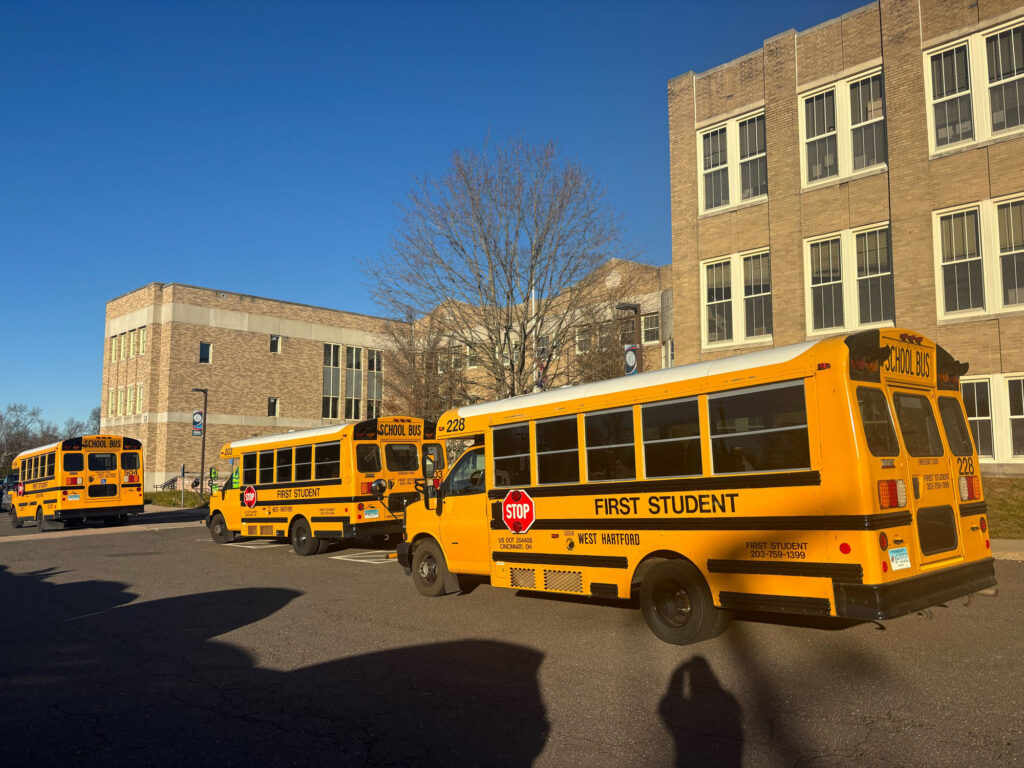
Daly said the funding freeze sent “shockwaves” throughout the state and left a harmful impact on the students and families in Danbury, affecting programs that support special education, English learning programs, mental health resources and nutrition services.
“When those funds are halted, even temporarily, it disrupts critical supports that many of our students rely on every single day. It also creates uncertainty for families and educators who are already stretched thin trying to meet growing needs with limited resources,” she said.
Freezing funds that directly affect children sends “the message that politics is being placed ahead of students,” Daly said.
“Educators have always worked in good faith to serve every child who walks through our doors, but when that commitment isn’t matched by consistent federal partnership and support, it becomes harder to believe that we’re all working toward the same goal,” Daly said. “At its core, this isn’t about politics — it’s about keeping our promise to students. Our schools need stability and investment, not uncertainty.”
DEI labeled as ‘indoctrination’
Since Trump took office in January 2025, federal funding has been leveraged to achieve ideological goals that seek to dismantle DEI programs and push a conservative view of sexuality.
The January executive order was aimed at eliminating federal funds for schools that “indoctrinate” students based on the “promotion of gender ideology” and “anti-American ideologies.” The order accused schools of pushing transgender lifestyles and steering students toward “surgical and chemical mutilation without parental consent or involvement.”
In February, the U.S. Department of Education said DEI programs could be considered discrimination and schools could face federal investigations.
“Educational institutions have toxically indoctrinated students with the false premise that the United States is built upon ‘systemic and structural racism’ and advanced discriminatory policies and practices,” the Feb. 14 memo from the Office for Civil Rights stated. It said “false” teachings of racism and other discriminatory practices are disguised under the premise of DEI, “smuggling racial stereotypes and explicit race-consciousness into everyday training, programming, and discipline.”
In an April memo, the federal Department of Education asked state education agencies to confirm they were not using “illegal DEI practices” and warning those that did were at risk of losing federal dollars.
Still, there has been little clarity from the Trump administration about what programs they would consider illegal.
“The idea that schools are ‘indoctrinating’ students is simply not true,” Daly said. “Our teachers are teaching kids how to think, not what to think. DEI work is about ensuring every student feels seen, valued, and supported — not pushing any political agenda.”
In an April 15 letter to the U.S. Department of Education, the Connecticut State Department of Education verified that the state “already does and will continue to comply with the Title VI of the Civil Rights Act of 1964.” In doing so, it also questioned the legality of the Trump administration’s threats.
“The CSDE is unaware of any federal or state statutes prohibiting diversity, equity and inclusion,” the agency wrote.
Threats to sexual education programs
The Trump administration has also targeted reproductive and sexual education programs for teens, seeking to shape ideology around transgender issues. In September, Tong and 16 other state attorneys general sued the U.S. Department of Health and Human Services to prevent the administrating from pulling funding for programs unless “gender identity language” was removed.
Since 2010, Connecticut has received about $1.6 million annually for the federal Personal Responsibility Education Program, from the U.S. Department of Health and Human Services. The program is responsible for providing medically accurate education for youth across the country to combat the spread of sexually transmitted diseases and teen pregnancy.
Tong said that for the Trump administration, “medically accurate” means MAGA-approved.
“Censorship and political propaganda will not protect teens from unplanned pregnancy or preventable disease,” he said in a press release. “Teens deserve accurate, honest information to stay safe, and we’re suing to make sure they get it.”
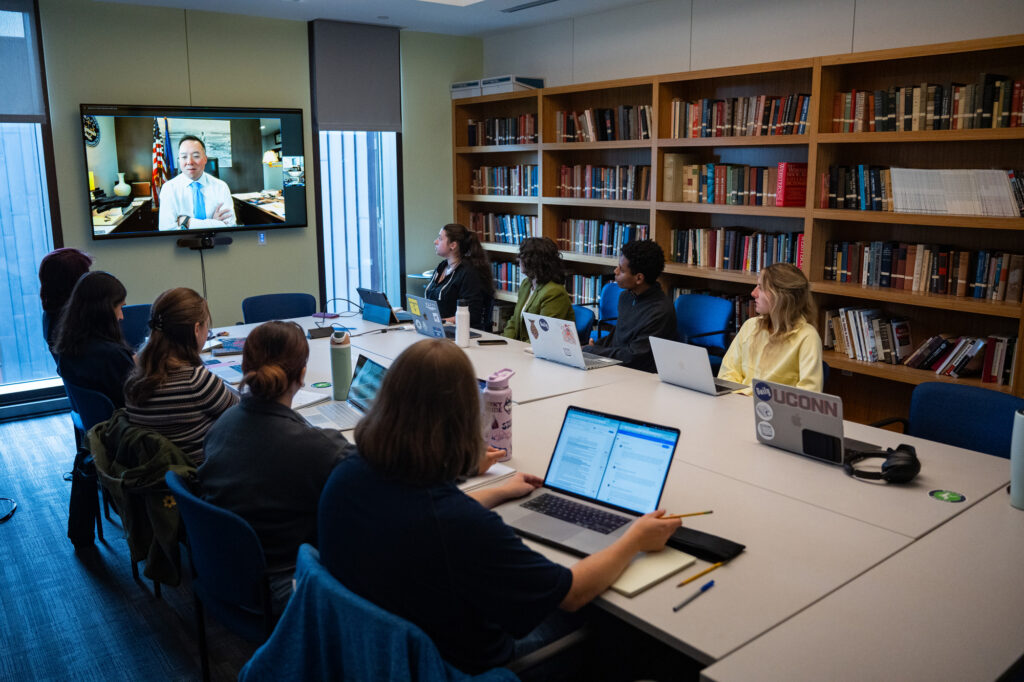
The PREP program is not running this year because the program contracts expired in September 2024 that have not been renewed by Congress, but the attorney general’s office said it has aided an “annual average of 800–12,00 at-risk youth in Connecticut.”
Administration pushes ‘patriotic’ education
On top of threats to federal funding and the push to change DEI programs, there have also been attempts by the federal government to influence school curriculum to promote a partisan view of history and civics.
In September, the U.S. Department of Education collaborated with over 40 conservative organizations to create the America 250 Civics Education Coalition intended to “reignite the fires of patriotism, strengthen civic literacy, and inspire Americans of all ages to understand and cherish our founding principles,” according to its website. The coalition is also planning a celebration for the 250th anniversary of the U.S. in July 2026.
The coalition, which includes highly partisan organizations such as Turning Point USA, the Heritage Foundation and the America First Policy Institute, is an attempt by the Trump administration to combat what the administration has called leftist indoctrination in the way the history of race is taught in schools.
While the programming and logistics of the coalition are still unclear, the federal government is prohibited by law from pursuing “any direction, supervision, or control” over “curriculum or program instruction” in schools, according to federal law.
The America 250 Civics Education Coalition furthers efforts made in Trump’s first term to pursue what the president calls “patriotic education.” In 2020, Trump created the 1776 Commission, an initiative born in response to the New York Times’ 1619 Project, which re-examined American history around slavery and its consequences.
“The left has warped, distorted, and defiled the American story with deceptions, falsehoods, and lies,” Trump said in a 2020 White House Conference on American History.
“Critical race theory, the 1619 Project, and the crusade against American history is toxic propaganda, ideological poison that, if not removed, will dissolve the civic bonds that tie us together,” he said. “It will destroy our country.”
The new civics coalition, spearheaded by the American First Policy Institute and U.S. Secretary of Education and Connecticut native Linda McMahon, will be releasing a “robust programming agenda” in 2026 that will include “50-state speaking tour on college campuses nationwide,” according to a press release.
Turning Point USA, previously led by Charlie Kirk who was assassinated in September 2025, is known for its confrontational college tours and is slated to lead the program.
Hutz H. Hertzberg, chief education officer of Turning Point Education/USA, said the group “is more resolved than ever to advance God-centered, virtuous education for students flourishing across our nation.”
The Trump administration has said its actions are necessary to stop schools from teaching “anti-American, subversive, harmful, and false ideologies.” Trump has even said that teaching critical race theory “is a form of child abuse.”
Some educators, on the other hand, said they think the Trump administration’s plan is part of an authoritarian attempt to exert control over the public education system for political gain.
Education is “very easy for people to exploit,” Morton said. It is an “easy access point for anybody who wants to pursue an ideological agenda.”
Immigration fear is palpable
The fear of immigration enforcement within schools has also impacted the academic environment, especially after the detainment of two high school students in Connecticut.
In June, a Meriden teenager was detained by ICE just days before graduating from Maloney High School. A few weeks later in July, a New Haven high school student was detained while working at his job at a car wash in Southington. Both teenagers have since been released, but as a result, educators say the fear is real and raw.
While there were not any reports in 2025 of ICE officials on school property in Connecticut, state officials released guidance to K‑12 public schools in late January 2025 regarding immigration activities, including protocols should officials show up on school property. While each district’s procedures are different, suggested protocols include requesting immigration agent identification and reviewing any warrant produced by the agents.
The guidance about protocols followed a key change that expanded where ICE could detain immigrants. Mere hours into his presidency, Trump reversed former President Joe Biden’s immigration enforcement guidelines that prevented arrests at places deemed to be “sensitive locations,” such as schools, hospitals, places of worship, shelters, healthcare facilities, protests and rallies.
Educators said this had caused fear of raids in classrooms.
“The fear is real. It is real for my families. It is real for my students,” New Haven Public Schools Superintendent Madeline Negron said.
Negron said her district is very clear about their core values and the belief that every child deserves access to public education. “That is not going to change,” she said.
The district is committed to ensuring students, families and school officials understand district protocols regarding immigration, including training for school security guards, school clerks and teachers. In a Jan. 28 letter to her district, Negron said all ICE and non-local law enforcement officers are required to have a proper warrant or subpoena to access school facilities, students and records. If the officers fail to produce the proper documentation, they will not be allowed in the schools.
“We don’t ask questions,” she said. “We just serve every kid that comes through our door.”
Alyssa Dunn, the director of teacher education at the University of Connecticut School of Education, said some of the administration’s actions, including cuts to special education funding and threats of immigration enforcement in schools, are undermining the fundamental principles of public education.
“In theory, public schools are meant to prepare students to be productive citizens in our democracy,” she said. “That means that you should be able to attend school, no matter what your ability is, no matter what your address is, your zip code, your citizenship status. But lately, policies are seeking to alter or hinder students’ participation in free public education.”
You must be logged in to post a comment.