By Charlotte Harvey
UConn Journalism
A political theory that has been advancing for 100 years is now more influential than ever before – taking center stage in recent Supreme Court arguments, despite many experts claiming it invalid.
The unitary executive theory is a political, legal and constitutional theory that asserts that all the power of the executive branch is held by one individual: the president of the United States.
Today, President Donald Trump’s administration is stretching the theory beyond what has ever been previously attempted and is using the theory to justify a wide range of unprecedented actions. A recent Supreme Court case addressing the theory, Trump v. Slaughter, began oral arguments on Dec. 8, 2025. It may overturn nearly a century of legal precedent and expand the powers of the presidency, further eroding the separation between the president and independent agencies.
Sotirios Barber, an emeritus professor of constitutional law at the University of Notre Dame who has written about the theory, is among the constitutional scholars that deny the unitary executive theory has legitimacy at all. He said it relies on a misunderstanding of history and misinterpretation of our country’s foundational texts.
“This theory has cogency entirely because Americans don’t know too much about their Constitution,” he said.
A quarrel of the first Congress

The argument over the scope of the president’s power goes back to the very first Congress in 1789.
Jed Shugerman, a law professor at Boston University School of Law, said that there was a split among members as to whether the president’s removal power was granted by the Constitution and controlled solely by the chief executive, or if the removal power was like the president’s appointment power and required Senate approval.
Shugerman, who submitted an amicus brief to the Supreme Court in the 2024 case Securities and Exchange Commission v. Jaresky – another case the Supreme Court decided with implications for the removal power and the structure of independent agencies — refers to the two sides as the “presidentialists” and the “congressionalists.”
Proponents of the unitary executive theory argue that the “presidentialist” faction, led by James Madison and Alexander Hamilton, won out and that the Constitution does, in fact, grant the president the power to remove officials within the executive branch without limit.
They cite two clauses in Article 2 of the Constitution as the basis for their theory – the Take Care Clause and the Vesting Clause. They argue that the first clause gives the president the ability to remove all officials and direct every agency within the executive branch. They argue that the second vests all executive power in the president alone and that everyone within the branch is simply carrying out their bidding and allows removal if the president does not believe they are carrying out their will.
The administration has also argued these points in court.
Trump v. Slaughter, concerns the March 2025 firing of Federal Trade Commissioner Rebecca Slaughter. Trump had nominated her to serve on the commission in 2018. She challenged her firing in court, arguing Trump does not have the ability to fire her except for just cause.
In the administration’s brief in Trump v. Slaughter, Trump’s lawyers leaned heavily upon Article 2 and the powers it grants the president.
“The Framers ‘sought to encourage energetic, vigorous, decisive, and speedy execution of the laws by placing in the hands of a single, constitutionally indispensable, individual the ultimate authority that, in respect to the other branches, the Constitution divides among many,’ ” Trump’s lawyer’s wrote in their brief, quoting the Supreme Court opinion in the 1997 case Clinton v. Jones.
“We think that the text of the Constitution confers the executive power, all of it, on the president,” Solicitor General D. John Sauer said in oral arguments.
Shugerman and other scholars argue that this is an inaccurate interpretation of history and the meaning of the Constitution.
“The historical evidence and the original public meaning of the Constitution is overwhelming that the Constitution did not give the president unconditional removal power of the executive branch,” Shugerman said in an interview.
Barber argues that even if the framers of the Constitution had intended the unitary executive theory to be true regarding removal power, they did not plan for the president to become all-powerful in ruling the executive branch. Even Hamilton, a leading figure of the presidentialist faction, did not picture the executive branch having more power than the other branches of government, he said.
“Hamilton assumes, yeah, you’ve got a powerful presidency, but you also have a presidency that’s checked by other branches of the government that are also powerful,” Barber said.
The Modern Legal History
There is no dispute that there are many positions within the executive branch that are subject to removal by the president at will, such as cabinet officials and the president’s advisers, which generally change with each administration.
“You can’t saddle the president with advisers that the president doesn’t want around,” said Daniel K. Birk, a lawyer and constitutional scholar who previously served as a visiting assistant professor at Chicago-Kent College of Law.
One of the most important questions being brought before the Court is whether Congress can create agencies with independent leaders that are intended to be insulated from political influence. This practice dates back to at least 1790, when Congress created the “Sinking Fund Commission” to pay debt and disperse funds with commissioners that could not be removed by the president.
In a 1926 case, Myers v. United States, the Supreme Court considered whether President Woodrow Wilson could remove the First-Class U.S. Postmaster despite a law prohibiting him from doing so. The court ruled that the prohibition was a violation of the separation of powers and unduly restricted the president.
“The President is empowered by the Constitution to remove any executive officer appointed by him by and with the advice and consent of the Senate, and this power is not subject in its exercise to the assent of the Senate, nor can it be made so by an act of Congress,” Chief Justice William Taft, the only member of the court to also serve as president, wrote in the majority opinion.
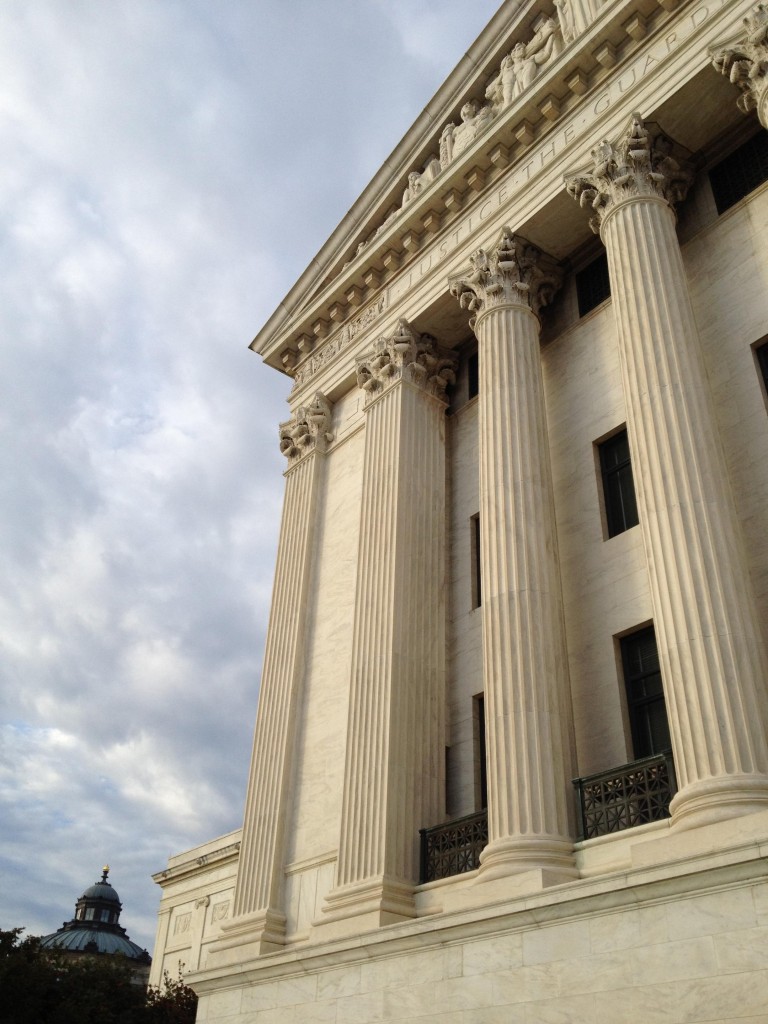
In 1935, the court reversed its position in another case, Humphrey’s Executor v. United States, which considered President Franklin D. Roosevelt’s s firing of an FTC member over policy disagreements, even though the act creating the agency in 1914 specified that commissioners could only be fired for “just cause.”
Roosevelt’s administration argued that not allowing him to fire the commissioner unduly limited his power. He lost. The separation of powers, the justices reasoned, necessitated Congress having the power to create agencies that are out of the president’s reach and “free from the control or coercive influence, direct or indirect.”
In the years after that decision, the Supreme Court relied on the Humphrey’s decision as precedent in cases such as Myron Wiener v. United States in 1958 in another instance of presidential removal. The court opinion stated that the “assumption” in the Myers case that the president had inherent constitutional powers to remove officials regardless of what restrictions Congress imposed on their tenure was incorrect. They said the thinking in the Myers decision was “short-lived,” having been overturned less than 10 years later with a unanimous court ruling in the Humphrey’s case, that included some of the judges who had ruled in the majority in the previous case.
Until 2020, the understanding was that the precedent set in the Humphrey’s case applied and that presidents could only remove independent agency heads for just cause. That restriction was challenged in regards to the structure of the Consumer Financial Protection Bureau, created after the 2008 financial crisis.
In Seila Law v. CFPB, a law firm that was being investigated by the CFPB challenged the agency’s constitutionality when declining to comply with orders to produce documents. When Congress created the agency in 2010, they specified that the agency would have a single director that served a five-year term and could be removed for “inefficiency, neglect of duty, or malfeasance outside of office” — the three conditions that can be considered a “just cause” firing.
The Supreme Court decided that the structure of the agency where the president could only remove the director for cause violated the separation of powers under the U.S. Constitution. They said the Myers decision was the appropriate precedent instead of the more recent Humphrey’s case, which they said represented an exception to it.
In a 2021 case, Collins v. Yellen, that questioned the constitutionality of the Federal Housing Finance Agency, the court ruled that the structure of the agency – again run by a single director who could only be removed “for cause” — violated the separation of powers. The ruling solidified the broadening of the removal powers of the president and weakening the ability of Congress to keep agencies independent from the chief executive.
Now, after a spate of firings by Trump on the basis of political loyalty, including a member of the FTC, the Supreme Court is poised to potentially rule that the president has the ability to remove any member of an independent agency within the executive branch.
Trump’s lawyer Solicitor General Dean John Sauer argued that that the decision in the Humphrey’s case should be overturned.
“Humphrey’s Executor is a decaying husk with bold pretensions,” Sauer said in his opening remarks before the court. “The Court should overrule Humphrey’s Executor explicitly and restore the separation of powers to our government.”
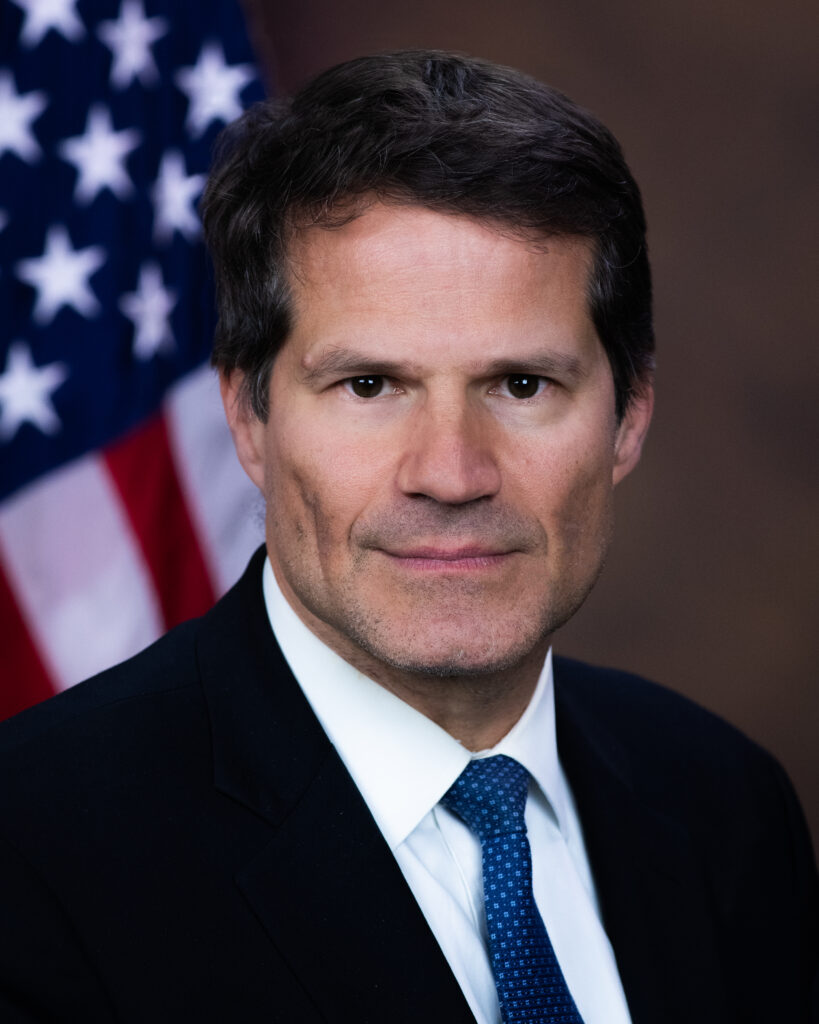
In oral arguments, Chief Justice John Roberts echoed Sauer’s language, calling the former precedent “just a dried husk of whatever people used to think it was.”
Expanding Presidential Power
Trump was not the first president to expand the powers of the presidency under the guise of the unitary executive theory, though scholars disagree when the more extreme interpretation being used today began to take form.
Some point to the presidency of Richard Nixon, while others cite Ronald Reagan.
Mitch Sollenberger, a professor at the University of Michigan Dearborn, said that before Trump, George W. Bush used the unitary executive theory to expand presidential power following the terrorist attacks of Sept. 11, 2001.
“He was really, up to that point, the most aggressive at doing it,” Sollenberger said. In this story of expanding power, the phenomenon has been bipartisan, he said. Though “flare-ups” have occurred under Trump and Bush, one shouldn’t assume this is just a Republican president problem, he said.
“I think with presidential power, there’s no ratcheting down,” Sollenberger said. “It’s always ratcheting up.”
Birk noted that once the power has been given to the executive branch, it is incredibly hard to rein back in and can be deployed by any president that follows from whatever party.
“The problem with letting the executive start to take more authority is that it never goes back into the bottle, right?” he said. “It’s hard to get it back in.”
Proponents of the unitary executive theory believe that the president has not only the right to remove whomever he pleases from the executive branch, but that he must, so that he can regain control of the government.
The more than 900-page Project 2025 plan for a conservative presidency authored by the Heritage Foundation and those with ties to the Trump administration argues that bureaucrats are the problem and that it is the president who serves as the guiding and controlling force in the executive branch. It cites the power granted to the president by the Constitution.
“The modern conservative President’s task is to limit, control, and direct the executive branch on behalf of the American people,” the document states.
A section written by Russell Vought, now Trump’s director of the Office of Management and Budget, states: “it is the President’s agenda that should matter to the departments and agencies, not their own.”
In a 2025 interview with Tucker Carlson, Vought was explicit about the administration’s views that the chief executive has sole control and that bureaucratic independence needs to be snuffed out.
“Number one is going after the whole notion of independence,” Vought said. “There are no independent agencies. Congress may have viewed them as such — SEC, or the FCC, CFPB, the whole alphabet soup — but that is not something that the Constitution understands. So, there may be different strategies with each one of them about how you dismantle them, but as an administration, the whole notion of an independent agency should be thrown out.”
Concerns over checks and balances
Mark J. Rozell, the founding dean of the Schar School of Policy and Government at George Mason University, said legal experts and scholars are concerned that the other branches of government have not acted to check the president’s power.
“Many constitutional scholars find this to be quite scary, frankly, that there has not been significant pushback by those with countervailing powers,” he said. “Congress has an institutional interest in protecting its own prerogatives and powers.”
They have an inherent motivation to keep a president from acting as the singular power of government.
“But that’s exactly what this president has been doing because Congress has not stood its ground,” Rozell said.
Shugerman said that while past administrations have stretched executive power in questionable ways, there has never been a president who has pushed executive power as far as Trump.
Shugerman said that the Supreme Court is not only failing to serve as a check on the president, but that they are empowering Trump to push his power farther than his predecessors.
He argued that a prime example of the Supreme Court doing this was the 2024 case Trump v. United States where the court ruled that the president is immune from criminal prosecution for actions taken while president.
Shugerman said that this landmark decision, alongside the court’s opinions that have expanded presidential power, have emboldened Trump and given him the green light to do things presidents have never attempted before.
He said that conservatives in government agree with the sentiment expressed in Project 2025 that bureaucracy and bureaucrats are the real issue in the government. This belief, he said, has guided the Supreme Court in their decisions and prevented the conservatives in Congress from intervening.
“I think there’s such an ideological assumption that the bureaucracy is the problem – that the deep state is the problem — that they will ignore the increasingly obvious fact that authoritarian executives are a much bigger problem than some bureaucrats in D.C.,” Shugerman said.
Sollenberger also stressed the need for the other branches of government to fulfill their role as a check on presidential power and the dangers of allowing the president to take governmental action unilaterally without restraint.
He spoke specifically about the actions Trump is taking under the guise of exercising emergency powers as a prime example of a situation where the other branches need to intervene and act as a check. This kind of exercise of executive power that uses the unitary executive theory as a legal basis, he said, is dangerous.
“If this is allowed to stand and the president has this kind of unilateral authority without question, without checks coming from particularly the judiciary, then the president can say the sky is black, even if it’s blue. Say it’s pink and orange even though it’s blue, right? You name it and he’ll be able to do it and not be challenged,” Sollenberger said.
Lily Goldblatt contributed reporting to this article.
You must be logged in to post a comment.