By Anna Heqimi
UConn Journalism
When Doina Lavoie-Gonci and other volunteers with the Old Lyme Refugee Resettlement Committee learned about the plight of a pregnant mother of three from Honduras whose husband had been deported, they took action, working to identify organizations and resources that could help.
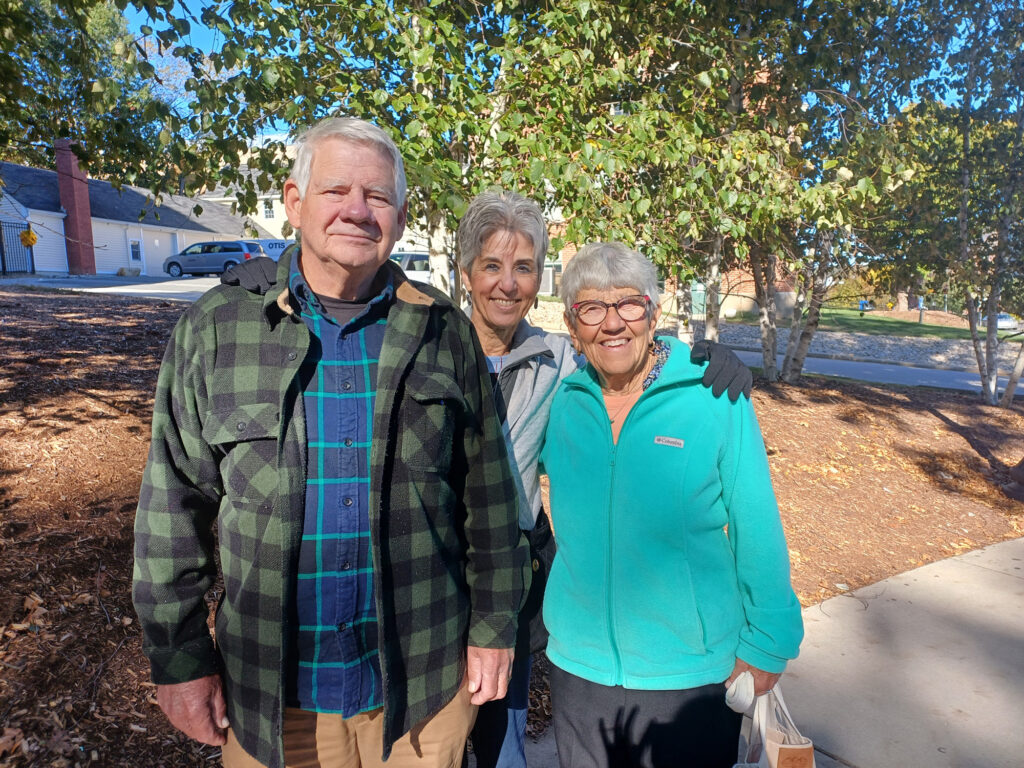
The group, which was previously dedicated to helping new refugees settle in the area, is among the many volunteer organizations seeking new ways to aid immigrant and refugee families already in Connecticut.
“We are all ‘visitors’ here on this planet and in our lifetimes have choices on how we choose to walk down our individual path,” Lavoie-Gonci said. “For me, it is simply the right thing to do.”
In the year since President Donald Trump returned to the White House and immigration enforcement has significantly ramped up, the refugee resettlement system has drastically changed. After initially suspending the refugee resettlement program, Trump significantly limited the number of incoming refugees.
With far fewer refugee families entering the country, local nonprofits and church groups have had to adapt to uphold their missions.
Under President Joseph Biden, the refugee limit for fiscal year 2025 was set at 125,000, with spots allocated to those coming from Africa, East Asia and Latin America. According to the Department of Homeland Security, most refugees came from Venezuela, Afghanistan and Syria in fiscal year 2024.
In late September 2025, Trump announced his administration would limit the number of refugees to just 7,500 refugees for fiscal year 2026, primarily accepting Afrikaners from South Africa, according to the Office of Homeland Security. Trump also banned Afghans from entering the U.S., and Venezuelans are partially banned, according to a presidential proclamation.
Trump said that Afrikaners are facing persecution. “Generally they’re white farmers and they’re fleeing South Africa, and it’s a very sad thing to see,” he said in remarks at the White House.
Maggie Mitchell Salem, executive director of Connecticut-based Integrated Refugee & Immigrant Services, said the “historically low” refugee admissions number sets an “unfortunate record.” The 2026 fiscal year limit is the lowest number of maximum refugees accepted in the country since the program started in 1980 – even lower than during the COVID-19 pandemic, according to the Migration Policy Institute.
Mitchell Salem said the white Afrikaners that the administration is prioritizing are those who are “ideologically aligned with the administration,” and not actual refugees. Her organization made the decision to no longer participate in the refugee admission program and to not to assist any new refugees besides Afghan allies.
“The populations being welcomed are not refugees, and we know what that word means, and we know who we serve,” Mitchell Salem said.
The U.S. Department of State used to provide the group, known as IRIS, with funding to support refugee settlement for the first 90 days that a refugee was in the U.S. The funds were used to provide refugees with apartments, basic supplies and groceries. It also helped cover staff that assist refugees to get children into school, find jobs, and obtain legal services.
The Trump administration cut refugee support funding, causing the nonprofit to lose $4 million in revenue in early 2025, according to Mitchell Salem. IRIS cut 40% of its staff and closed offices in Hartford and New Haven.
“I think being an immigrant is at the core of who we are as Americans,” Mitchell Salem said. “The work we do at IRIS is fundamentally among the most American jobs you can have because it’s bringing in and helping adjust the next generation, and I think that’s beautiful.”
Daad Serweri, who came to the U.S. in 2017 from Afghanistan and works as IRIS’ associate director of sponsorship, said the organization is relying more on volunteers and community partners.
Serweri said he thinks that less refugees and immigrants will be harmful to the U.S. economy.
“A lot of immigrants and refugees are entrepreneurs, and they are not only contributing economically, but also are creating employment for many others,” Serweri said. “By not having this program and not welcoming refugees in this country, we are losing those advantages.”
Churches committed to supporting refugees
Ann Grosjean is a liaison for the Storrs Community Church Mercy & Justice Team and Quiet Corner Refugee Resettlement, which has helped settle five refugee families since their founding in 2015. Her church is one of 30 faith communities participating in Quiet Corner Refugee Resettlement.
Three families were from Syria, one was from Afghanistan and one was from Nicaragua. Grosjean, who is a former teacher, would help the children of the families learn English and would oversee furnishing the restrooms of the houses provided to the refugee families.
“It has been a great way to volunteer in my retirement and give back to the community after 35 years of teaching,” Grosjean said.
She described the community effort that went into supporting new refugee families: one volunteer would teach the adults how to drive while another would help the family open a bank account and organize their finances, she said.
With the changes to the refugee system, the group doesn’t expect to have new families to help.
“The whole system fell apart,” she said.
But volunteers have formed strong connections with the refugee families already here and still help them as friends, she said. “We go as long as there is a need,” Grosjean said.
The mother of one of the Syrian families Grosjean helped resettle said she is extremely grateful for the support she received.
Yasmin Almuhsen said if she did not receive the support she did, “I would not have gone to the doctors or go to school; I wouldn’t do anything.”
Today, she is a U.S. citizen, running a small cooking business and working on getting her GED. Grosjean remains a crucial support.
“If there is anything, I call her,” Almuhsen said.
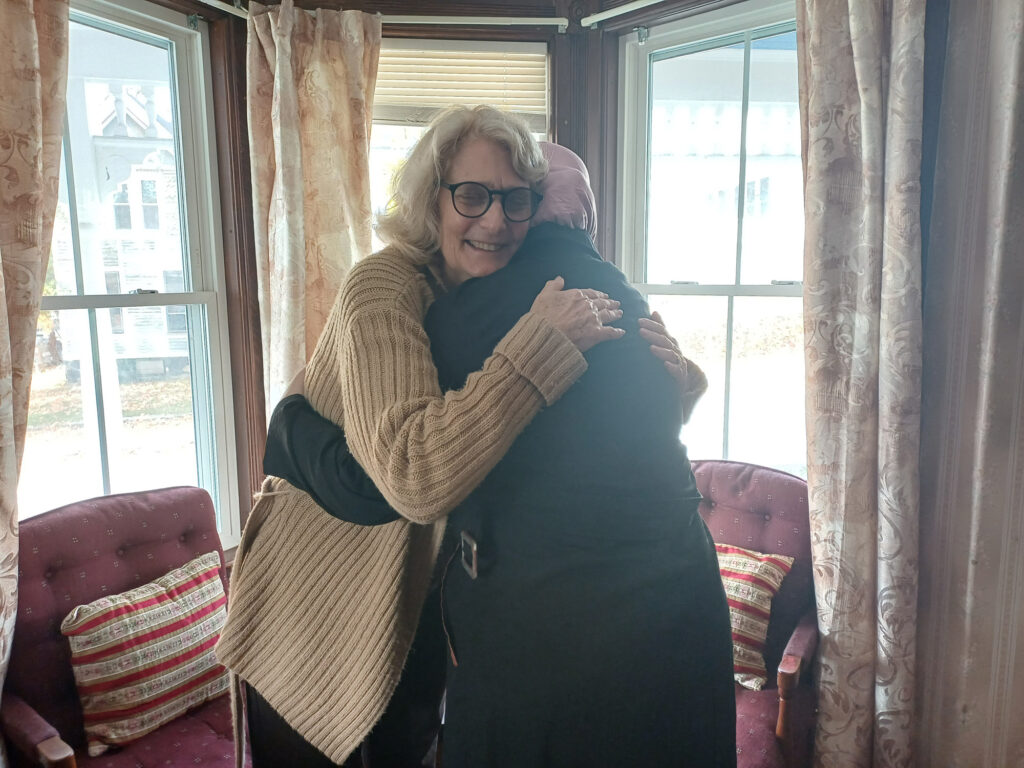
Members of other groups that were focused on new refugees say they are focused now on helping existing members of their communities, too.
Lavoie-Gonci, a physician assistant, supported refugee families through medical assistance, ensuring they went to appointments, got wellness checks and took medications as prescribed. She would also assist families applying for government benefits such as the Supplemental Nutrition Assistance Program. Jo-Ann Staves would help with tutoring children, teaching them English and the alphabet.
Lavoie-Gonci and Staves said they have formed strong bonds with refugee families. They helped resettle one family from Syria in 2016, and recently attended their oldest son’s graduation from the University of Connecticut in May 2025.
The First Congregational Church of Old Lyme, the church part of their committee, has also helped immigrants resist deportation. In 2018, during the first Trump administration, Lavoie-Gonci said the church gave sanctuary to a Pakistani family who lived in the basement of the church for more than six months as they fought to remain in the U.S.
Their removal was halted by the court at the time. But Lavoie-Gonci said she was devastated to learn the family chose to self-deport in March 2025 as the second Trump administration’s immigration enforcement efforts escalated.
“The family had been observing the increasingly draconian measures used by this current administration towards immigration matters and decided they needed to be proactive to exercise some sort of control around how they left the country,” Lavoie-Gonci said.
In December, both she and Staves were working to help the pregnant Honduran woman by finding other organizations that can help her pay for rent, food and utilities. Lavoie-Gonci delivered food and money to the woman provided by her and other volunteers.
“Her life has been turned upside down and she is struggling to just figure out each day. There are a couple of organizations that are trying to make things happen, but it is taking time and effort,” Lavoie-Gonci said.
You must be logged in to post a comment.