
By Krisztian Elcsics, Gabrielle Wincherhern, and Seth Wallen | UConn Journalism
May 11, 2026
The Connecticut Department of Energy and Environmental Protection will host the third in a series of informational meetings about nuclear power for the public on May 13.
The uncertainties that led to disquiet over nuclear power across the country in the 1970s and 1980s have not gone away but have changed as technology has evolved. Nuclear power plants generate waste in the form of fuel rods, which remain radioactive for thousands of years. Back in the 1980s, and even now, the federal government has not settled on a permanent storage site for spent fuel rods.
But today, some nuclear plants are being designed on a smaller scale, with new ways of storing spent fuel rods on site.
Its proponents believe nuclear power could address a wide range of problems. It seems to hold the potential to solve anticipated energy demands from computer data centers as well as to reduce greenhouse gases emissions enough to meet the state’s ambitious goals.
Department of Energy and Environmental Protection Commissioner Katie Dykes said in a statement to reporters that within a decade, Connecticut will face a major problem in meeting the power demands of households and particularly data centers, which create what are known as “always-on” power needs.
“The mid-2030s is where we start to see that we are going to face more significant shortfalls in terms of energy generation,” Dykes said. “The mid-2030s and onward is really kind of the target, where we need to think about whether nuclear could be possible by that time, or whether it may be further into the future.”
She added, “But that will depend on actions that we take today. While it may seem like a long time from now, now is the time we need to get started.”
Initiatives at both the federal and state levels are converging. On May 23, 2025, President Donald Trump signed an executive order to advance nuclear technology and energy. Earlier that year, the Connecticut General Assembly passed a sweeping climate change bill with an ambitious goal to reduce greenhouse gas emissions 45% by 2030, 70% by 2040, and to achieve economy-wide net-zero levels by 2050. Those two moves, from the federal and state governments, have created an urgency not seen since the 1960s.
In December, the state Department of Energy and Environmental Protection, or DEEP, began holding meetings to inform the public of the possibility of building more nuclear reactors within the state, hoping to entice a town to host one.
The third workshop in DEEP’s series, both in person in Hartford and on Zoom, will be held from 3 to 5 p.m. May 13, with an overview of fusion energy, a new technology different from traditional fission reactors.
Dykes said these systems could be “a transformational source of always-on, carbon-free energy.”
“This informational process is intended to foster engagement and gather input from diverse perspectives on critical aspects of nuclear energy development,” DEEP’s news release says. “These workshops are designed to assist municipalities and inform policy makers about the potential for hosting new nuclear capacity in the state.”
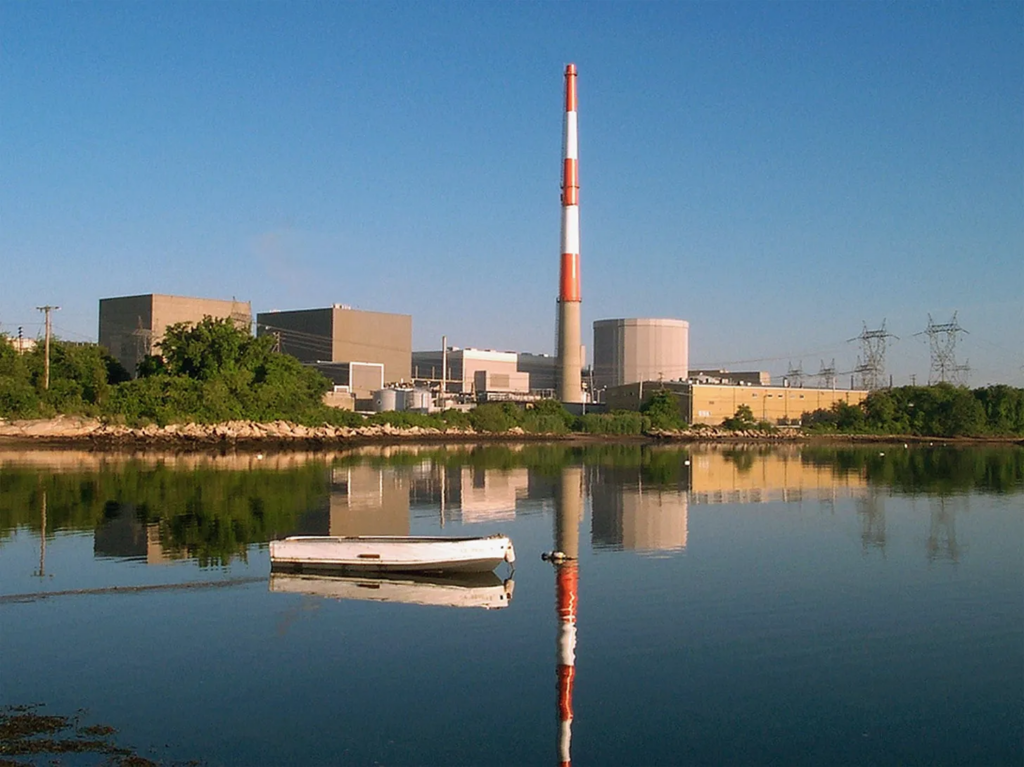
Connecticut is no stranger to nuclear reactors. The Millstone Nuclear Power Station has been operating in Waterford since 1986. Millstone Unit 1 stopped operating in 1995. Millstone’s two other units supply the New England grid with about 15% of its electricity as the largest single source of power in the region. Connecticut’s first nuclear power plant was Connecticut Yankee, which operated on the Connecticut River in Haddam from 1968 until 1996.
But nuclear technology has changed.
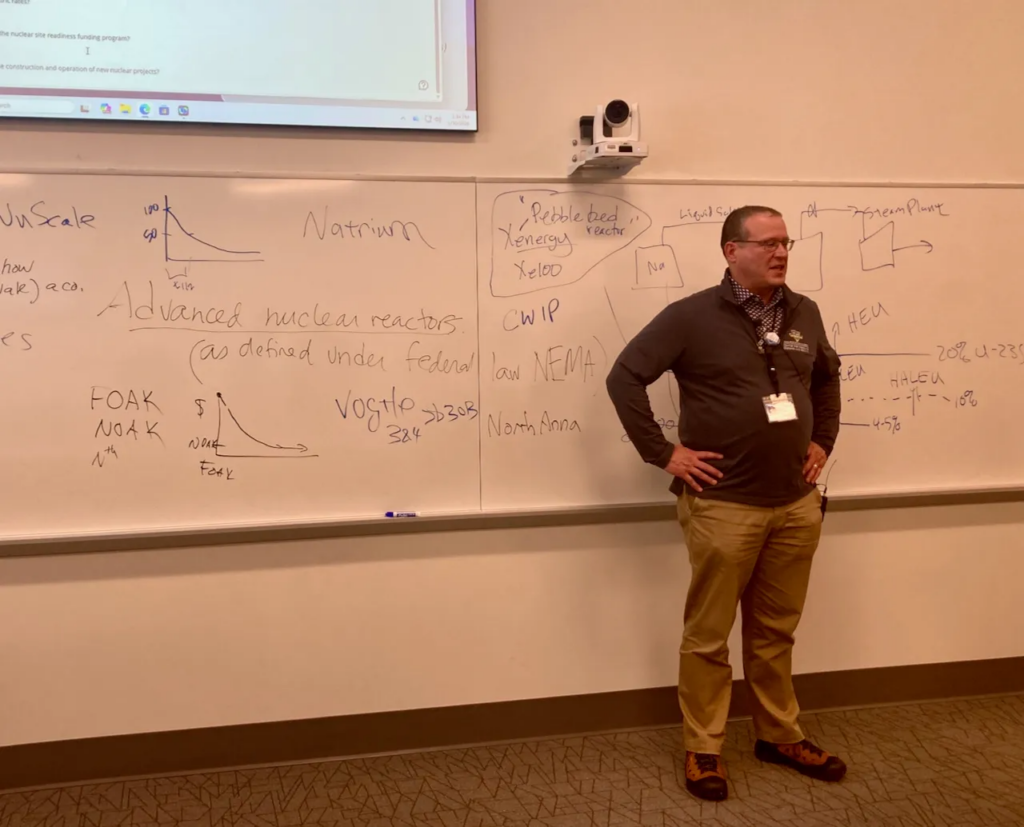
One difference is Connecticut is aiming for potential new plants to be powered by small nuclear reactors. Small nuclear reactors are classified as “advanced” under the Nuclear Energy Innovation and Modernization Act, which defines reactors based on safety features, economics, nuclear waste and other factors.
Advanced nuclear reactors are designed to be portable, smaller and safer than older and larger nuclear reactors, according to the U.S. DOE. They can be used for power generation, processing heat, desalination and other industrial uses.
Small nuclear reactors typically generate less than 300 megawatts of electricity, according to Jeffrey Semancik, the radiation division director for DEEP. Compare this to the Millstone units which make more than 2,100 megawatts. Semancik said the new smaller units are designed to be built in a factory and then assembled on site.
These small nuclear reactors come in groups rather than one unit, Semancik said. Individual reactors can be shut off while others operate, and new reactors can be added later. DEEP says that four co-located reactors could deliver 1,200 megawatts.
Critics of adding nuclear power capacity say it depletes resources.
Nuclear power is not pollution-free energy, said Johanna Neumann, senior director of the Campaign for 100% Renewable Energy for Environment America. Pollution-free energy is defined as energy that is abundant, inexhaustible and has little impact on human health.
“Nuclear power doesn’t meet the criteria of being clean and renewable because uranium is a finite resource,” Neumann said, noting that once used, it becomes depleted.
Other concerns over nuclear energy include its health risks.
Researchers from Harvard and other institutions recently published a study in the journal Nature Communications that suggests those who live near nuclear power plants may be at higher risk for cancer. Nuclear power plants use ionizing radiation, which has been classified as carcinogenic by the International Agency for Research on Cancer.
Additionally, in the event of an accident, nuclear power plants have the potential to have disastrous effects on both human health and the environment, according to the U.S. Energy Information Administration. It should be noted that most nuclear power plants have run without accidents for decades, and nuclear power plants have many safeguards in place to prevent problems, according to the World Nuclear Association.
Another problem with nuclear energy is the price.
While the cost of generating power from nuclear energy is low, building the plant is what ends up costing so much, said Joseph DeNicola, a senior policy advisor at DEEP.
When asked how nuclear power plants would affect electricity prices for Connecticut residents, DeNicola said that answer is currently unknown because no advanced nuclear reactors have yet been built.
Connecticut is a part of a deregulated regional electrical grid, and Nicola noted that electricity is bought and sold on the open market, leaving the risks of building new plants to private companies.
“Who bears the risk of cost overruns is one of the main challenges with nuclear right now,” DeNicola said. “If it is that much more expensive, who’s going to pay that extra cost? No one wants to take the risk. So, that’s a question that must be resolved in a place like Connecticut.”
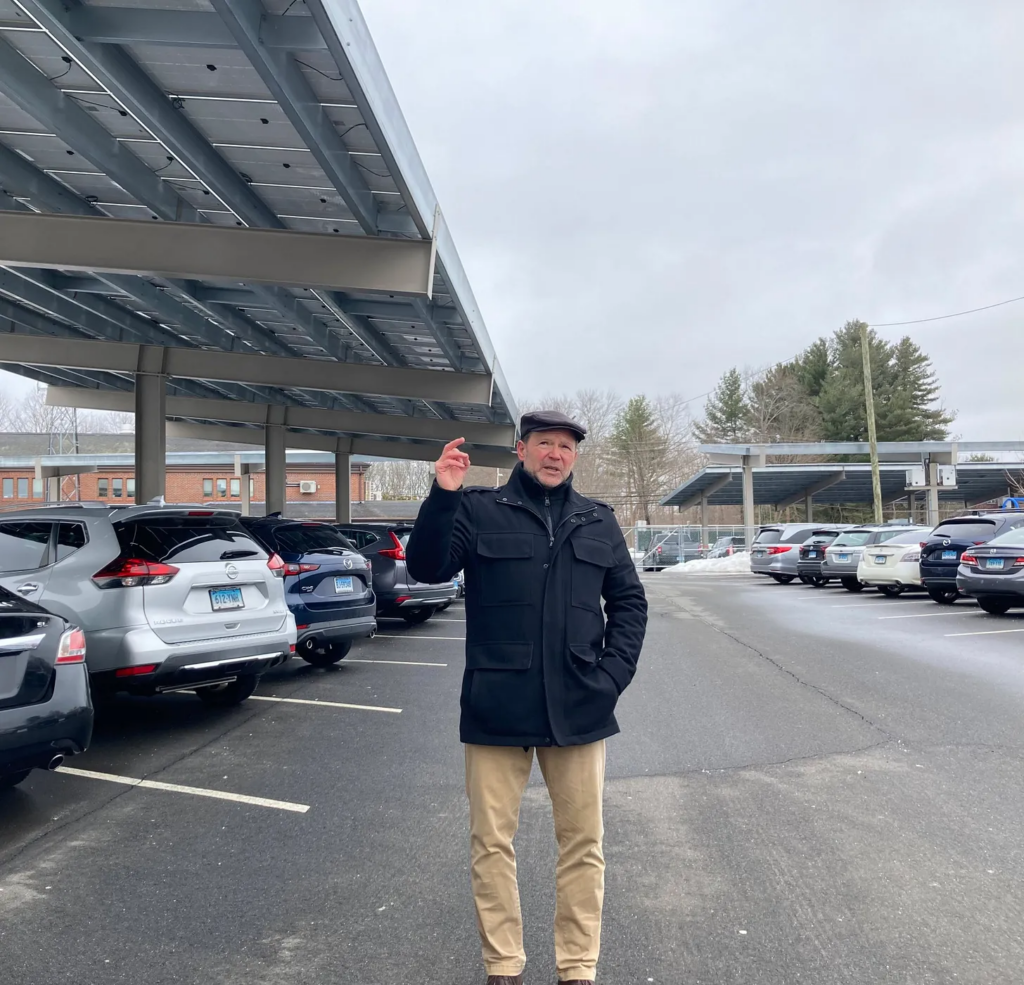
Despite this, energy officials believe that introducing new nuclear power could ultimately protect ratepayers from price spikes. The majority of New England’s non-renewable energy comes from natural gas, which is used to heat homes in the colder months of the year.
“If you looked in the spring and fall, our electric prices might be $20 per megawatt hour,” Semancik said. In late winter, the average was about $500 per megawatt hour.
Although Connecticut is currently producing more electricity than it needs, that could change, according to DeNicola. A 2026 report from the International Energy Association shows that energy demands are projected to increase in the coming years. Going nuclear could help the state meet that demand, its proponents argue.
“There is so much that has evolved and changed in the nuclear industry since the last time that Connecticut was in dialogue with communities about siting and hosting nuclear,” Dykes said. She said the state wants the public to understand “the current technology, safety, security and environmental impact,” which is why it is hosting the workshops.
Krisztian Elcsics, Gabrielle Wincherhern, and Seth Wallen are students at the University of Connecticut. They produced this story through JOUR 3046: Environmental Journalism, a course taught at the UConn Hartford campus in Spring 2026 by Christine Woodside.