
Living/learning communities are the latest innovation in a long history
By Krystal Johnson, UConn Journalism
May 7, 2026
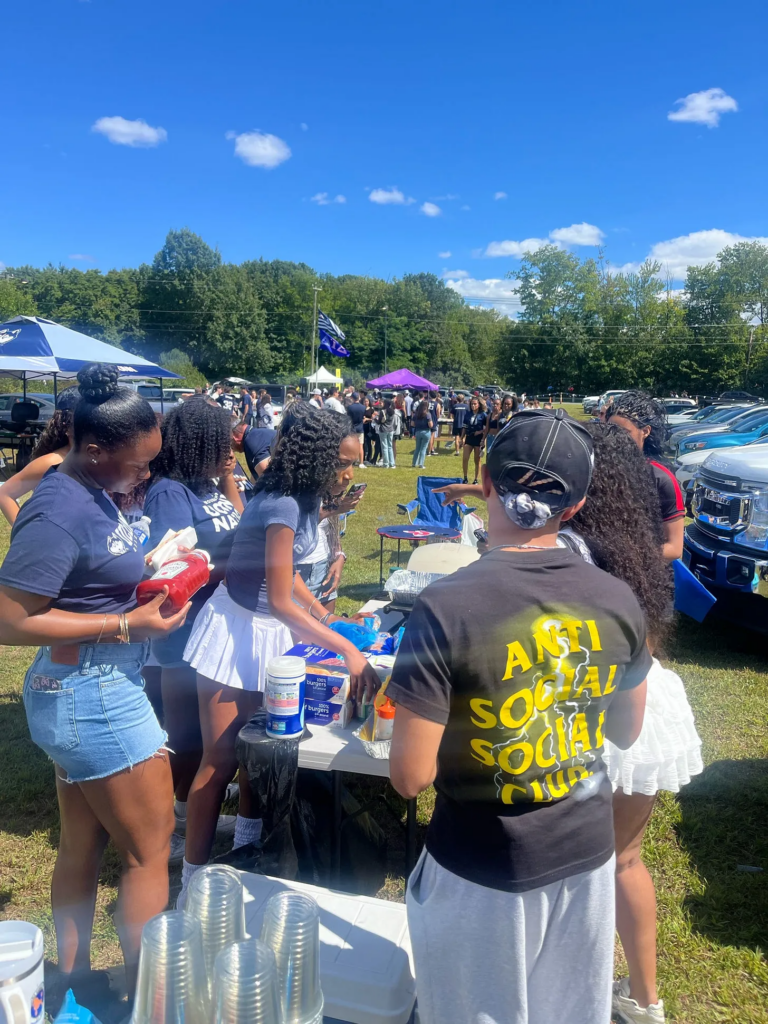
At the University of Connecticut, Black students are finding community within innovative organizations that are designed to foster connections and a sense of belonging.
In 2023, the Black Sisters Optimizing Unity & Leadership House joined the Scholastic House Of Leaders in Support of African American Researchers & Scholars as a learning community on the university’s main campus. These learning communities support Black women and men in their freshman and sophomore years.
Known as BSOUL and ScHOLA2RS, respectively, they are part of UConn’s larger system of learning communities that aim to provide support for students transitioning to college. These communities attract students with a variety of interests, from the success of Black women in higher education to environmental causes, human rights and engineering.
Data USA reports that in 2023, white students made up 50 percent of the UConn student body or 13,639 students. Black or African Americans accounted for 1,889 students, or about 7 percent. Statewide census data show whites make up about 66 percent of state residents, with Black residents at roughly 12 percent.
The gap between demographics aligns with the Encyclopedia of African American Education definition of Predominantly White Institutions, or PWIs, as “institutions of higher learning in which whites account for 50% or greater of the student enrollment”
“I don’t see people from where I’m from,” freshman UConn student Nhyria Mensah said. “It’s really lonely.”
To combat this sense of loneliness, in the BSOUL learning community, students take one class freshman and sophomore year focused on developing a professional network with alumni and building a community. The community targets academics, research and professional development.
“It launched to create an environment for Black women to be greeted with other Black women as soon as they started here at UConn,” BSOUL Graduate Assistant Tyshana Campbell said.
After its start in spring 2023, BSOUL expanded into what UConn calls a living/learning community the following semester. Such communities enable students to live together on the same floor of the Peter J. Werth Residence Tower.
When submitting housing applications, new and current UConn students can select one living/learning community they’re interested in and will be notified mid-May if they’ve been accepted. UConn charges no additional fees for students interested in participating in these living-learning communities.
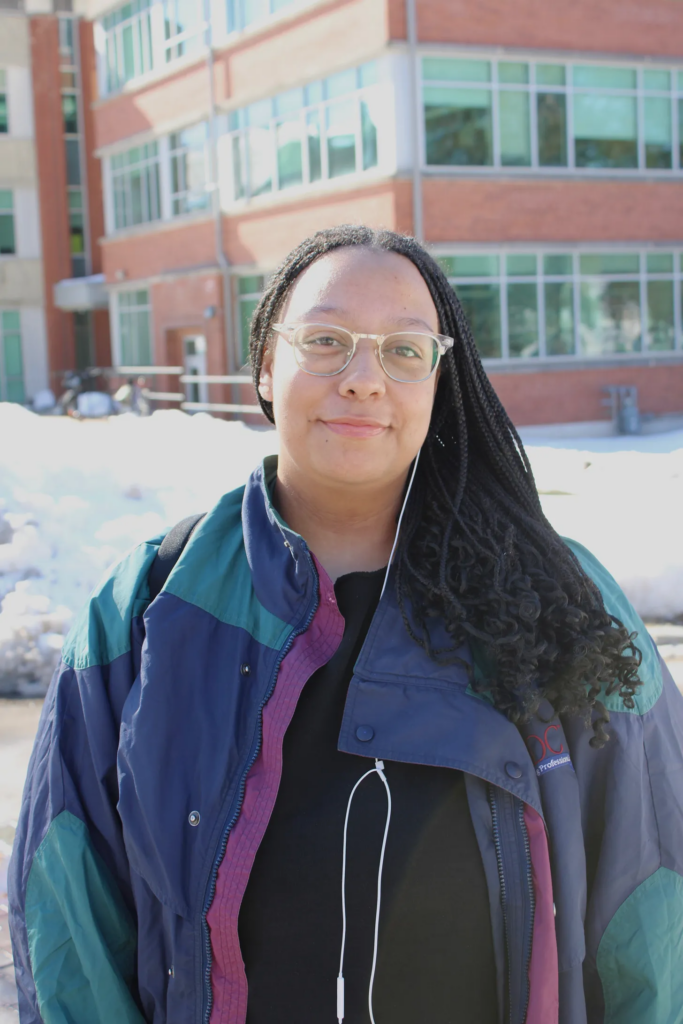
Second-year BSOUL student Kamdyn Thomas said when she walks around the campus she doesn’t see a lot of people who look like her. But living on the BSOUL floor with other Black women she can walk out of her room in her bonnet without worrying about what’s going on with her hair. She’s able to text the group chat and ask the other women if they have braiding gel or even a head scarf.
“I can experience all these cultural things that are within our community,” Thomas said. “It makes my life a lot better. It’s like a weight lifted off my shoulders when I got into that house.”
Campbell and another graduate assistant teach a class to the BSOUL women on how to build up their identity, figure out who they are and discover their interests and passions.
BSOUL also hosts wellness events, monthly community meetings, events with organizations on and off campus and professional opportunities.
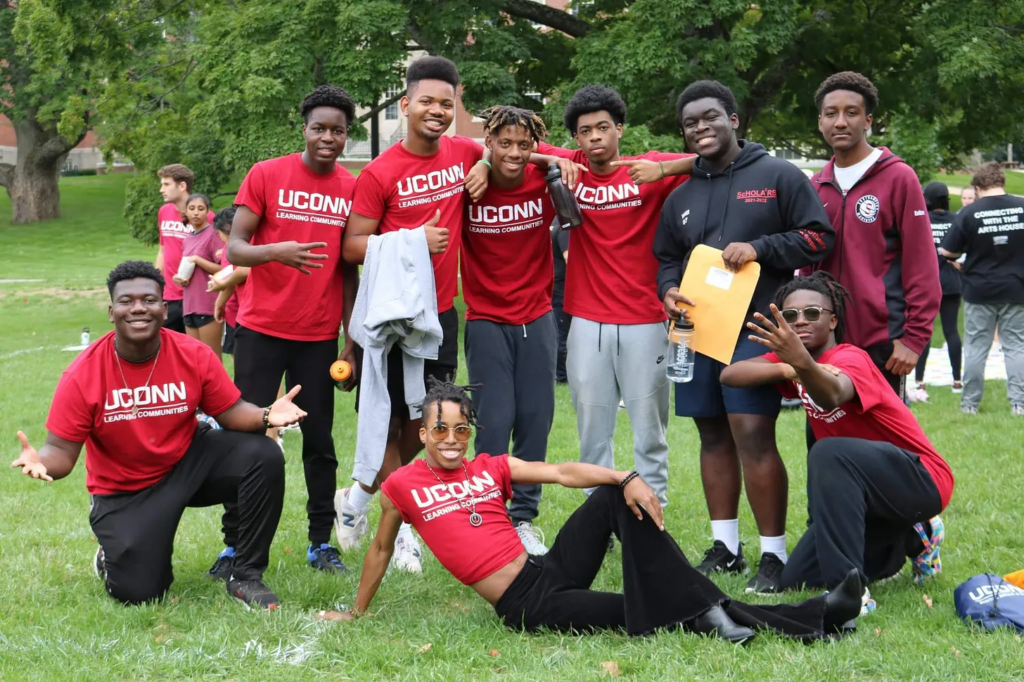
Much like BSOUL, the Scholastic House Of Leaders in Support of African American Researchers & Scholars, OR ScHOLA2RS, living/learning community offers classes to first- and second-year Black men.
Senior Ayoyinka Omojola says ScHOLA2RS has been a huge plus.
“It gave me friends for life,” he says. “People that I could always go to whenever. Anytime — 2 a.m. or 5 a.m. — someone’s up to talk. Those things give us a good sense of community and that’s important, especially being here.”
It’s not unusual to find the BSOUL and ScHOLA2RS learning communities teaming up to host events. And the learning communities will often collaborate with other Black campus organizations such as the Black Student Association, UConn West Indian Student Organization, the National Association of Black Accountants and others.
Long tradition
Living learning communities that foster Black community are a growing resource across the country, Oregon State University has its own living learning community for Black students. The Nia Black Scholar Living-Learning Community focuses on building a supportive and engaging community for Black Students. Alma College in Michigan has the Julius Chatman Living Learning Community for first-year students to live together and support each other while attending a predominantly white institution.
At UConn the newer learning communities come out of a longer tradition. The African American Cultural Center was established in 1968 to serve as a link between students and UConn departments such as Residential Life and Financial Aid. It also provides a support system for Black students in their academics and personal lives. Over the years, the goals of the cultural center have changed but its values and mission statement have stayed the same. The AACC is committed to creating a welcoming environment for Black students that preserves their culture and provides support in all areas of their college experience.
Centrally located on the fourth floor in the Student Union, it’s open to all students, whether that be to study, meet up with friends, host an event or talk with department staff. The center is known for bringing together the Black community by hosting the Black student organizations involvement fair, Crown Day where students can get their hair done for free, opening and closing ceremonies for Black History Month, and the Black Excellence Summit to encourage professional growth and community building.
As president of UConn’s Black Student Association, Mikayla Robinson has firsthand experience seeing how campus involvement can reduce feelings of isolation and lower stress.
“Events that bring students together, create joy, and provide safe spaces for conversation can have a really positive impact,” she said.
Every Tuesday, the Black Students Association hosts its general meetings in the cultural center, which are open to all students. Events range from karaoke night to honoring Black figures who have shaped the future.
The network of support today in UConn’s Black community mirrors an important time in the early 20th Century when Black students around the nation faced systematized racial segregation. Between 1903 and 1963, nine African American sororities and fraternities were created to build a sense of brother- and sisterhood and uplift the Black community. The “Divine Nine” as they are known, are part of the National Pan-Hellenic Council and also have a presence on the UConn campus: Alpha Phi Alpha, Alpha Kappa Alpha, Kappa Alpha Psi, Omega Psi Phi, Delta Sigma Theta, Phi Beta Sigma, Zeta Phi Beta, Sigma Gamma Rho and Iota Phi Theta.
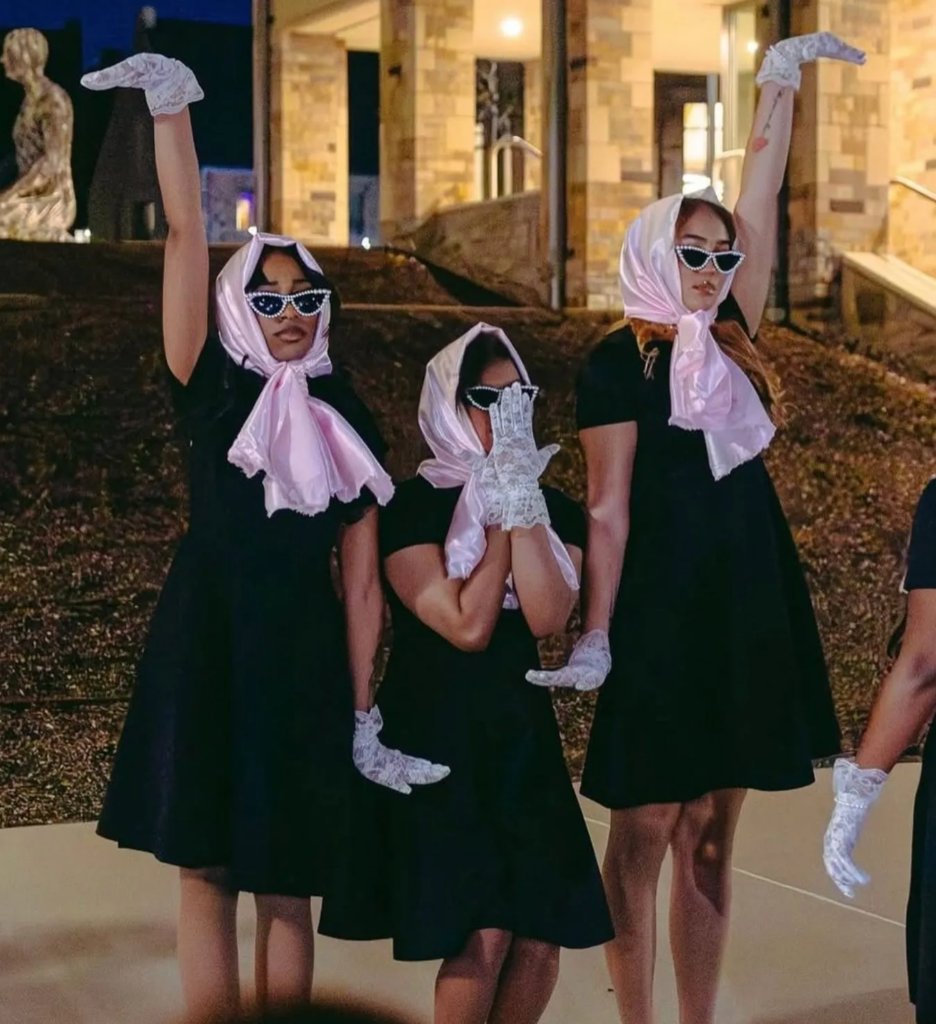
This sense of Black community can often be expressed through the Divine Nine tradition of strolling, in which members perform synchronized steps combined with stepping in a line formation.
Recently Alpha Kappa Alpha Sorority Incorporated (AKA) had a new member probate at Sacred Heart University (SHU) in Fairfield, Connecticut. Newly inducted members are introduced and present their chapter history to friends, family, and other AKA members.
Sophomore Aryanna Streater says she feels strongly about being an AKA because Black students are underrepresented on campus. More than 70 percent of SHU’s student body identifies as white.
Streater talked about the importance of growing the chapter that started in 2024.
“We’re trying to bring more Black women interested in our organization,” she said. “A lot of people I know have chosen white sororities on campus because they felt as if they had no other choice since there’s not enough black faces around.”
Streater says she believes being part of a Black organization will inspire more students to get involved because their purpose is to help the community and those who look like them.
Unmet need
Even though UConn previously had a well-developed network of campus support, there are signs that the relatively new living learning communities are tapping into an unmet need amongst Black students. BSOUL Graduate Assistant Campbell says the community currently has a waiting list of 80 students.
Despite high demand, however, students may find these support systems through word of mouth rather than the university itself.
Kendrick Allonce says he’s unsure how he came across the ScHOLA2RS living-learning community his first year at UConn and adds that many of his friends were unaware of it. He says it should be advertised more to incoming students and might be used to promote the wider network of support for the Black community here.
The lack of familiar faces for incoming Black students on campus can lead to the need to act out of character to fit into white spaces. The Encyclopedia of African American Education refers to this action as code-switching, or “the process of shifting from one linguistic code to another depending on the communication setting or context.”
As a STEM major, the weight of a “mask” is something Allonce says he knows all too well.
“There are so many classes where I’m the only Black man or just Black person in general. I feel like sometimes I have to act not myself depending on the circumstances,” he says.
A 2018 study found that “For many Black students, entering into a PWI is their first time in a predominantly white environment, which can cause minority status stress.”
That’s particularly true for home students from Connecticut, where the K‑12 school system is among the most highly segregated in the nation.
A study from the School + State Finance Project shows that most students attend a school district where more than 75% of the students are white, or a district where more than 75% are students of color.
More than half of all Black students attend a district where the white student population is less than 25% of the district’s total enrollment.
Alicia McKenzie sees this dynamic a lot.
“For a lot of students this may be the first time they’re in a space where they are the minority,” the African American Cultural Center director says. “They could have come from a school or community where they were the majority.”
Knowing this, the AACC hosts a welcome-back community kickoff event with food, a DJ and the Greeks strolling.
“It’s the first time a lot of our first-year students will be in a space with so many Black and brown students,” McKenzie says.
And that initial moment of connection the first weekend on campus serves as a vital foundation for many first-year Black students. Campbell says she wants students to know it’s OK to be Black on a campus with a community that will welcome them with open arms and accept who they are.
This story was supported by a grant from the Solutions Journalism Network. UConn Journalism is a foundational member of the CT Student Journalism Collaborative, which was chosen to participate in the Solutions Journalism Network Student Media Challenge cohort for 2025–26.