Mashpee Wampanoag artist Brianna Tobey has been making jewelry since she was 10 years old. On a Tuesday in late September 2025, Tobey stood behind her booth on Fairfield Way at the University of Connecticut, which was covered in multicolored beaded jewelry and wampum designs.
Now, as an adult, Tobey brings her business, called Beltweaver, to fairs and tribal events and sells her jewelry and crafts with the goal of keeping Indigenous traditions alive.
“It is important to use natural materials, but I don’t kill anything. I use materials I find on the reservation and use animal skin only if it is from an animal that was hit on the side of the road,” she said.
Tobey’s work features wampum, oyster shells, deer leather and duck feathers. Natural materials are important to her, she said, because they help connect her to the Earth.
Click on images to enlarge.
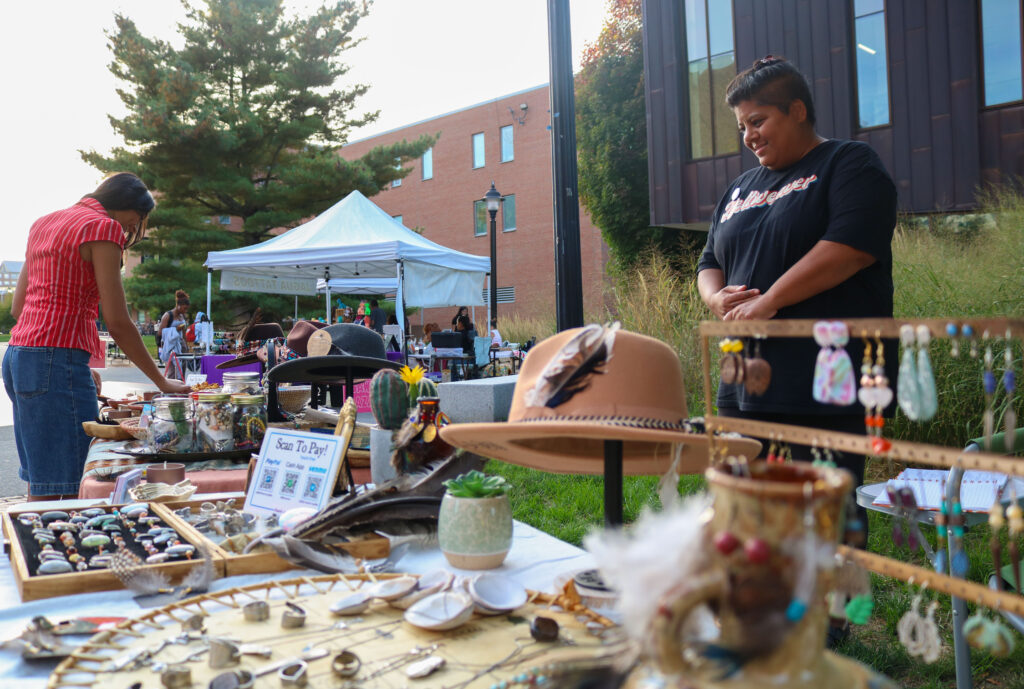
Tobey sells a variety of items, including earrings, necklaces, rings, hats and bracelets. She said it is fine for anyone to buy and wear her work, even if they are not Indigenous.
“We do it to keep traditions going. That’s who we are. That’s what we do,” she said. “I do try to sell my stuff in spaces that aren’t heard as much, like Indigenous communities and LGBTQ communities.”
She said she believes in the respectful sharing of knowledge, stating that non-Native people can learn how to make crafts as long as they are not selling it. She said this is because there is a distinct difference between commercially sold items and “real authentic” Indigenous work.
Tobey explained that her tribe is working to educate other tribal members on how to make Indigenous jewelry so they can reclaim this practice into their own cultural traditions.
Cultivating skills in young people is very important to reminding native people who they are, UConn Professor Sandy Grande explained. “It’s not just like an art object. All the things are interconnected, from making wampum to understanding the science of the water to eating and harvesting,” Grande said.
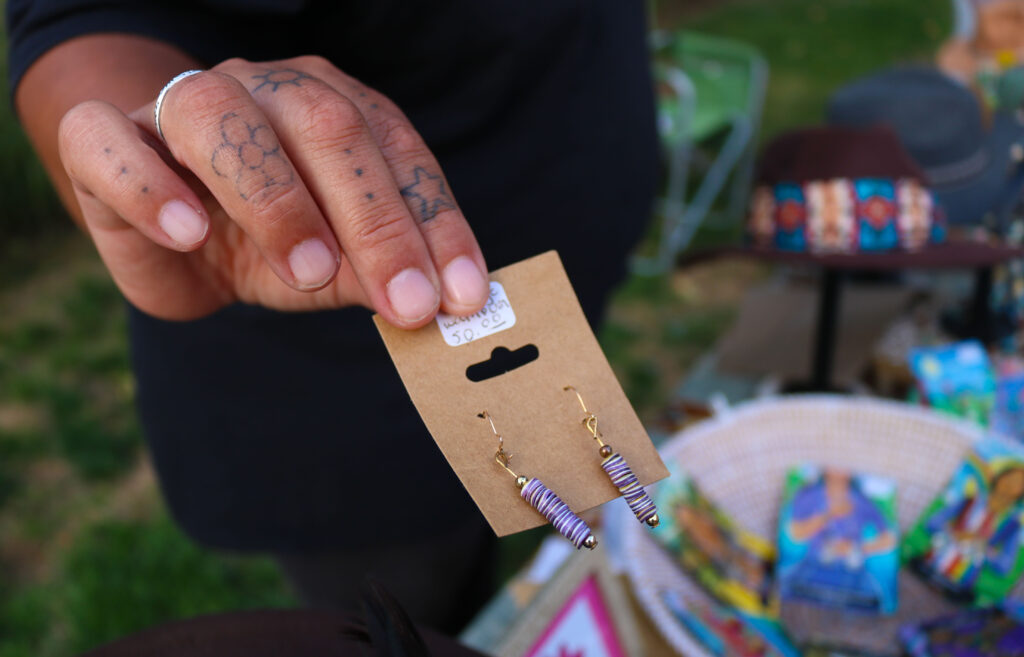
Tobey holds wampum earrings on Fairfield Way at the University of Connecticut on Sept. 30, 2025. Wampum is made from a purple and white shell and is very important to Indigenous culture. Over the centuries, it was used for ornamental or ceremonial purposes as well as a gift item. She said she uses wampum frequently in her work to preserve the importance of this material to native culture.
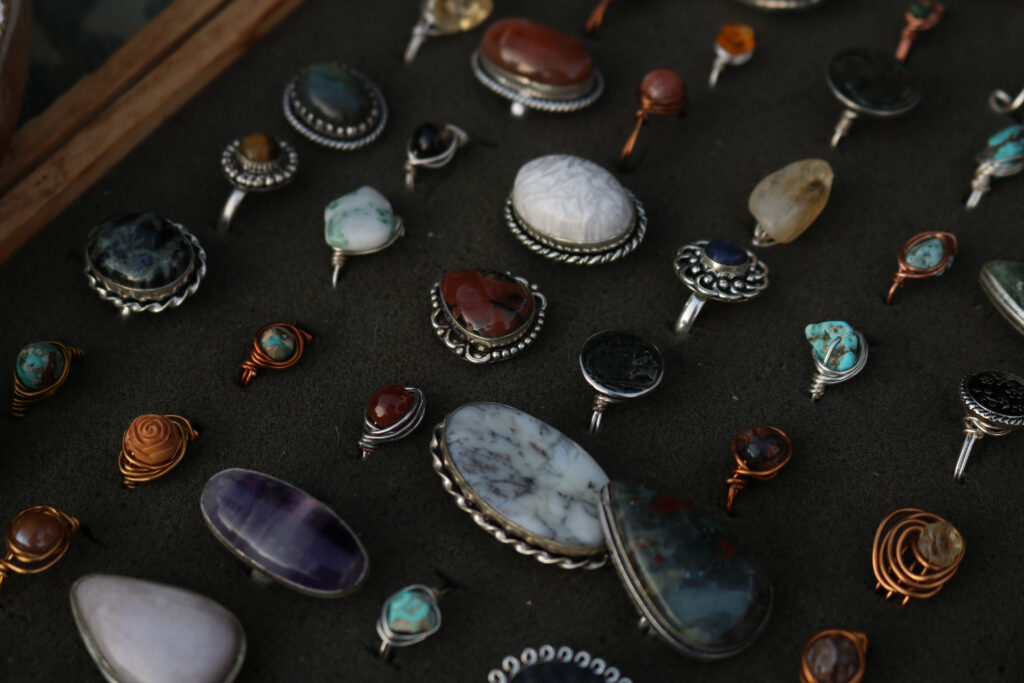
A display of Briana Tobey’s rings at her booth on Fairfield Way at the University of Connecticut on Sept. 30, 2025.