In a corner of the Mashantucket Pequot reservation, four tribal members work to grow produce for the local tribal community to combat food insecurity.
Meechooôk Farm is operated by Michael Martins, cultural supervisor; Bryan Holder, hydroponics specialist; Shi Spears, a laborer, and Emaneul Duran, a laborer. They work the farm year round to grow lettuce, kale potatoes, onions, eggplant, carrots, squash, rainbow chard, cucumbers and more.
The project began in collaboration with UConn Extension — the statewide educational outreach arm of the University of Connecticut — with the goal of achieving food sovereignty for the tribe. The overarching mission is to ensure the tribe has “fresh produce year round,” according to Martins.
Click on images to enlarge.
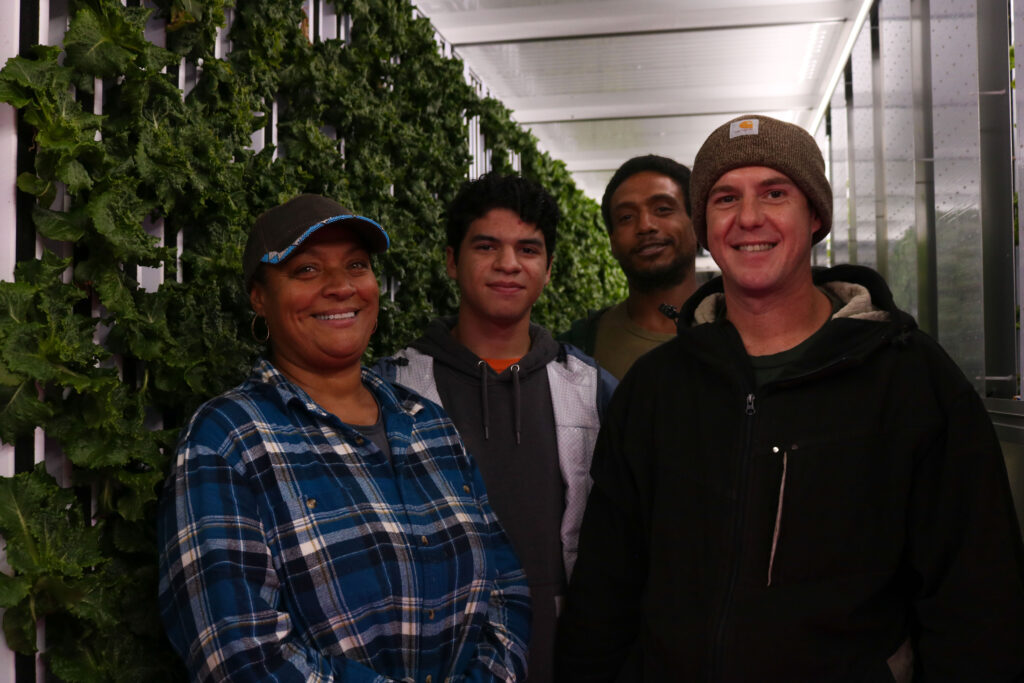
Pictured from left to right, Shi Spears, Emaneul Duran, Michael Martins and Bryan Holder stand in front of the walls of lettuce of the freight farms on Nov. 10, 2025 at Meechooôk Farms.
Meechooôk Farm uses outdoor irrigation, indoor freight farms and greenhouses to grow produce. As winter approaches, the crew is finishing up closing down the outdoor farming and is prioritizing the indoor fright farms which are growing lettuce, basil and parsley at the moment. During the winter the farm produces maple syrup by tapping several hundred trees in the area.
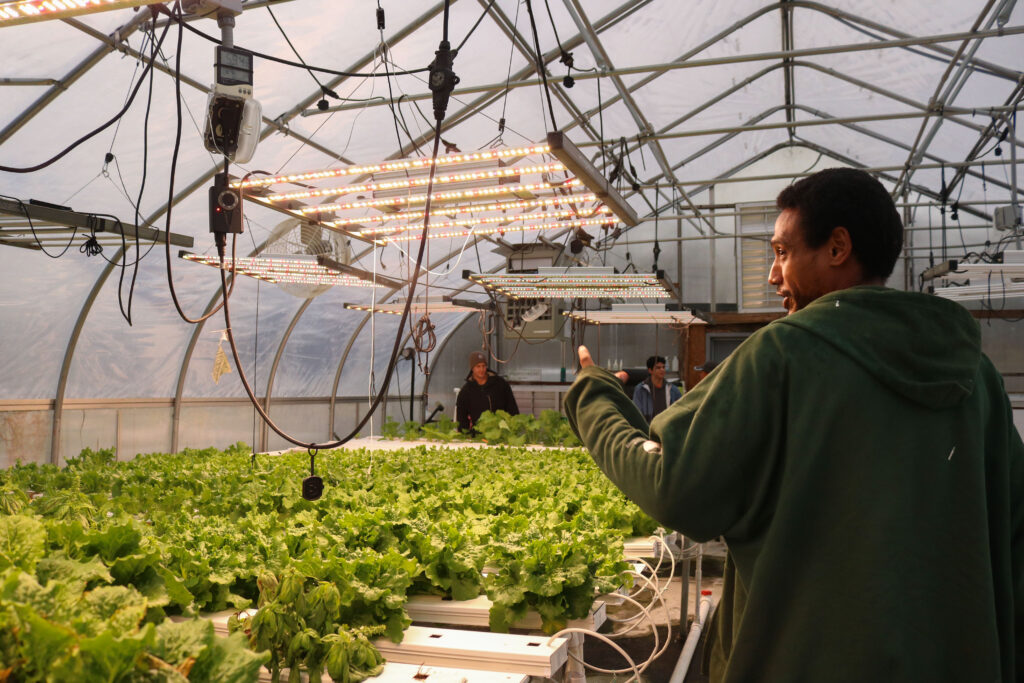
Michael Martins walks along one of the hydroponic greenhouses that is growing lettuce under LED lights on Nov. 10, 2025 at Meechooôk Farms.
Once the crops are harvested they often will hold events where tribal members can come and get some fresh produce. The crew said it is very rewarding to help their local community. Martins, Holder, Spears and Duran are all part of the Mashantucket Pequo tribe.
“It is very rewarding to see the tribal members come and get their food back,” Martins said. “The corn that we grew this year was, oh my God, phenomenal. Then the tribal members were really excited about it too. It’s very rewarding,” Martins said.
Meechooôk Farm sells produce to local restaurants as well.
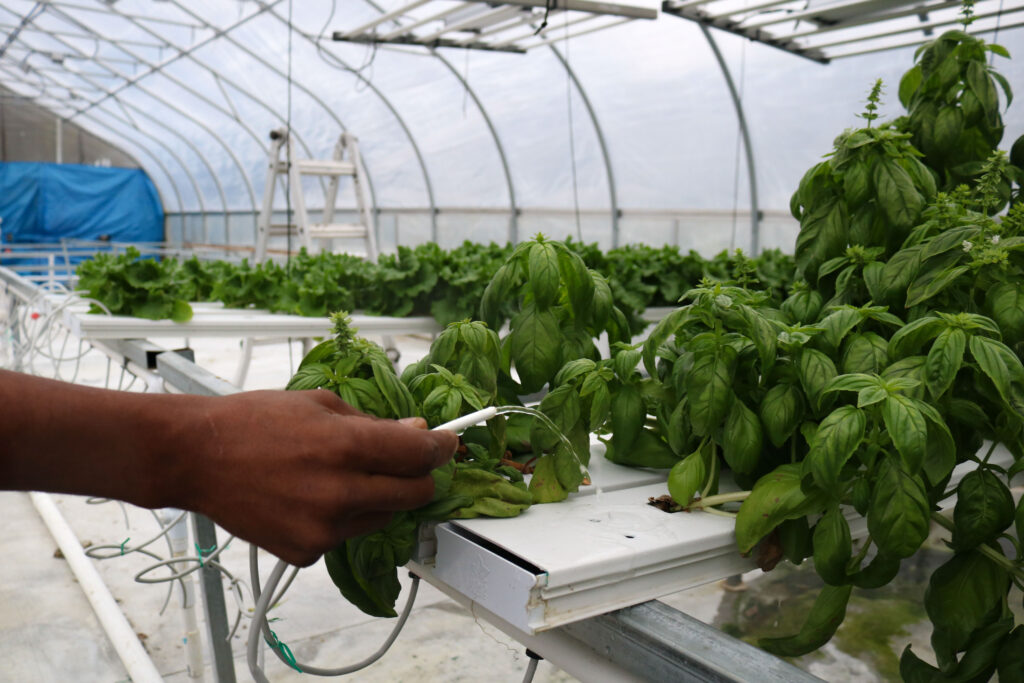
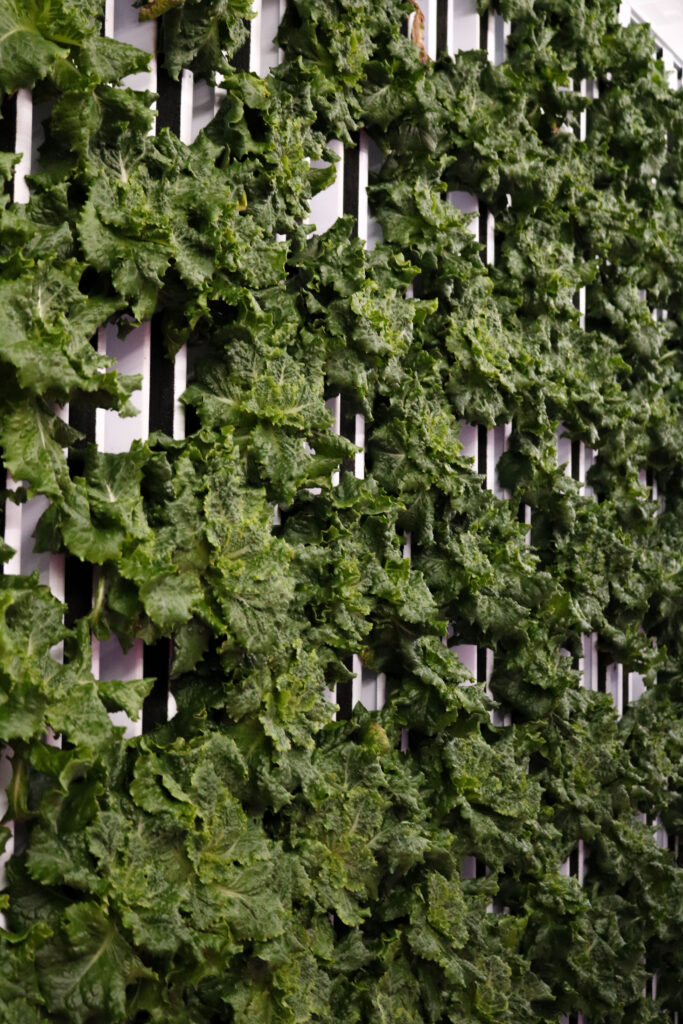
At left, Michael Martins showed how the basil is watered in the hydroponic greenhouses on Nov. 10, 2025 at Meechooôk Farms. At right, lettuce grows vertically on the walls of the freight farms, which are climate-controlled units. The crew monitors these systems daily.
Shi explained that the lettuce typically takes 4–6 weeks to grow and then they will harvest an entire wall which takes around 3–3/1/2 hours.
Organizations like the farm help rebuild interconnection and economic sovereignty with native communities, according to Professor Grande. By growing their own food, the tribe can create healthy ways of living and build trust in the community.
“The more interconnection, and the stronger and healthier and wider our webs of connection are, and in indigenous communities, the healthier and wealthier you are. Projects like this help their economic sovereignty. The purpose for that is for them to support the community,” Grande said.