As Mike Thomas drives through the Mashantucket Pequot reservation on a fall afternoon in October 2025, he stops at an opening in the woods that leads to a path. This is Matt’s Path – home to Council Rock, Balancing Rock, the Sweat Lodge and the Homestead House.
“Everything for us, all of our ceremonies, our language, our entire view of existence is relationship-based first, earth-based secondarily and place-based,” Thomas said. “It is specific places on the Earth that we belong to, rather than the opposite way around. For us, the connections to the land and the water are everything.”
According to Thomas, Native people belong to land rather than owning the land.
However, after the 1638 Treaty of Hartford, tribes like the Pequots lost their land and were forced to go into hiding to survive, joining tribes like the Mashantucket and the Mohegan. Over time, tribes across the nation lost 99% of their land due to colonization and erasure.
The Connecticut Mashantucket Pequot Tribal Nation has been working for the past century to reclaim and preserve the land that they do have through advocacy, privacy and education.
Click on images to view larger.
The Homestead
According to Mashantucket Pequot history the tribe “struggled to maintain and regain their land” throughout the 18th and 19th centuries. By 1865, only 214 acres of reservation land remained, and by the mid-1970s only two sisters, Elizabeth George Plouffe and Martha “Matt” Langevin Ellal, were residents on the reservation.
After the two sisters died, around 50 tribal members from around the United States returned to the reservation. In 1974, a tribal constitution based on a draft that Elizabeth George, Amos George and members of the Tribal Council had created in the 1960s, was enacted. Soon after, a tribal chairman was elected, and the tribe began encouraging Mashantucket Pequots to return to the reservation. They aimed to “restore the Tribe’s culture and traditions, and to address housing needs, sustainable economic development and self-sufficiency on the reservation,” according to the Mashantucket Pequot historical website. Eventually, their success led to the tribe’s federal recognition in 1983 and later, the economic development of Foxwoods Resort Casino and cultural development of the Mashantucket Pequot Museum & Research Center.
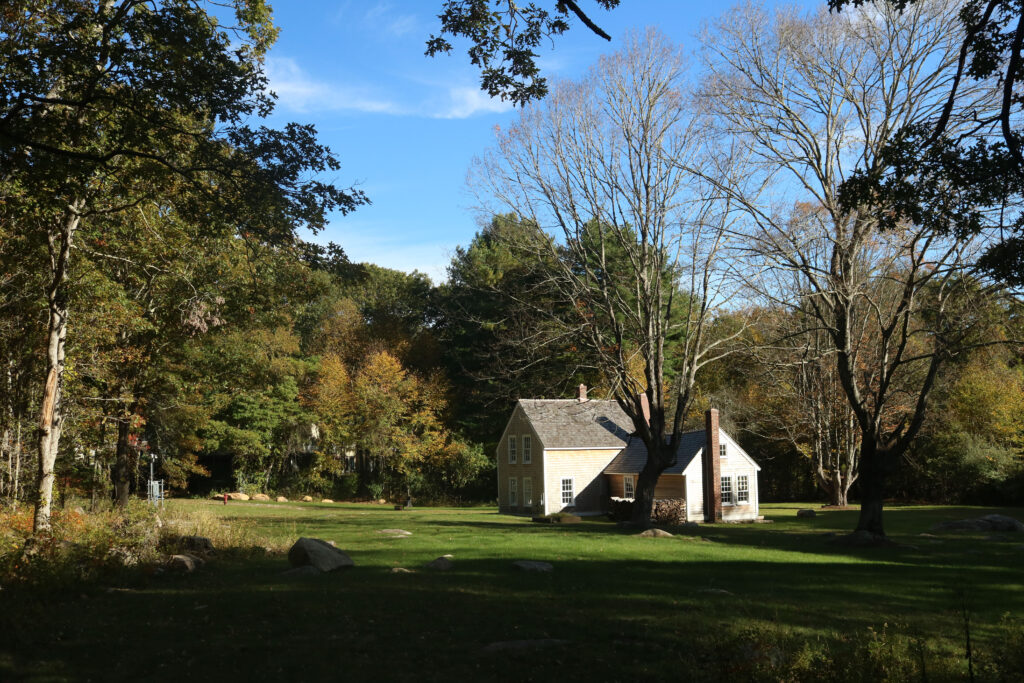
The house in the photo above is a replica of Elizabeth George Plouffe’s house, which was rebuilt in 2024. A replica of Ellal’s house is across the way. This area of the reservation is known as the Homestead.
“Both of their houses are preserved here, because they fought for this land and none of us would be here without them, “Thomas said. “Matt’s Path is named after Aunt Matt [Ellal].”
Council Rock and the Sweat Lodge
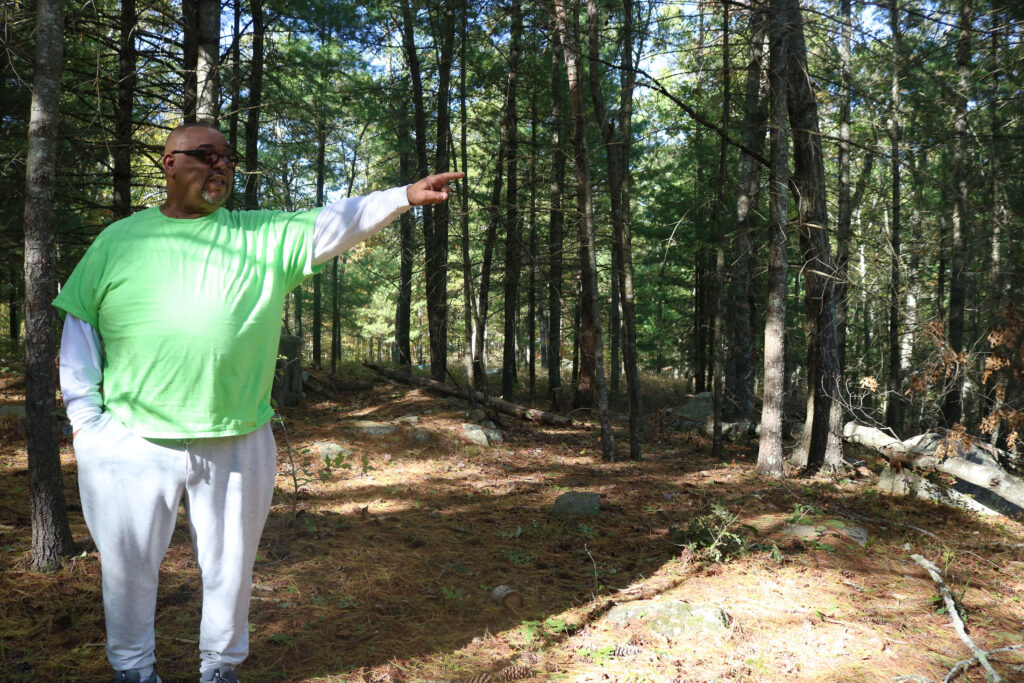
Thomas walks up to a large area covered in rock. On top of the rock, dozens of smaller rocks sit in a circular formation. This place is known as Council Rock, sacred land on Matt’s Path where leadership meetings took place for more than 1,000 years. The space is now used for ceremonial purposes. Leaders would each have their own rock to sit on during tribal meetings, Thomas explained.
“The site is used for the anniversary of the colonists attempting to wipe us out in Mystic, and as an example, we have first light ceremonies on Council Rock. Everybody gathers in the darkness before the sun rises, and we begin a ceremony as soon as the sun is visible. Also, all of our naming ceremonies, when young people get their traditional names, happen here,” Thomas said.
The area is kept private outside of the community and is only used for ceremonies, as it is sacred land. No published photos are allowed of the space. The same rules apply for the sweat lodge — a metal structure on a different section of Matt’s Path. The lodge is where other religious ceremonies are held in accordance with celebrations throughout the year. The photo above shows Thomas pointing to Council Rock.
“There were times throughout U.S. history when our spirituality was literally outlawed,” Thomas said. “For us, keeping things like this private stops people who we know still feel that way about us from knowing where our most precious things are.”
Professor Grande explained that privacy is related to the idea of Indigenous refusal: where Indigenous communities control what is known about them in order to “build out of the line of sight of whatever they don’t want.” Grande said it allows them to work toward reclamation and preservation without outside eyes.
“Visibility never worked well for native people, so that hasn’t been an easy story for them, the story of inclusion or visibility. It’s basically creating boundaries and refusing to be studied as a subject,” Grande said.
Balancing Rock
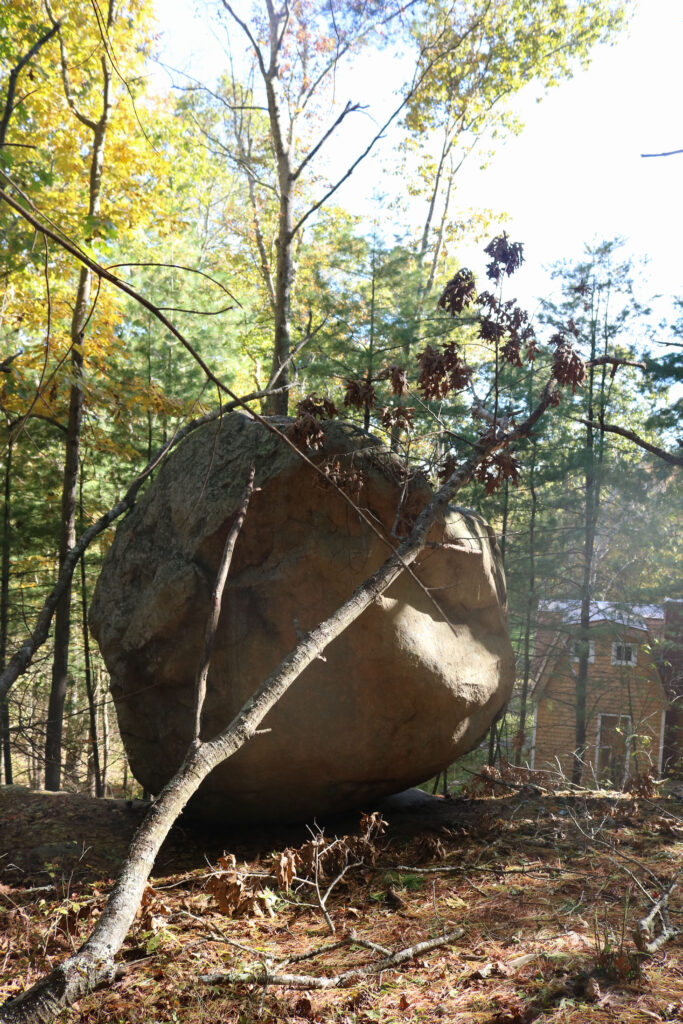
Balancing Rock is another feature of Matt’s Path that holds significant meaning for the tribe. Located behind Aunt Matt’s house, the rock has been there for as long as anyone can remember, Thomas said. Family members would meet there long before Aunt Matt built her house next to it.
The rock teeters on the edge of a cliff, looking as if it might fall any second. Thomas said he brings his students from the cultural center to the rock and gives them a chance at pushing it over. No one has ever been able to do it, but it has become a tradition passed down to each new young generation.
Thomas said his students learn to teach the younger tribal members the land’s history and therefore preserve the history and the land.
“I want them to know you belong in this place, because the people who made you belong in this place, and the people who made them here, too,” Thomas said.
Lantern Hill
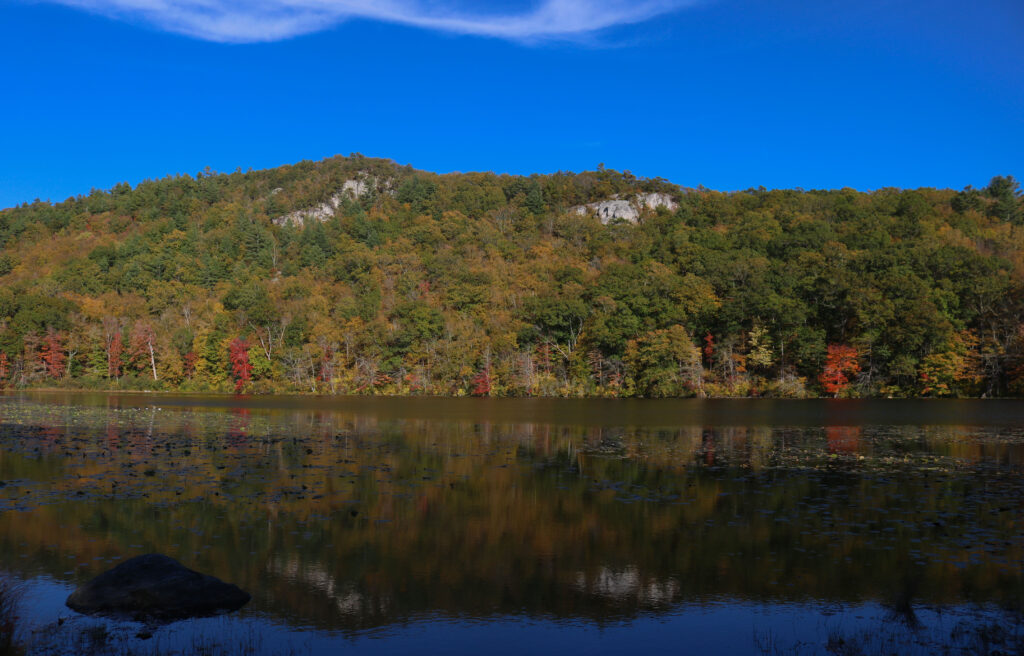
Lantern Hill and the lake at its base are also examples of sacred land that serves to educate the next generation on Pequot history, according to Thomas.
“Lantern Hill is one of those sacred spots that both Pequot tribes, us and the Eastern Pequot, live on opposite sides of, and so it’s a sacred hill to all of us,” he said.
Every year, the education program brings students to the hill as well.
“We bring all ages down here multiple times a season and make sure everybody knows,” Thomas said. “We do other things to keep kids connected to the land and the water, including our forestry and watersheds camp, where our high school kids in the tribe get a chance to spend all summer on the water in the land that used to be ours, as well as on the water in the land that still is.”