The Mashantucket Pequot Museum and Research Center presents the histories and cultures of Indigenous people in the Northeast through exhibits, archives and archaeology displays.
Executive director Joshua Carter said the museum works constantly to reclaim and preserve Native history in a way that is respectful.
“The mission is to strengthen Pequot culture first, and the museum’s displays must prioritize the Pequot community first, our sister nations second and the larger community third,” Carter said.
Click on images to enlarge.
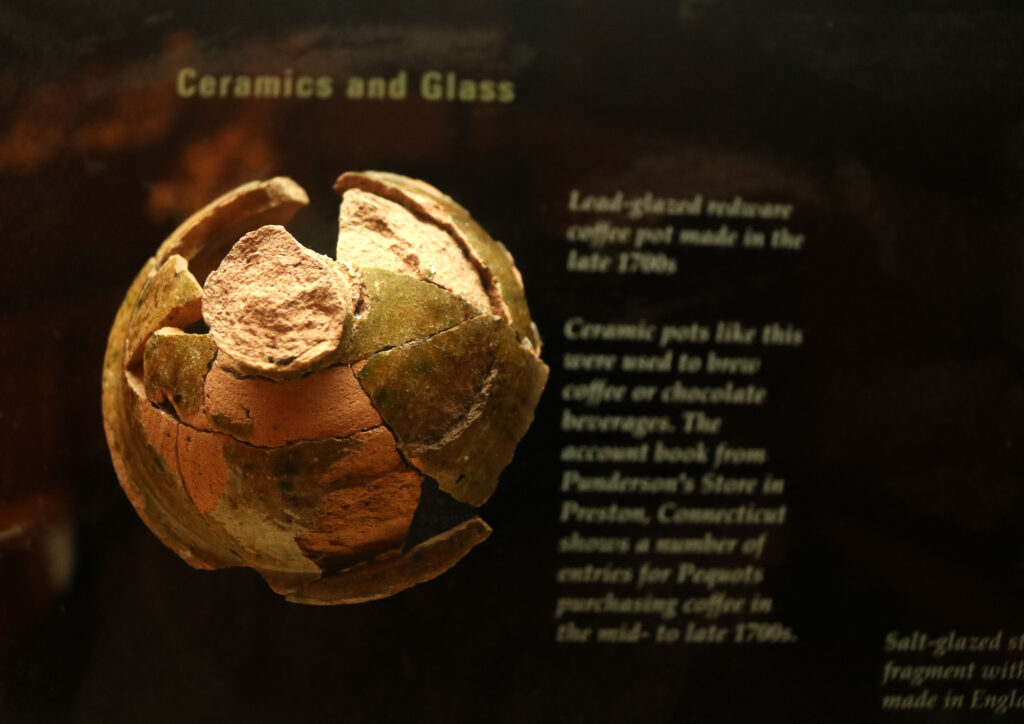
A reconstructed ceramic coffee pot made in the 1700s and recovered from an archaeological site in Preston, Connecticut is on display in the Mashentuquet Pequot Museum. Pots like this were used to brew coffee or chocolate, showing a glimpse into native life during the time.
The Native American Graves Protection and Repatriation Act (NAGPRA), passed in 1990, helps to return cultural artifacts to tribes and museums such as the Mashantucket Pequot Museum. The law requires federal institutions that hold Native artifacts and burial remains to return them to tribes.
Although the act has helped many tribes reclaim their culture, Carter said there is still a long way to go.
“It still doesn’t have the teeth. It still doesn’t have what I would consider the structure to address that fundamental aspect of what our value system is,” Carter argued.
Displays showing artifacts and scenes that capture moments in Indigenous history have helped Northeastern Native communities reclaim their history by correcting myths often assumed about Indigenous peoples. In one display, villagers collect corn, which was a central part of native agriculture.
The handheld audio guides reflect Indigenous oral history, which Carter said is highly valued. At certain points, visitors can hear the Maliseet-Passamaquoddy language spoken by the figures in the display.
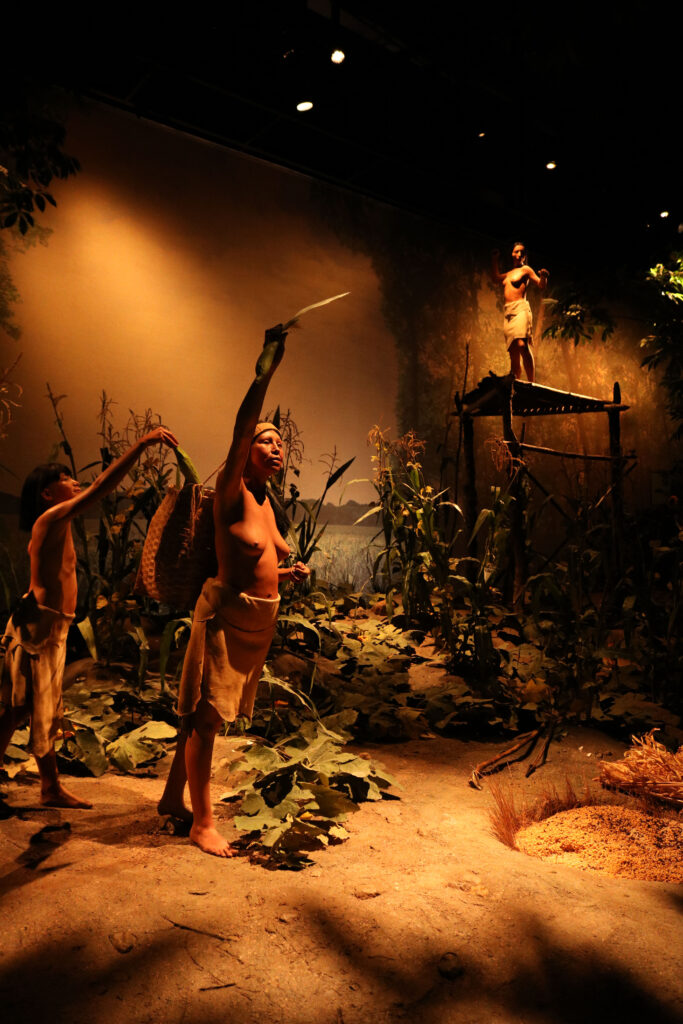
The museum contains a life-size room display recreating the daily life of a 16th-century Pequot village before and after European contact. Visitors can walk along the path listening to a handheld device that explains each section of the village.
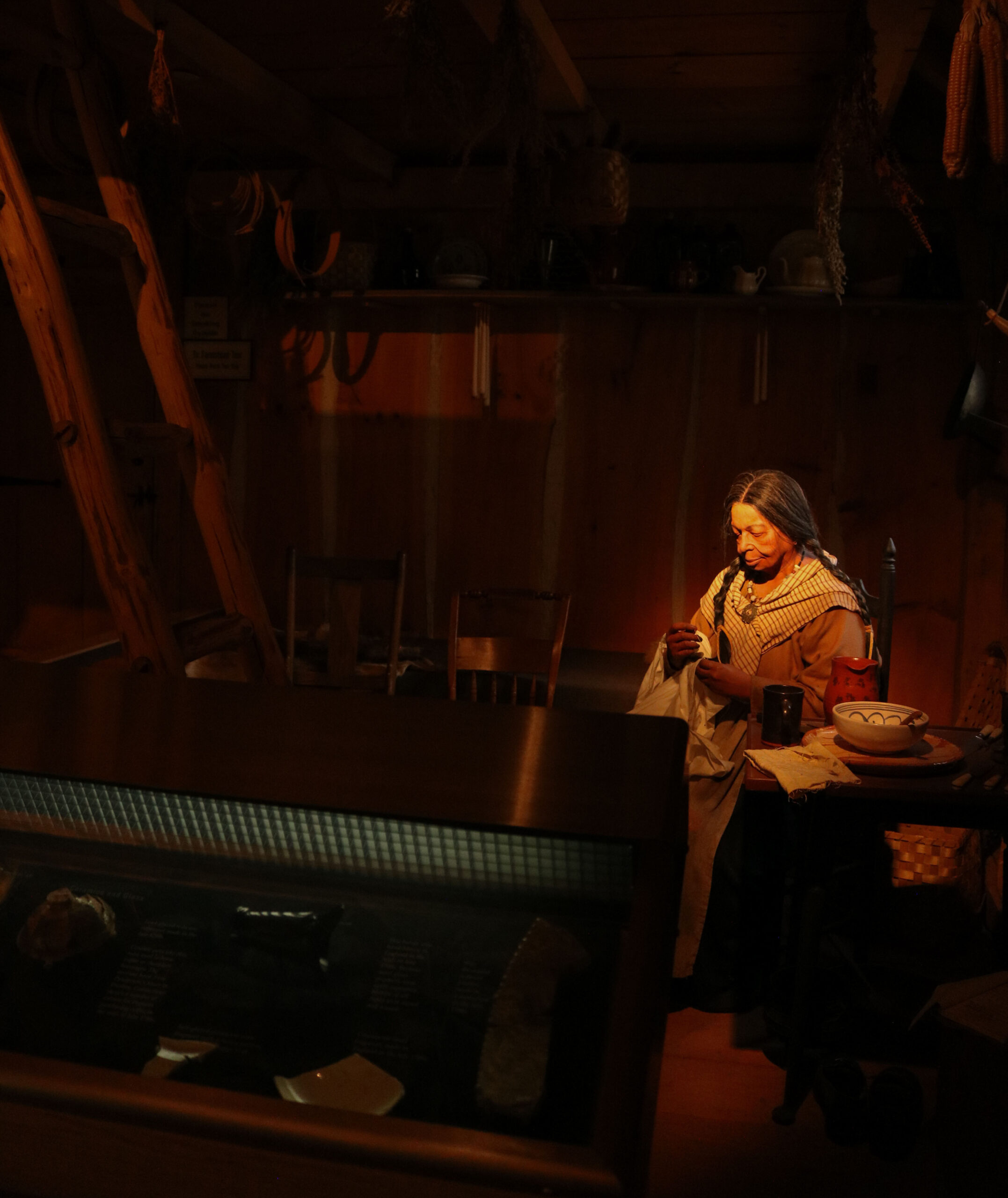
A life-size house shows what Native life would have looked like during the year 1780 on the Mashantucket reservation at the Mashantucket Pequot Museum on Oct. 17, 2025.
The Mashantucket Pequot Museum & Research Center is located at 110 Pequot Trail, Mashantucket. During the summer, the museum hosts a one-week immersive teacher workshop for local educators. Participants explore Indigenous life, history, and language directly from led by Native scholars and culture bearers to ensure Indigenous history is taught from an authentic perspective. Learn more at https://www.pequotmuseum.org/