
By Allison Gollenberg | UConn Journalism
June 8, 2026
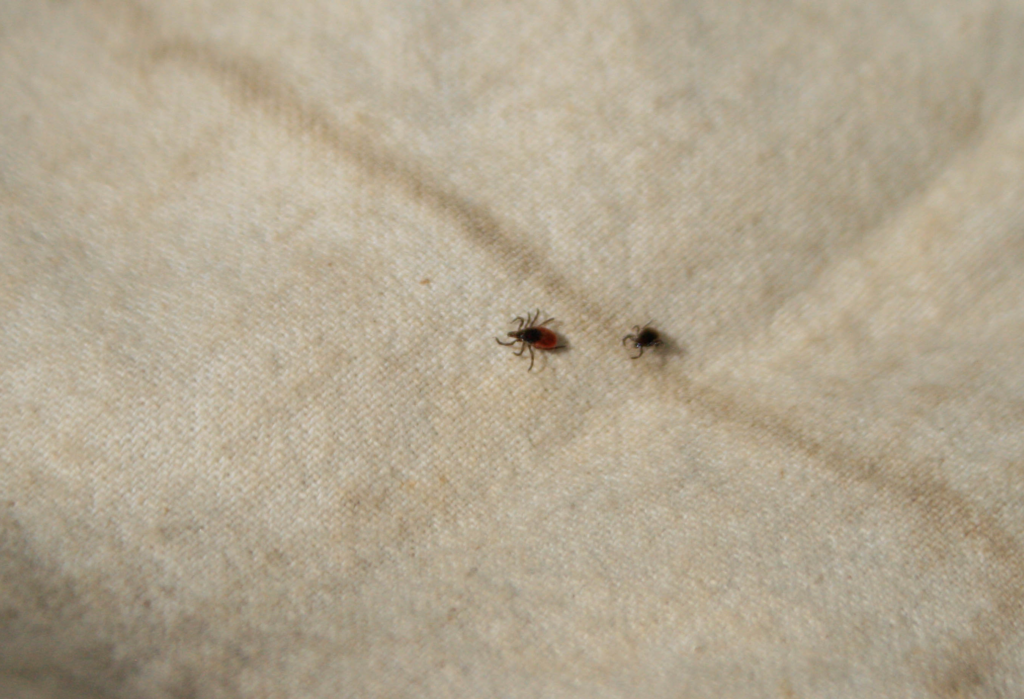
The number of ticks infected with Lyme disease is spiking early this season in Connecticut, data from the Connecticut Agricultural Experiment Station shows, as environmental conditions give ticks a chance to thrive.
Dr. Goudarz Molaei, an entomologist and research scientist at the Connecticut Agricultural Experiment Station’s tick testing lab in New Haven, said the average rate for adult ticks infected with the Lyme disease pathogen tested at the station usually hovers around 32%. But as of May 19, he said the infection rate had already reached 38.5%.
“This time of year is not our peak season,” Molaei said. “But we’re receiving numbers that are similar to peak tick activity.”
The station provides free testing on ticks collected by residents across the state, gathering data that’s helpful for tracking tick activity and diagnosing disease in humans. In late March and early April alone, the station received over 600 ticks, and by May 19, it had received about a total of 2,300, he said.
Some days, Molaei said, the lab has been receiving over 150 tick submissions. Sometimes more than 50% of the ticks in their lab test positive for the bacteria that causes Lyme.
Molaei said this winter’s conditions were ideal for tick survival.
“First of all, the cold season is what gets them,” he said. “But if we’re dealing with a cold winter associated with heavy snow, heavy snow acts as a warm blanket for ticks.”
Ticks have two- to three-year lifespans, Molaei said. This means that adult ticks overwinter under the snowpack before emerging in the spring to reproduce. During particularly cold winters, or those without snow, a lot of them die, and that leads to lower numbers of Lyme cases in the spring.
The station reported that positive cases of Lyme disease identified in blacklegged, or deer ticks, the most common variety in Connecticut, increased 9% between 2024 and 2025. In 2024, 905, or 27%, of ticks tested positive for the bacteria that causes Lyme. In 2025, 1,465, or 36% did.
In 2023, the last year data was available, Connecticut saw 3,239 human cases of Lyme disease, according to the U.S. Centers for Disease Control and Prevention. In 2010 and 2011, there were roughly 3,000 cases reported each year.
But from 2011 to 2019, annual cases saw a sharp decline. In 2019, before reporting was skewed by the COVID-19 pandemic, data showed there were 1,233 cases in Connecticut. That means the state saw a 163% increase from 2019 to 2023, a difference of 2,006 cases.
Dr. David Banach, an infectious disease specialist and epidemiologist at UConn Health in Farmington, said some of this increase could be due to changes in reporting. Lyme disease is chronically underreported, he said.
But environmental factors also play a role in the number of infections doctors see each year.
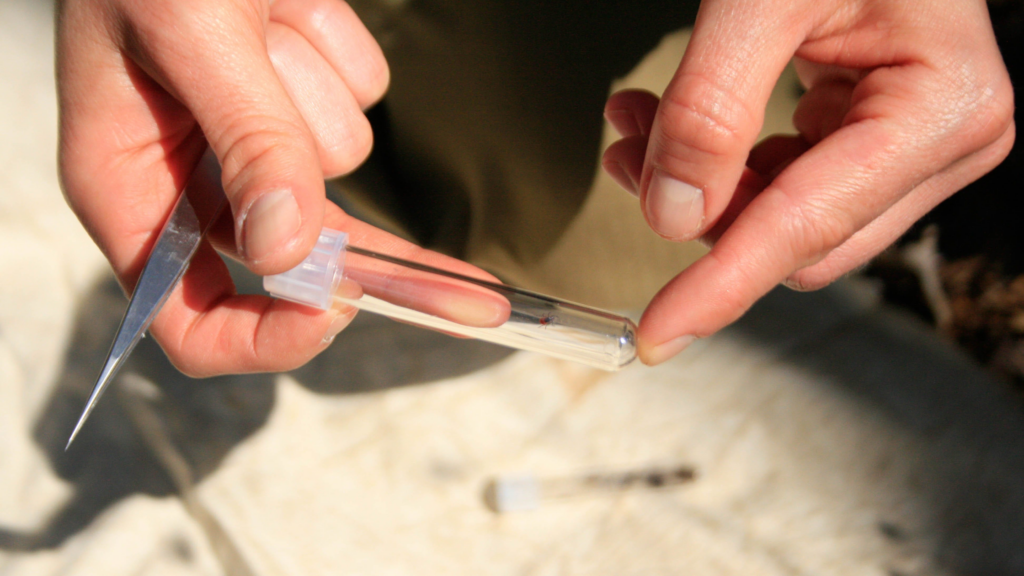
Jamie L. Cantoni said she’s never had Lyme disease and rarely finds ticks on herself despite working as an agricultural research technician for the experiment station’s active tick surveillance program. Part of Cantoni’s job is to collect ticks from around the state through a process called dragging. Dragging for ticks involves running a square of canvas through edge areas and checking it for the bugs every 25 meters, said Cantoni, who was recently dragging for ticks just off Horsebarn Hill in Storrs. Any ticks the drag picks up are stored in vials, labelled and brought to the station for research.
Increased residential development in wooded areas since the pandemic is also a factor driving infection, she said, since ticks and humans both like to hang out in areas where lawns and woodlands merge.
“A lot of it is environmental. A lot of it is people now. They move,” said Dr. Justin Radolf, an infectious disease doctor who works with the University of Connecticut’s Lyme Disease Research team. “They build houses in areas that everybody wants to be in, in beautiful places. And that’s where the Lyme disease is.”
Plus, Radolf said, changing climates have allowed both ticks and Lyme disease bacteria to increase their range. Even birds can catch and carry Lyme disease, potentially picking up and dropping off ticks across large distances, he said.
Ticks don’t hibernate, so since the last few winters have been milder, they’ve been coming out earlier and infecting more people, Dr. Megan Linske, a vector ecologist specializing in tick-host-habitat dynamics at the experiment station, said.
She said they can sometimes even find hosts on warm days in February.
“Connecticut’s kind of this perfect storm for black-legged ticks,” Linske said. Connecticut’s abundant populations of mice and deer give ticks plenty of potential hosts to latch onto and feed from.
“[A total of] 87 million Americans live, work, or vacation in Lyme-endemic areas,” Dr. Seth Lederman, CEO and founder of Tonix Pharmaceuticals, said. “It’s spreading north. It’s spreading south. It’s spreading west.”

Lederman said Tonix, a company based in Chatham, New Jersey that develops treatments for chronic, rare and infectious diseases, is developing a vaccine that kills the bacteria that causes Lyme before it even leaves the tick’s gut.
“Most vaccines mean that the disease you get is milder than if you didn’t get the vaccine,” Lederman said. “This one, it literally blocks– it kills the Borrelia before it gets into your system.”
Borrelia is the bacteria which causes Lyme disease. Lederman said the injection of Borrelia antibodies has been in the works at the University of Massachusetts for the last ten years.
The vaccine could be available by 2030 and would be prescribed at doctors’ discretion, Lederman said. One dose would be effective for roughly four months. He expects it to be most frequently used by people who spend a lot of time outdoors, like hikers, gardeners and landscapers.
A different Lyme vaccine, LYMErix, was available from 1998 to 2002, Dr. Paulo Verardi, head of UConn’s department of Virology and Vaccinology, said. He said it was ultimately discontinued because of low demand and controversy over safety concerns.
Lederman said Tonix’s vaccine was about 95% effective in primate tests. Another vaccine, in development by Pfizer, is about 70% effective, according to a press release from the company.
But despite its potential, Verardi said, a vaccine is not a catch-all solution. To really control tickborne diseases, he said, there needs to be more land management, public education and a drop in the overall tick population.
Linske said when it comes to keeping ticks off their property, people should know that many spray treatments can harm the ecosystem. As a solution, she said, her team has been working with pesticide treatments that target tick and mite populations in the fall. This means they can eliminate ticks without harming beneficial insects, like bees, butterflies and other pollinators that are most active in the spring, she said.
“I feel like people get freaked out by ticks and tick-borne diseases, and then they’re like, I’m never going outside again,” Linske said.
But the best thing people can do, she said, is to be mindful of their surroundings when they’re outside and check themselves for ticks once they’re back in.
“Go out and enjoy them, but just be aware of where you are,” she said.
Tick season typically peaks in May and June. But regardless of the date, Verardi said, ticks will be out when the sun and the people are.
“If I were to go outside, it would take me less than five minutes to find a tick,” Verardi said. “Or, I should probably say that it would take less than five minutes for the tick to find me. Because that’s what they’re good at.”