By Lily Goldblatt
UConn Journalism
Read here to learn more about expansions of executive power in the 2000s by Presidents George W. Bush, Barack Obama and Donald Trump during his first term.
George W. Bush (2001–2009)
The War on Terror and the unitary executive theory
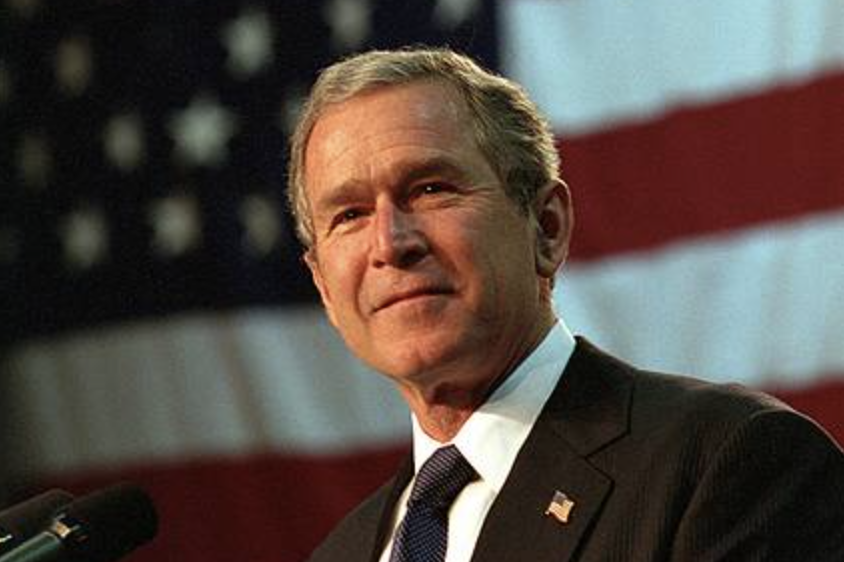
While not the first president to wield his executive power so expansively, George W. Bush used it in a way that was unprecedented.
A major turning point came after the Sept. 11, 2001 terrorist attacks on New York and Washington, D.C. Bush used these attacks as the basis for several resolutions and governmental actions that would cause exponential increases in executive power.
Howard Ball, a political scientist and former professor at the University of Vermont, argued in his book “Bush, the Detainees, and the Constitution,” that Bush used two significant resolutions after Sept. 11 to expand his military powers unilaterally.
The first resolution, passed one week after the attacks, allowed for the president to use military force against any entity or person that he believed was involved in the attack. The other was a joint resolution that allowed the president to send armed forces to Iraq in the following year.
According to Ball, with the military force resolution, the administration relied on power that the president is not explicitly given in the Constitution but can argue are necessary for the national interest, to centralize decision-making in the executive branch.
“As passed and implemented by the Bush White House, the resolution granted Bush the broadest authority to do battle against any nation, organization, or person he determined to have been involved in 9/11 or to be part of planning future terrorist actions against the United States,” Ball wrote.
The USA Patriot Act, a 342-page bill which passed Congress 45 days after the terrorist attacks, gave the executive branch the power to suspend due process and habeas corpus in the case of suspected terrorists or those suspected to be involved with terrorism.
In a Senate Judiciary Committee on the oversight of the USA Patriot Act, Georgetown University constitutional law professor David Cole testified on the constitutional and civil liberty concerns that came with the act.
“Section 412 of the Patriot Act allows the Attorney General to lock up foreign nationals without charges for seven days, and indefinitely thereafter if they are charged with an immigration violation,” wrote Cole. “The law does not require any showing that the foreign national poses a danger to the community or a risk of flight — the only two constitutionally valid reasons for preventive detention.”
Bush used the unitary executive theory to argue for expanded executive power. The theory holds that “the Constitution mandates an integrated and hierarchical administration — a unified executive branch — in which all officers performing executive business are subordinate to the President, accountable to his interpretations of their charge, and removable at his discretion,” explained Stephen Skowronek, a professor of political and social science at Yale, in an essay for Harvard Law Review.
Political scientists Mark Rozell and Mitch Sollenberger of George Mason University and University of Michigan-Dearborn, respectively, point to the Bush administration’s claim of executive privilege to keep from releasing documents or allowing aides to testify before Congress about his decision to force the resignations of several U.S. attorneys. The U.S. Court of Appeals suggested the case would become moot because subpoenas would expire at the end of that Congress.
Rozell said that Bush employed a strategy of delay and non-compromise with Congress when they attempted to exercise oversight on his executive actions and that this set a precedent for future presidents.
“Presidents after George W. Bush, I think, saw the utility of adopting a kind of no-compromise position in some of these inter-branch conflicts and ultimately winning battles through a process of delay and non-cooperation with those who have compulsory power,” Rozell said in an interview.
Sollenberger said that Bush also expanded his executive power through the use of signing statements, which the president issues when he signs a law passed by Congress to clarify or give his own interpretation of the law.
“Where Bush was aggressive was using these signing statements to provide a unitary executive theory interpretation of the presidency,” Sollenberger said in an interview. “Basically, any kind of restrictions on the executive branch, on the presidency, that were in laws that Congress duly passed, President Bush would consider them to be null and void.”
While Bush was not the first president to do this, Sollenberger said he was one of the most aggressive.
Barack Obama (2009–2017)
Continuing his predecessor’s expansion in foreign policy power
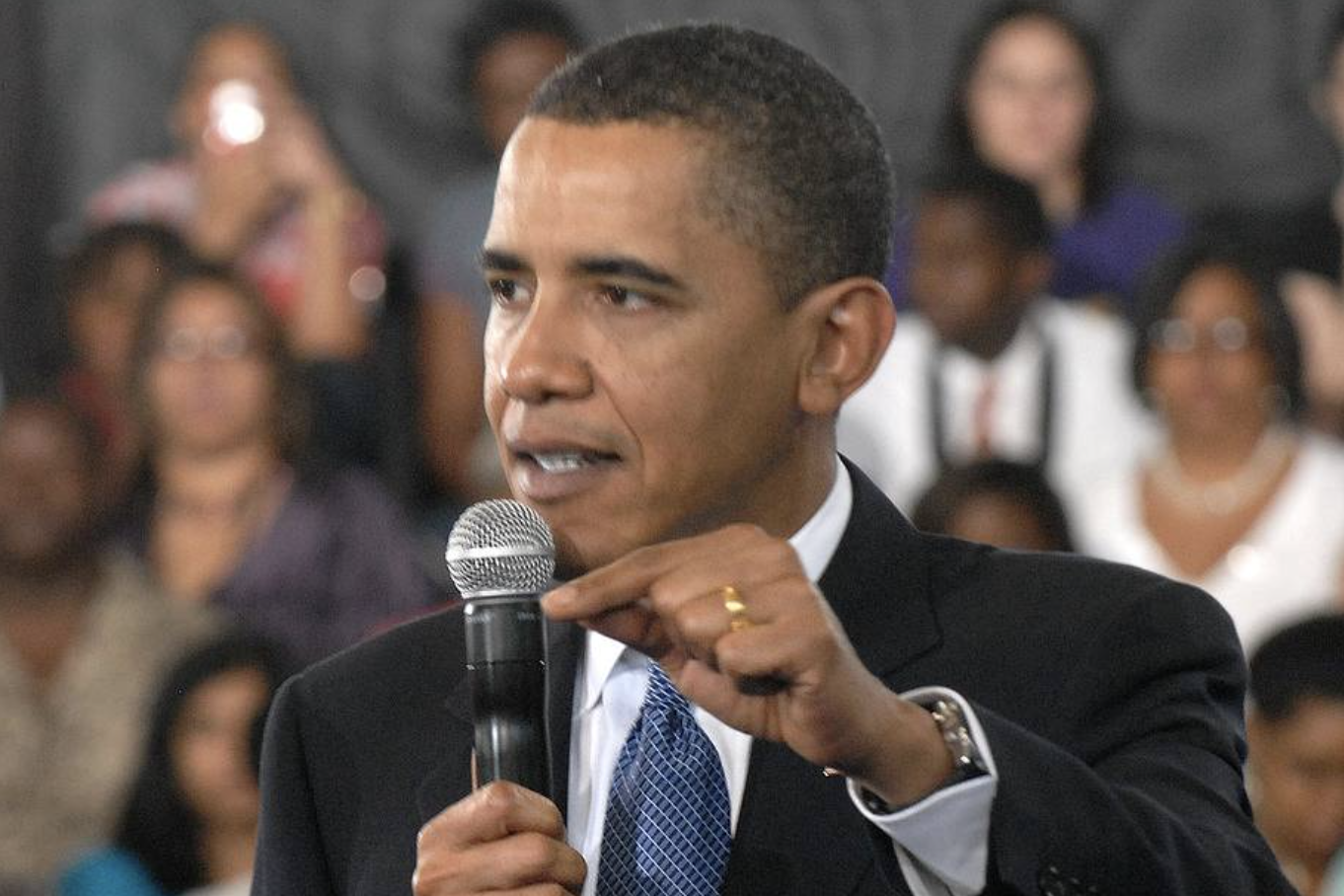
Barack Obama campaigned on a promise to stay true to the Constitution in contrast with the Bush administration. Despite this, he also makes unilateral presidential actions in terms of signing statements and military power.
“I think presidential power, there’s no ratcheting down, it’s always ratcheting up,” Mitchel Sollenberger, of University of Michigan-Dearborn, said in an interview. “Democratic presidents have been certainly willing to utilize the increased presidential power and expand it.”
In a 2013 essay for Presidential Studies Quarterly, a peer-reviewed political science journal, Sollenberger and co-authors Mark Rozell and Jeffrey Crouch point to two controversial signing statements at the end of Obama’s first term that expanded executive power.
The first one, attached to an omnibus year-end spending bill, objected to several provisions that he believed violated, “his constitutional duty to supervise the executive branch.” The second one came when he signed the National Defense Authorization Act for Fiscal Year 2012, where he argued that certain provisions in the bill went against his “constitutional foreign affairs powers.”
Signing statements are often objected to by members of Congress because they signal an attempt by the administration to bypass legislative input in a policy debate.
“What the president could not achieve through lengthy negotiations with Congress, he believed he could mandate unilaterally in his signing Statement,” Sollenberger and co-authors wrote.
Sollenberger said Obama expanded presidential power through using drone strikes to kill people in the Middle East, and he was the first president to “kill a U.S. citizen in a non-war setting and double down on it.”
In 2011, Obama ordered the killing of Anwar al-Awlaki, an American citizen living in Yemen who was associated with the terrorist group Al-Qaeda. Two weeks later, al-Awlaki’s 16-year-old son was also killed in a drone strike that officials said was a mistake, according to the National Security Archive, a site by journalists and scholars to check rising government secrecy. Awlaki was the first U.S. citizen since the Civil War to be hunted down and killed without trial by his own government.
At a 2011 congressional hearing on a resolution authorizing limited use of armed forces in Libya, U.S. Rep. Jerrold Nadler, a Democrat from New York, said: “We have been sliding for 70 years to a situation where Congress has nothing to do with the decision about whether to go to war or not, and the president is becoming an absolute monarch. We must put a stop to that right now, if we don’t want to become an empire instead of a republic.”
In 2012, the House Judiciary Committee met to discuss the Obama administration’s abuse of executive power, specifically referencing the recent “fast and furious” scandal in which Obama claimed executive privilege over certain documents sought by the Congressional oversight committee.
“President Obama has to an unprecedented extent failed to ‘take care that the laws be faithfully executed,’” said Rep. Lamar Smith, a Republican from Texas and chairman of the committee. “Instead he, has repeatedly issued blanket waivers that exempt large classes of the population from duly enacted laws.”
In 2014, House Republicans voted to sue the Obama administration for allegedly failing to implement several provisions of the Affordable Care Act.
House Speaker John Boehner led the lawsuit and said that Obama changing the healthcare law without a vote from Congress was essentially Obama trying to make his own laws.
“That’s not the way our system of government was designed to work. No president should have the power to make laws on his or her own,” said Boehner in a statement to the LA Times.
Donald Trump (2017–2021)
Using executive power for personal political gain
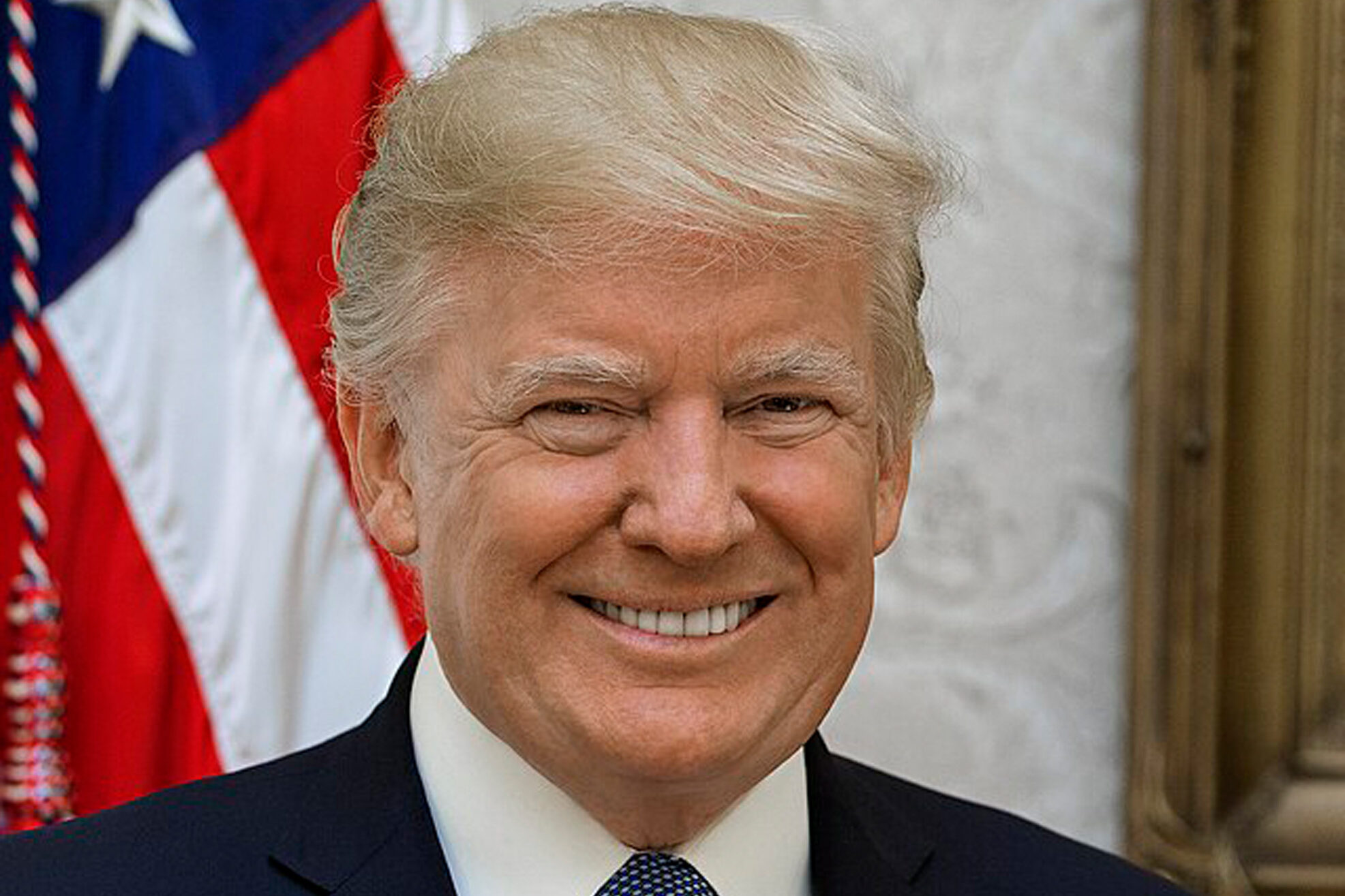
Donald Trump’s first term saw him continuing the trend of executive power increases seen with his predecessors.
One week into his presidency, Trump issued Executive Order 13769, which imposed a three-month travel ban on immigrants from all majority Muslim countries and stopped refugees from entering the United States for four months.
This order was upheld in the case of Trump v. Hawaii, in which the Supreme Court ruled in a 5–4 decision that “the president has ‘broad discretion’ under the law to suspend entry into the United States of certain classes of individuals when detrimental to the national interest.”
In May 2017, Trump terminated then FBI director James Comey after Comey confirmed that the FBI would be investigating possible Russian interference in the 2016 presidential election.
Trump said that he did not believe Comey was able to “effectively lead the Bureau” in his letter dismissing him. “It is essential that we find new leadership for the FBI that restores public trust and confidence in its vital law enforcement mission,” he wrote
The Brennan Center for Justice at NYU Law released a statement calling Comey’s termination an assault on the rule of law.
“The president has dismissed the chief law enforcement officer probing whether the president’s advisors colluded with a hostile foreign government to influence our elections,” the Brennan Center wrote.
In January 2020, Trump launched a drone strike that killed Iranian general Qasem Soleimani near an airport in Baghdad. In a report for the United Nations, French human rights activist Agnes Callamard found that “the US had provided no evidence that showed Soleimani specifically was planning an imminent attack against US interests, particularly in Iraq, for which immediate action was necessary and would have been justified.”
During his first term, Trump became the first president to be impeached twice. In December 2019, the House voted to bring charges against Trump after a whistleblower filed a complaint that during a phone call with Ukraine’s newly elected president, Volodymyr Zelenskyy, Trump had attempted to solicit Ukraine to interfere with the upcoming 2020 election.
According to the letter from the whistleblower, White House officials attempted to lock down records of the phone call and White House lawyers directed officials to remove the electronic transcript from the computer system.
The letter said that a White House official called this an “abuse” of the electronic system because “the call did not contain anything remotely sensitive from a national security perspective.”
Trump’s second impeachment regarded the events of Jan. 6, 2021, in which a mob of Trump supporters stormed the U.S. Capitol building following a rally held to protest the results of the electoral college vote, which, like the popular vote, was won by Trump’s opponent Joe Biden. During the rally, Trump espoused false claims that the election had been stolen and that he had actually won.
Trump made prior efforts to subvert the election results when he made a phone call to Georgia Secretary of State Brad Raffensperger in which he told him to “find” enough votes to overturn the Georgia presidential election results, according to the House Resolution to impeach.
Jonathan Alter, a journalist and author who has covered American politics extensively, said that the Jan. 6 insurrection was Trump’s biggest and most dangerous assault on democracy.
“The peaceful transfer of power was not just enshrined in our Constitution, but was respected and understood and in some ways taken for granted until January 6th, 2021,” Alter said in an interview. “We had a president who didn’t believe in the Constitution who was violating the oath that he had sworn to uphold.”
You must be logged in to post a comment.