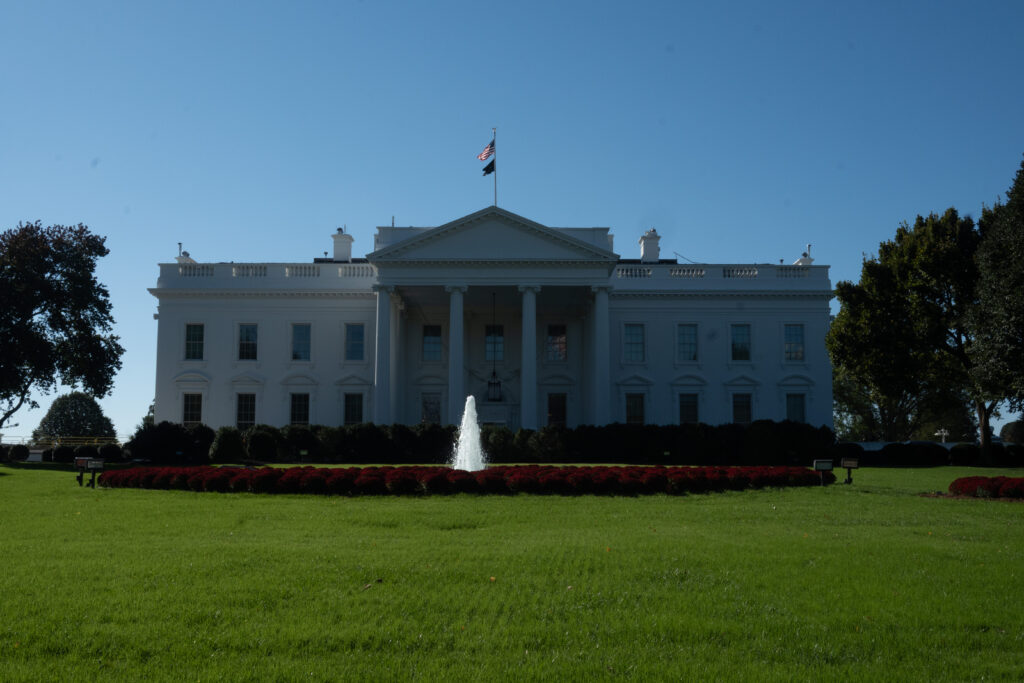
Article 2, Section 1, established the office of the presidency. The clause requires that the president and the executive branch “faithfully executes” the laws put in place by Congress. One of the ways the president can do this is through executive orders.
According to the American Bar Association, executive orders are the president “directing a federal official or administrative agency to engage in a course of action or refrain from a course of action.” While there is no specific provision of the Constitution that mentions executive orders, the executive vesting and take care clauses are interpreted to establish this power.
Executive orders can be overturned by the president, future presidents or invalidated by legislation passed by Congress.
The total executive orders issued by each president has varied widely. The 18th president, Ulysses S. Grant, was the first president to have more than 100 executive orders (217), according to The American Presidency Project. Franklin D. Roosevelt, who served longer than any other president (1932–1945), had the most executive orders at 3,726.
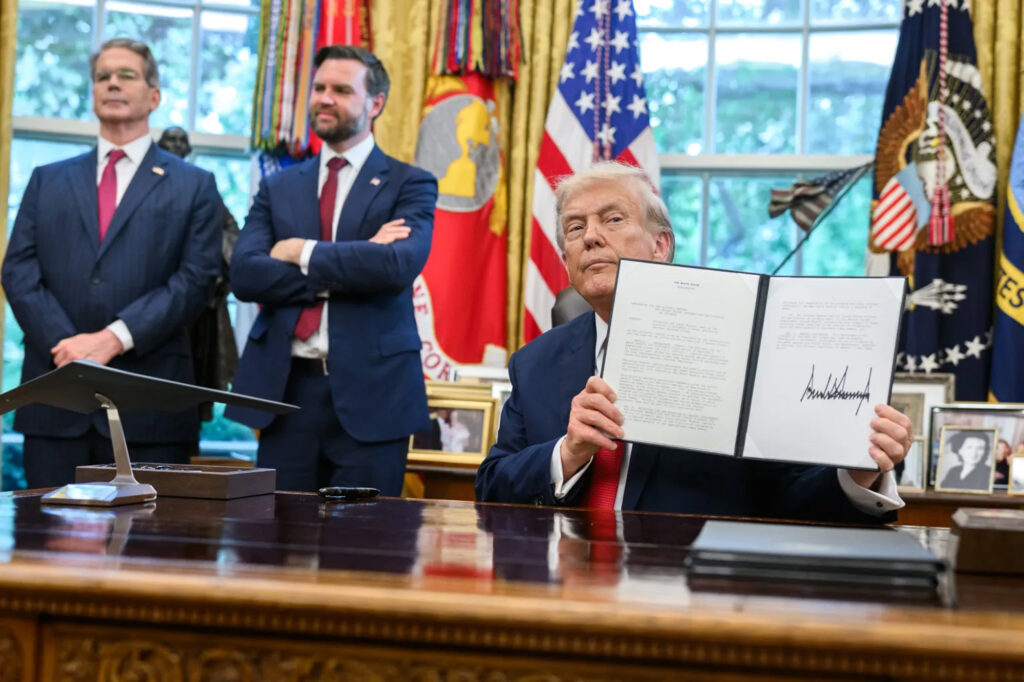
In his first term, President Donald Trump signed 220 executive orders. He has almost matched that number in just the first year of his second term with 218 executive orders as of Dec. 6, according to the Federal Register.
The Constitution didn’t establish term limits for the president. The first president, George Washington, stepped down from the presidency after two terms, setting a precedent that all presidents followed until Roosevelt, who served for four terms.
In 1951, Congress ratified the 22nd amendment, limiting the presidency to two terms of four years. A person who has served as president for over two years, such as a vice president serving after a president dies or resigns mid-term, can only be elected to one full term.
Despite this, Trump and his supporters have often floated the idea that he would run for a third term. In an interview with NBC in 2025, Trump said that “there are methods” to get him a third term in office but declined to elaborate.
Article 2 also establishes the president’s pardoning power. They can only pardon federal offenses and cannot pardon impeachments. While former President Joe Biden holds the record of clemency actions granted at 4,245 according to the federal Office of the Pardon Attorney, most of Biden’s clemency grants came in his last three-and-a-half months in office. He granted no pardons in his first year. In his first term, Trump granted just 238 acts of clemency according to the U.S. Office of the Pardon Attorney. In his second term, however, he began using his pardon power right away, granting clemency on his very first day to over 1,500 people convicted of crimes related to the Jan. 6, 2021, attack on the U.S. Capitol by the president’s supporters.
Trump pardoned former Republican Rep. George Santos, who was roughly three months into his seven-year sentence for fraud and identity theft. Justifying the pardon, Trump said Santos’ words misleading voters about his background and financial status, including lying about charity organizations, his degree, his “family firm,” past jobs and more were no worse than misleading statements Democratic Sen. Richard Blumenthal from Connecticut made about his military service in 2010 according to the AP. Blumenthal apologized for the comments at the time of the controversy, admitting he misspoke.
“This is far worse than what George Santos did, and at least Santos had the Courage, Conviction, and Intelligence to ALWAYS VOTE REPUBLICAN!” Trump wrote on Truth Social.
In May, Trump pardoned former Connecticut Gov. John Rowland, a Republican, who served from 1995 to 2004 before resigning during a federal corruption investigation into gifts he received from state contractors. He served 10 months in a federal prison and another 30 months after another criminal conviction in 2014 for a campaign law violation.
—by Mikayla Bunnell, UConn Journalism
You must be logged in to post a comment.