Article 2, Section 2 of the U.S. Constitution designates the president as the commander-in-chief of the army and navy of the U.S. and of the militia of the states – now called the National Guard – when it is called into national service.
Until 1916, states maintained their National Guards on their own. Now, the federal government helps, providing federal funding. Under certain circumstances, the National Guard can be drafted into national service or deployed domestically.
Article 1, Section 8 allows Congress to call the “Militia to execute the Laws of the Union, suppress Insurrections and repel Invasions.” In 1792, Congress passed the Militia Act, which temporarily designated this power to the president only in times of crisis. In 1795, Congress gave the president this power permanently.
Another law passed in 1903, 10 U.S. Code section 12406, also allows the president to “call into Federal service members and units of the National Guard of any State in such numbers as he considers necessary to repel the invasion, suppress the rebellion, or execute those laws.”
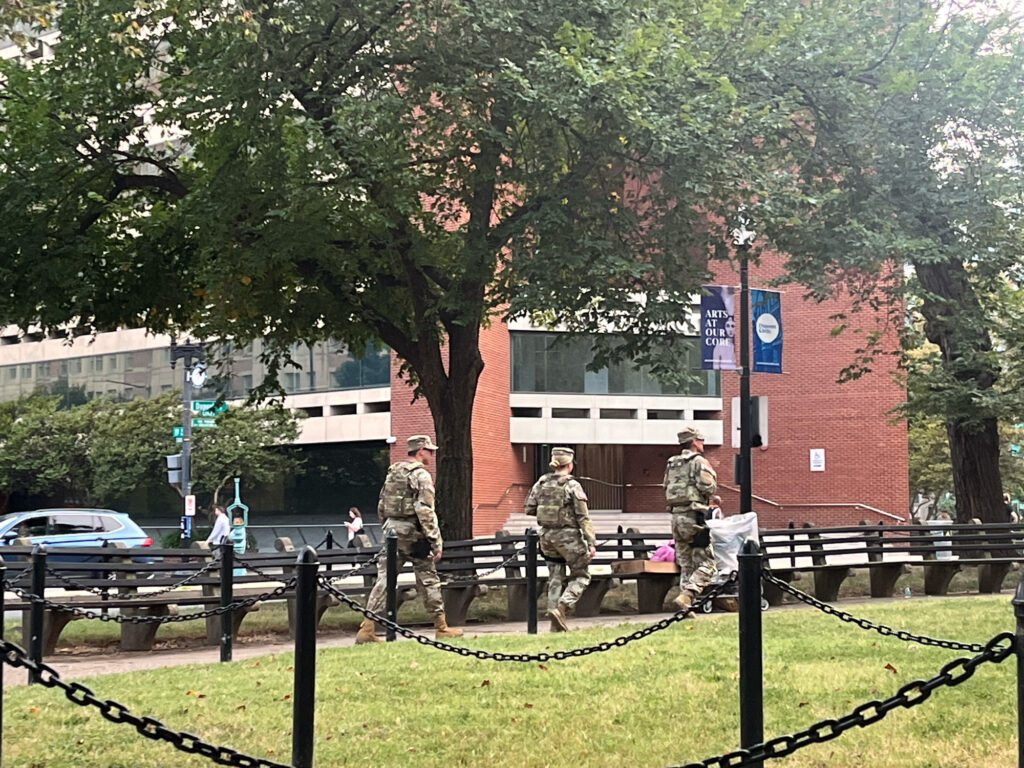
These statues were President Donald Trump’s justifications to send or threaten to send the National Guard to Democratic cities like Washington D.C., Los Angeles, Portland and Chicago, which he claimed were overrun by crime and in need of intervention.
In a memorandum on Aug. 11, 2025, Trump said: “It is a point of national disgrace that Washington, D.C., has a violent crime rate that is higher than some of the most dangerous places in the world.” It went on to allow the Secretary of Defense to “coordinate with State Governors and authorize the orders of any additional members of the National Guard to active service, as he deems necessary and appropriate, to augment this mission.”
States are suing the administration for the deployments. In September 2025, U.S. District judge Charles Breyer ruled in favor of California, which sued Trump for his deployment of troops into Los Angeles over the summer in response to protests over immigration enforcement. Breyer, in his opinion, said that Trump sought to create a “national police force.”
—by Mikayla Bunnell, UConn Journalism
You must be logged in to post a comment.